

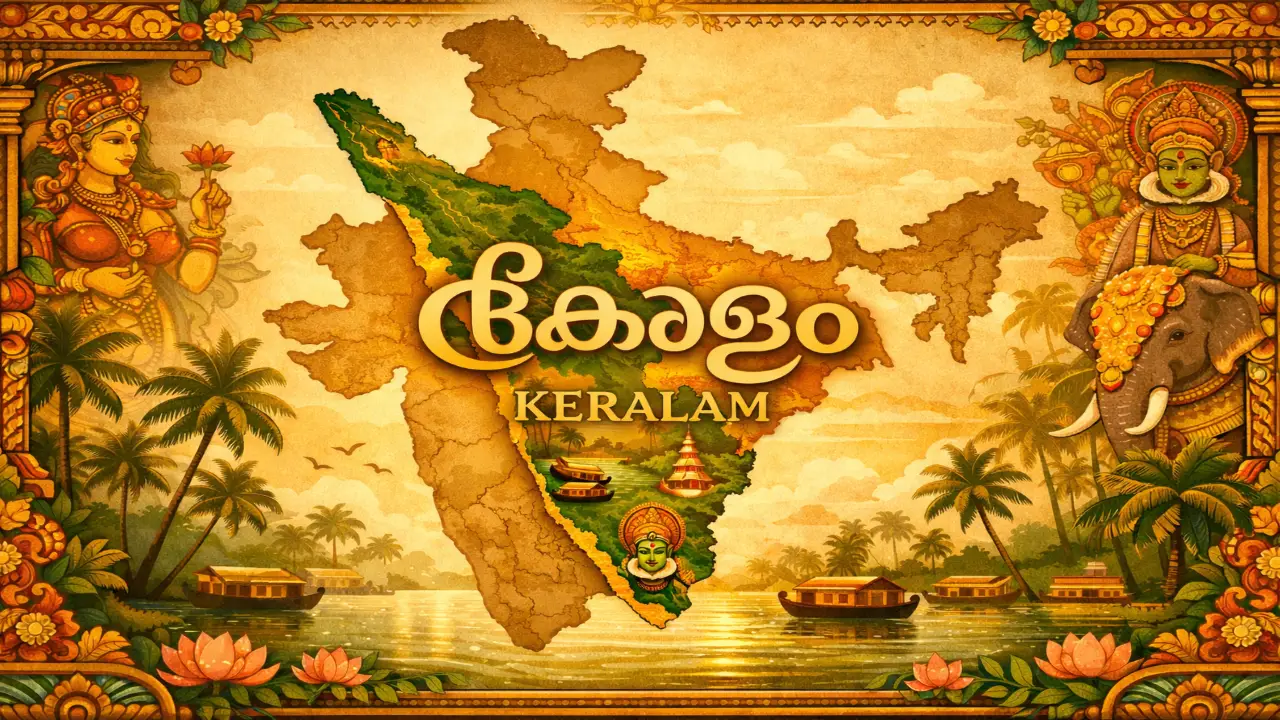
On February 24, 2026, the Union Cabinet approval for the Keralam name change marked a watershed moment in India’s federal and linguistic history. Framed by the Centre as a move to strengthen the “connect with our glorious culture,” the decision to rename the state from “Kerala” to “Keralam” is a formal acknowledgment of a long-standing demand for linguistic authenticity. The timing is politically salient, arriving just months ahead of the 2026 assembly elections, providing a rare point of convergence between the state’s ruling Left Democratic Front (LDF) and the Bharatiya Janata Party (BJP) at the Centre.
The journey to this executive nod was defined by legislative persistence and a nuanced dialogue between Thiruvananthapuram and New Delhi. Chief Minister Pinarayi Vijayan’s government first moved a unanimous resolution in August 2023. However, following a review, the Union Home Ministry suggested technical corrections to ensure the name change would be reflected consistently across the First Schedule and the Eighth Schedule of the Constitution. The Ministry sought better clarity on how the name would be rendered in all 22 official languages to avoid administrative discrepancies.
Addressing these discrepancies, the Kerala Assembly passed a second resolution on June 24, 2024. This resolution was notable for its rare, unanimous cross-party support, where both the LDF and the Congress-led UDF opposition presented a united front. The resolution specifically urged the Centre to ensure that the state is recognized as “Keralam” in all 22 official languages listed in the Eighth Schedule, moving beyond a mere English-language correction to a total linguistic alignment that respects the state’s historical and cultural roots.
Reclaiming Native Identity
The transition to “Keralam” is an effort to discard an Anglicized administrative term in favor of the authentic Malayalam pronunciation. While “Kerala” has been the official nomenclature since the state’s formation in 1956, the term “Keralam” is deeply embedded in the region’s vernacular and historical consciousness. To its speakers, the terminal “m” is not a minor phonetic detail but a vital component of the name’s grammar and history.
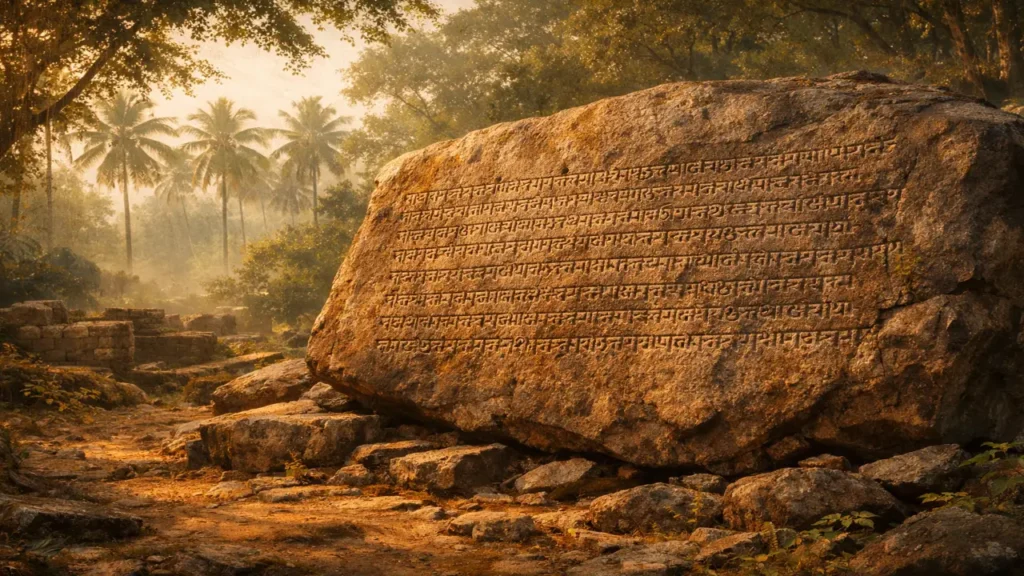
The historical footprint of the name is exceptionally deep. The earliest epigraphic reference appears in Ashoka’s Rock Edict II (257 BCE), which mentions “Keralaputra” as an independent border kingdom alongside the Cholas and Pandyas. In Sanskrit, “Keralaputra” translates to the “son of Kerala” or the “son of the Cheras,” the dynasty that ruled the region during the Sangam period.
The two primary theories dominate the discourse. The Chera-Alam Theory suggests the name originates from the compound “Cher” (to join) and “alam” (land or region), signifying an “integrated land.” Alternatively, the Keram Theory, supported by scholars like Herman Gundert, posits that “keram” (coconut) is the root, identifying Keralam as the “land of coconuts”—the state’s primary agricultural symbol. Regardless of the specific root, the demand for “Keralam” is inextricably linked to the Aikya Kerala movement of the 1920s, which sought to unify Malayalam-speaking regions into a single political entity. For many, the current change is the final step in the linguistic reorganization of 1956, fulfilling the cultural promise of the state’s birth on Kerala Piravi day.
Article 3 and The Road Ahead
Despite the Union Cabinet approval, the name change is not yet a legal fait accompli. Under the Indian Constitution, the authority to alter a state’s name resides exclusively with Parliament. The process is strictly governed by Article 3 of the Constitution, which necessitates a specific sequence of federal consultations designed to maintain a balance between central authority and regional aspirations.
The next procedural hurdle involves the Kerala (Alteration of Name) Bill 2026. Following the Cabinet’s sanction, the President of India must refer the Bill to the Kerala Legislative Assembly to seek its formal views. While the state’s opinion is not legally binding on Parliament, meaning the Union could technically proceed even in the face of state opposition, this referral is a mandatory consultative step under the proviso to Article 3.
Once the state assembly returns its views, the Centre will seek the President’s recommendation to formally introduce the Bill in Parliament. Unlike general constitutional amendments that require a two-thirds majority under Article 368, a Bill for changing a state’s name under Article 3 requires only a simple majority (more than 50% of those present and voting) in both the Lok Sabha and the Rajya Sabha to pass. Following parliamentary approval and Presidential assent, the government will officially amend the First Schedule, the list of all states and territories, and the Fourth Schedule, which deals with Rajya Sabha seat allocations.
The West Bengal Paradox
The smooth progression of the “Keralam” proposal stands in stark contrast to the long-stalled request from West Bengal to rename itself “Bangla.” While Kerala’s proposal achieved Union Cabinet approval relatively quickly after its technical revised resolution, Chief Minister Mamata Banerjee’s push has faced persistent resistance. The Ministry of External Affairs has historically raised concerns that “Bangla” is phonetically and diplomatically too similar to the neighboring sovereign state of Bangladesh, potentially leading to international confusion.
Furthermore, the Centre initially rejected West Bengal’s proposal because the state sought three different names, Bengal in English, Bangla in Bengali, and Bangal in Hindi, a request the MHA deemed administratively unfeasible. In contrast, the Kerala government’s 2024 resolution addressed these technical concerns by requesting a single, uniform name, Keralam, across all schedules. This procedural diligence, combined with rare support from the Kerala BJP unit led by Rajeev Chandrasekhar, provided the political and legal lubrication necessary for the Centre to grant its nod where it has previously demurred for Bengal.
Conclusion
The transition from Kerala to Keralam is a landmark in India’s linguistic federalism. It represents more than a technical correction; it is a significant assertion of regional identity that bridges 2,000 years of history with modern constitutional practice. By aligning the official name with native usage, the Union government has acknowledged that the map of India is a living document, reflective of the people’s collective self-respect and cultural heritage. As the Kerala (Alteration of Name) Bill 2026 moves toward Parliament, the state stands as a testament to how regional aspirations can be fulfilled through patient, bipartisan engagement with the constitutional framework.
READ OUR OTHER ARTICLES
- ओडिशा का दीपक पहुंचा बेंगलुरु, Hardik Pandya की उदारता ने मचाया तहलका
 भारत में क्रिकेट केवल एक खेल नहीं, बल्कि एक गहरी सामाजिक भावना है जहाँ खिलाड़ी भगवान की तरह पूजे जाते हैं और प्रशंसक उनके प्रति अटूट स्नेह प्रदर्शित करते हैं. … Read more
 - Iran’s Darkest Day: Screams for Revenge and a Missing Leader
 On Sunday, July 5, 2026, Iran entered the tense and highly charged Khamenei funeral Day 2. This marked a critical moment in a six-day state funeral meant to show the … Read more
 - अजीत कुमार: प्रेरणादायक सफर और वैश्विक उपलब्धियों का महाकाव्य
 भारतीय सिनेमा के परिदृश्य में कुछ ऐसे व्यक्तित्व होते हैं जो पर्दे की चकाचौंध से परे जाकर समाज और संस्कृति पर अपनी अमिट छाप छोड़ते हैं। दक्षिण भारतीय सिनेमा के … Read more
 - Coachella 2026: Highlights and History-Making Moments You Missed!
 The 25th anniversary of the Coachella Valley Music and Arts Festival just wrapped up, and it was absolutely legendary! From April 10–12 and April 17–19, 2026, the Empire Polo Club … Read more
 - वैभव सूर्यवंशी का टीम इंडिया में चयन हो चुका है?
 भारतीय क्रिकेट के इतिहास में कुछ क्षण ऐसे आते हैं जो केवल खेल के आंकड़ों को नहीं बदलते, बल्कि पूरे देश की खेल भावना और भविष्य की दिशा को पुनर्परिभाषित … Read more