

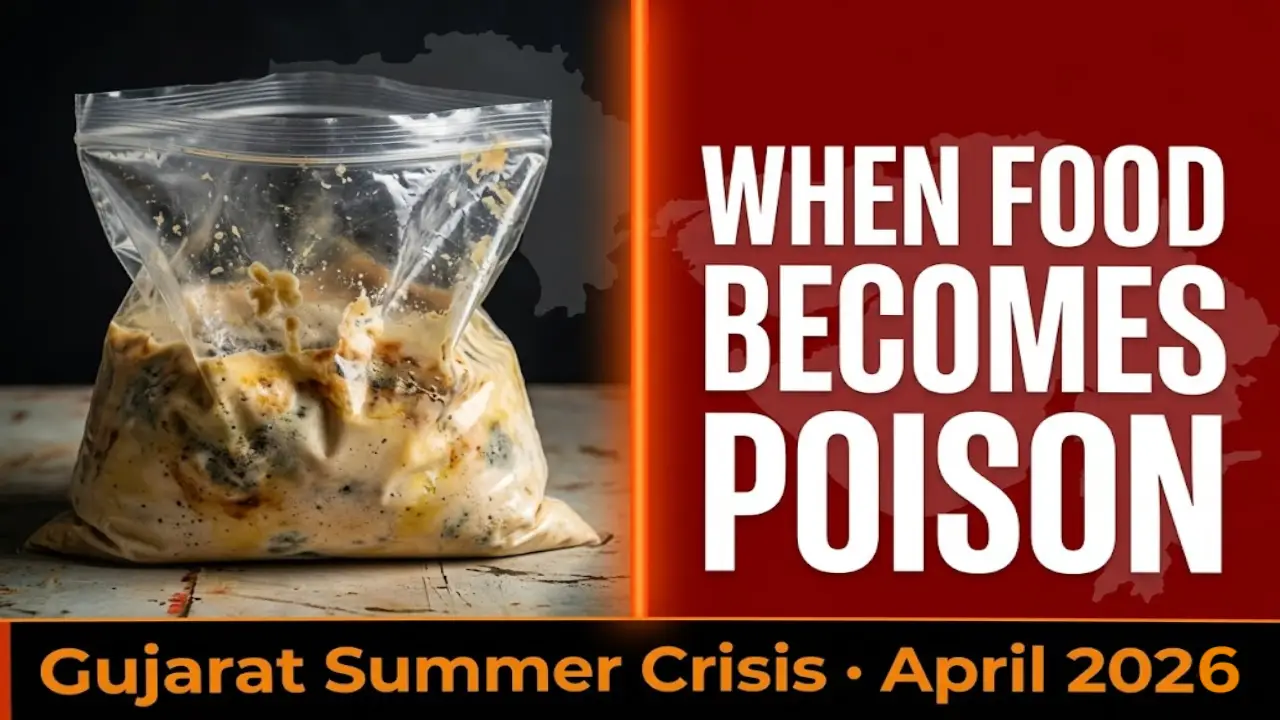
The extremely hot summer weather in Gujarat has brought a terrible health crisis this year. In April 2026, we have seen a massive and scary spike in food poisoning cases. This disaster is happening because of two main reasons: the extreme heat makes food spoil very fast, and there are serious problems with people secretly selling fake or low-quality food ingredients.
When you look at the keyword “Gujarat food poisoning April 2026,” the numbers are truly shocking. Hundreds of people have ended up in the hospital. The victims include young children, college students, and normal families who were just trying to enjoy a simple meal together. Food that is supposed to give us energy and keep us healthy is instead making people very sick, and in the worst cases, it is causing deaths.
This easy-to-read guide will explain exactly what happened in three major food poisoning events in Ahmedabad and Bhavnagar. We will also talk about a big police crackdown called “Operation Shuddhi Gujarat” that found huge amounts of fake food. Most importantly, we will give you simple tips to protect yourself and your family by spotting spoiled or fake food before you eat it.
Three Tragedies in One Week
It is very rare to see so many different groups of people get sick so quickly. The fast spread of these stomach emergencies shows us that our food supply has some big weak spots. Here is a closer look at the three major events that filled up local hospitals.
- The Heartbreaking Dosa Batter Death in Chandkheda, Ahmedabad: The most tragic event happened to a normal family living in the Chandkheda area of Ahmedabad. On the 1st of April, the parents bought some ready-made dosa batter from a local shop named Ghanshyam Dairy. They made dosas at home and ate them. Very soon after eating, the mother and father became violently ill with stomach pain and vomiting. The most heartbreaking part of this story is what happened to their children. Their little four-year-old daughter got extremely sick. Also, the mother was breastfeeding her three-month-old baby. Both of these beautiful little girls sadly died while doctors were trying to save them. This “Chandkheda dosa batter death” shocked the whole city. Right now, the local police and the scientists at the Forensic Science Laboratory (FSL) are testing the leftover batter. They want to find out exactly what kind of deadly germ or poison was hiding inside it.
- The Girls’ Hostel Emergency in Memnagar, Ahmedabad: Another huge scare happened at the Saurashtra Patel Girls Hostel in the Memnagar area. Imagine living in a building with 900 other girls, and suddenly, dozens of your friends start throwing up and clutching their stomachs. That is exactly what happened here. Between 57 and 60 students got very sick with terrible stomach pain, diarrhea, and vomiting. They were rushed to Sterling Hospital, and 18 of those young women were so sick that they had to be admitted to the hospital beds for constant care. This “Ahmedabad hostel food poisoning” case is currently under a major AMC food safety investigation. The Ahmedabad Municipal Corporation (AMC) wants to know where the bad germs came from. Did the girls get sick from the food cooked inside the hostel kitchen, like the khichdi and sev khamani? Or did they get sick from eating street food outside, like panipuri and dabeli? The inspectors are testing food samples to find the true cause.
- Mass Sickness in the Villages of Bhavnagar: Outside of the big cities, the rural areas also faced terrible food poisoning outbreaks. In the Bhavnagar district, two massive events happened in the villages of Khambha (in the Sihor area) and Longdi (in the Mahuva area). In these two places combined, anywhere from 150 to over 300 people became very sick all at once. Many of the victims were young school children. This “Bhavnagar mass food poisoning” happened because people ate food that was served to large crowds. They ate Pav Bhaji at a school event and Pulav served as prasad at a religious gathering. Cooking for hundreds of people outside in the hot sun is very risky, and sadly, the food spoiled and sent hundreds of villagers to the local hospitals.
Why Food Becomes Dangerous ?
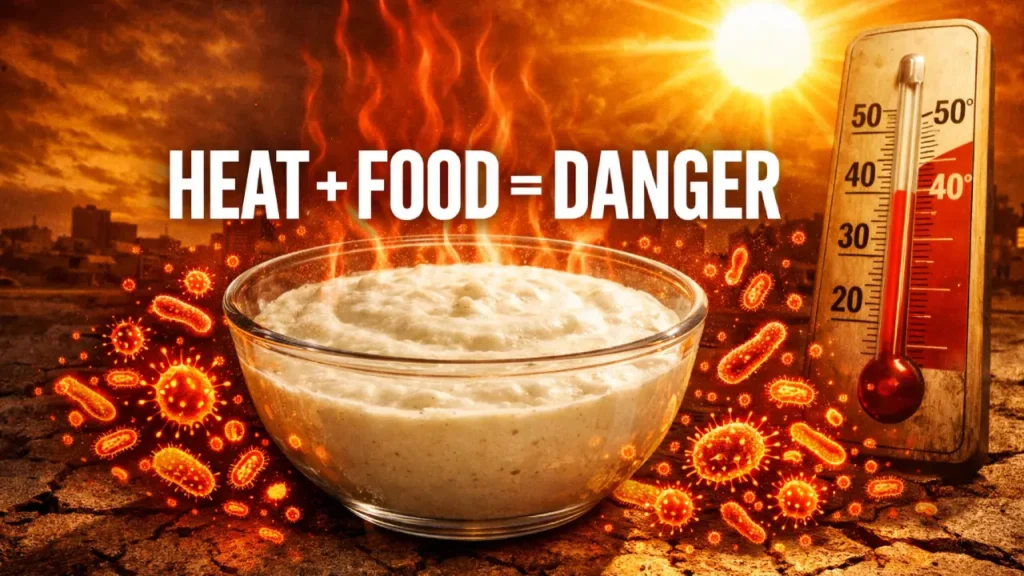
You might wonder why all of this is happening right now. The simple answer is the extreme summer heat in Gujarat. When the weather gets very hot, the way food behaves changes completely.
Let’s take dosa batter as an example. Good dosa batter needs to sit out so it can ferment. Fermenting means that friendly bacteria and yeast grow in the batter to make it fluffy and slightly sour. But when you buy batter in a plastic bag and carry it home in the blazing April heat, those friendly bacteria go into overdrive. The batter gets way too sour, way too fast. Worse, if any harmful, invisible germs accidentally got into the batter at the shop, the warm weather acts like a super-heater, multiplying the bad germs by the millions. This massive growth of bad germs is likely what caused the terrible tragedy in Chandkheda.
The same thing happens at big village gatherings like the ones in Bhavnagar. Wet, heavy foods like mashed Pav Bhaji or rice Pulav are full of water and carbohydrates. If these foods sit outside in large pots for hours during a long school or religious event, they enter what food safety experts call the “danger zone”. This zone is when the food is not hot enough to kill germs, but not cold enough to stop them from growing. In this warm zone, germs like Salmonella can double in number every twenty minutes.
Operation Shuddhi
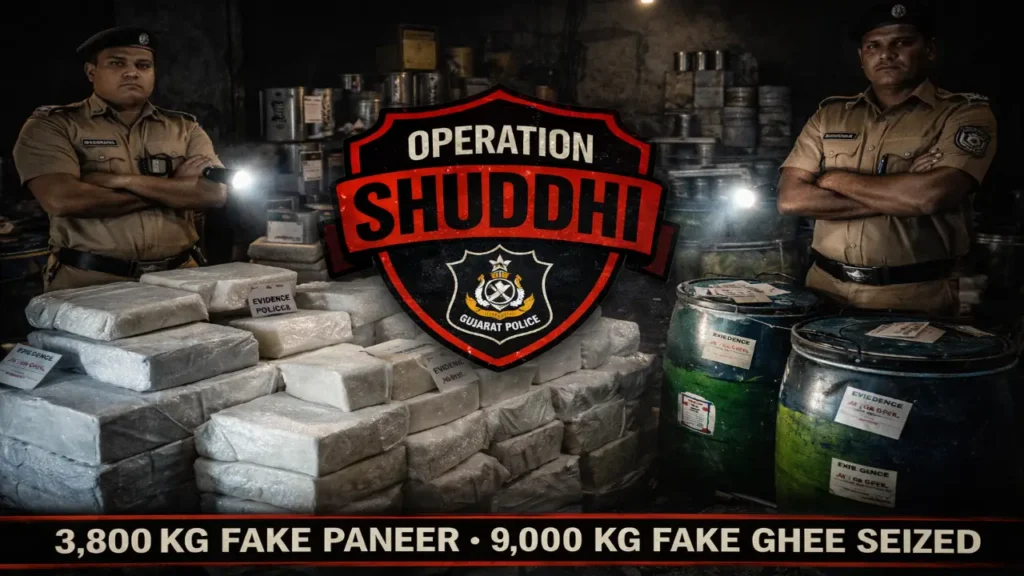
While the hot weather ruins good food, there is another scary problem: some food is bad from the very beginning. Gujarat is fighting a huge battle against criminals who make fake food just to trick people and steal their money. This fight is known as “Operation Shuddhi Gujarat.”
Recently, the Gujarat police raided secret factories and found a terrifying amount of fake dairy products. They seized over 3,800 kilograms of fake paneer, which would have sold for ₹9 lakh. They also found 9,000 kilograms of fake ghee, worth a massive ₹67 lakh.
How do they make fake paneer? Instead of using healthy, pure milk, these bad actors use cheap palm oil, dry milk powder, and harsh industrial acids. To make fake ghee, they mix cheap vegetable oils with heavy starch. These fake foods look and taste a little bit like the real thing, but they have zero health benefits. Worse, the harsh chemicals used to make them can severely hurt your stomach, cause terrible cramps, and damage your body over time.
Street Food in Ahmedabad
The AMC food department has a very tough job. Ahmedabad is a massive city with thousands of food carts. Ensuring “street food safety Ahmedabad” is incredibly difficult because there simply are not enough food inspectors to check every single vendor every single day.
Many street vendors work very hard to make an honest living. However, they usually cook on the side of dusty roads. They might not have enough clean water to wash their hands, and they almost never have refrigerators to keep their ingredients cold. If a street vendor accidentally buys the fake paneer to put in a sandwich, or uses fake ghee on a dabeli, the customer is the one who ends up eating those harmful chemicals. Until there are more inspectors and better rules to help vendors keep food cold and clean, eating street food in the extreme summer heat remains a big risk.
How to Protect Yourself
Since we cannot always rely on the government to catch every bad batch of food, we must be smart and careful shoppers. Knowing how to check your food at home can literally save your life.
Checking Dosa Batter: First, use your nose. Good dosa batter should smell clean and a little bit sour, like plain yogurt. If you open a bag of batter and it smells like harsh chemicals, strong ammonia, or rotting garbage, throw it in the trash immediately. Second, look at the color. The batter should be white or slightly off-white. If you see any pink, gray, or orange colors, that means dangerous mold is growing. Finally, if the batter feels slimy or super sticky, it is completely spoiled and dangerous to eat.
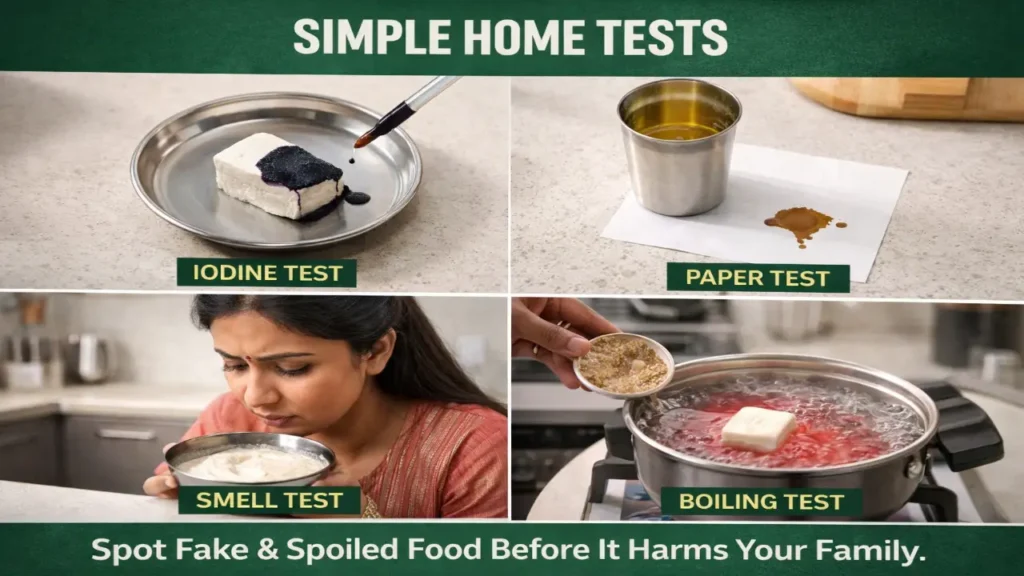
Checking Paneer and Ghee (FSSAI Tips): The Food Safety and Standards Authority of India (FSSAI) has shared some very easy tests you can do in your own kitchen to spot fake food.
- The Iodine Test for Fake Paneer: Take a tiny piece of paneer and mash it up. Put two or three drops of a medicine called Iodine tincture on it. If the paneer suddenly turns a dark blue or black color, it is fake. That color means the makers mixed cheap potato or starch into it.
- The Boiling Test for Fake Paneer: Boil a piece of paneer in water. Let it cool down, and then sprinkle some soybean powder on it. If the paneer turns a light red color, do not eat it. This means it was made with harmful chemicals like detergent or urea.
- The Acid Test for Fake Ghee: Melt a little bit of ghee in a glass. Add a tiny pinch of sugar and a few drops of strong acid (like Hydrochloric Acid, if you have it for cleaning). Shake it up for two minutes. If the liquid turns a bright pink or red color, your ghee is fake and mixed with cheap oils.
- The Paper Test for Fake Ghee: Put one drop of melted ghee on a clean piece of paper. Wait fifteen minutes. Pure ghee will leave a light, clear mark that slowly fades. Fake ghee mixed with heavy oils or wax will leave a very dark, sticky stain that never goes away.
Conclusion
The terrible events of April 2026 are a sad reminder that we cannot take our food for granted. From the tragic loss of the two young girls in Chandkheda to the crowded hospital beds full of students and villagers, food poisoning is a real and present danger during the hot Indian summer.
We need the government to hire more food inspectors to check local shops and street vendors. We also need strict punishments for the criminals making fake paneer and ghee. But most importantly, you, the buyer, must stay alert. Trust your nose, trust your eyes, and do not be afraid to throw away food if it seems spoiled. By doing simple home tests and refusing to eat food that smells or looks bad, you can keep your family safe during the hottest months of the year.
READ OUR OTHER ARTICLES
- ओडिशा का दीपक पहुंचा बेंगलुरु, Hardik Pandya की उदारता ने मचाया तहलका
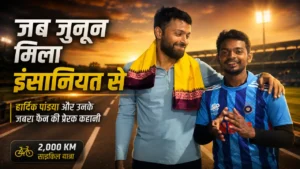 भारत में क्रिकेट केवल एक खेल नहीं, बल्कि एक गहरी सामाजिक भावना है जहाँ खिलाड़ी भगवान की तरह पूजे जाते हैं और प्रशंसक उनके प्रति अटूट स्नेह प्रदर्शित करते हैं. … Read more
 - Iran’s Darkest Day: Screams for Revenge and a Missing Leader
 On Sunday, July 5, 2026, Iran entered the tense and highly charged Khamenei funeral Day 2. This marked a critical moment in a six-day state funeral meant to show the … Read more
 - अजीत कुमार: प्रेरणादायक सफर और वैश्विक उपलब्धियों का महाकाव्य
 भारतीय सिनेमा के परिदृश्य में कुछ ऐसे व्यक्तित्व होते हैं जो पर्दे की चकाचौंध से परे जाकर समाज और संस्कृति पर अपनी अमिट छाप छोड़ते हैं। दक्षिण भारतीय सिनेमा के … Read more
 - Coachella 2026: Highlights and History-Making Moments You Missed!
 The 25th anniversary of the Coachella Valley Music and Arts Festival just wrapped up, and it was absolutely legendary! From April 10–12 and April 17–19, 2026, the Empire Polo Club … Read more
 - वैभव सूर्यवंशी का टीम इंडिया में चयन हो चुका है?
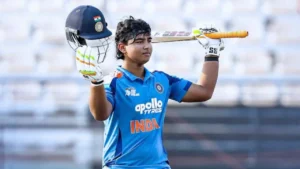 भारतीय क्रिकेट के इतिहास में कुछ क्षण ऐसे आते हैं जो केवल खेल के आंकड़ों को नहीं बदलते, बल्कि पूरे देश की खेल भावना और भविष्य की दिशा को पुनर्परिभाषित … Read more