

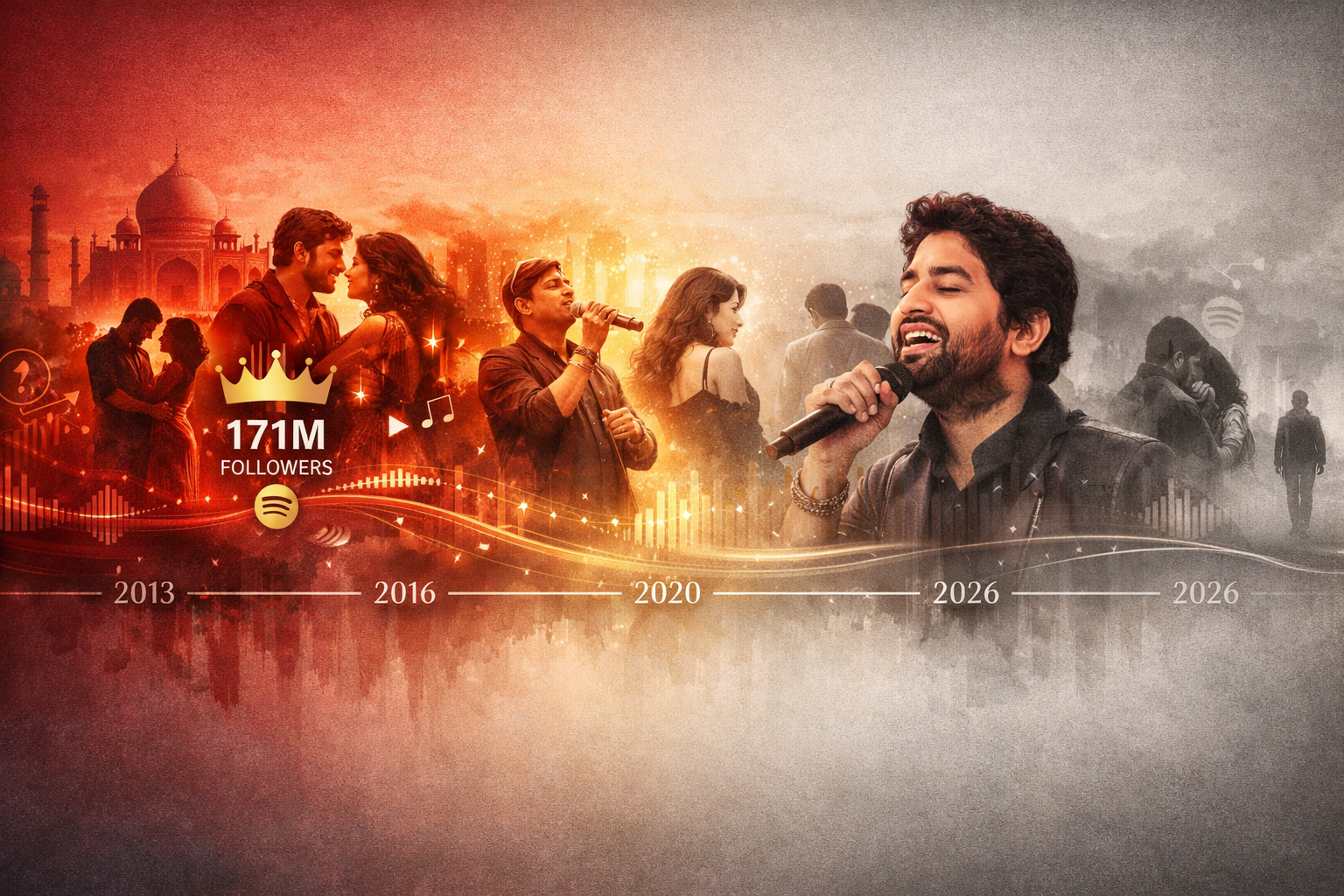
The cultural landscape of India shifted on its axis on the evening of January 27, 2026. For over a decade, the voice of Arijit Singh had been a sonic constant—soundtracking the collective heartbreak, romance, and spiritual yearning of a billion people. When the notification pings echoed across millions of smartphones, the message was as jarring as it was brief: “I am calling it off… I got bored”. At only 38, while occupying the undisputed throne of Spotify’s #1 most-followed artist globally with 171 million followers, Singh announced his formal Playback Retirement from Bollywood. This was not a “clickbait” stunt; it was a surgical exit. He clarified that while he is finishing “pending commitments” through 2026, he will take no new assignments, effectively ending the most dominant era in Indian music history.
The Architect of an Era: A 3-Phase Career Timeline
| Phase | Time Period | Key Milestone |
| The Rise | 2005–2012 | From Fame Gurukul rejection to “Phir Mohabbat,” carving a path through music programming. |
| The Dominance | 2013–2023 | Aashiqui 2 to Animal; 13 years as the “Voice of a Generation” and tying Kishore Kumar’s Filmfare record. |
| The Evolution | 2024–2026 | Global Spotify dominance and the bold pivot toward Independent Music and classical roots. |
Analyzing the Creative Drought
The most striking aspect of Singh’s exit was his admission of Artistic Burnout. “I get bored pretty quick,” he confessed, explaining that he often changed song arrangements on stage just to feel alive. For thirteen years, the industry overused his voice, treating his vocal texture as a guaranteed “viral” insurance policy for every genre—from sufi to EDM. This industrial reliance created a paradox: while he was the most-streamed artist on the planet, his creative oxygen was thinning.
“I need to do other music to live,” he stated, highlighting a deep disillusionment with the “Industry Hit Formula” of labels that prioritize “forced remakes” and creative micromanagement. Critics had long noted the “saturation” of his voice, yet Singh’s decision to walk away at his absolute peak is an act of preservation. He chose to reclaim his name from the brand the industry built, admitting that the psychological toll of fame had reached a point where even those close to him stopped using his name as a person and started using it as a commodity.
The End of an Era: 13 Years of Heartbreak and Healing
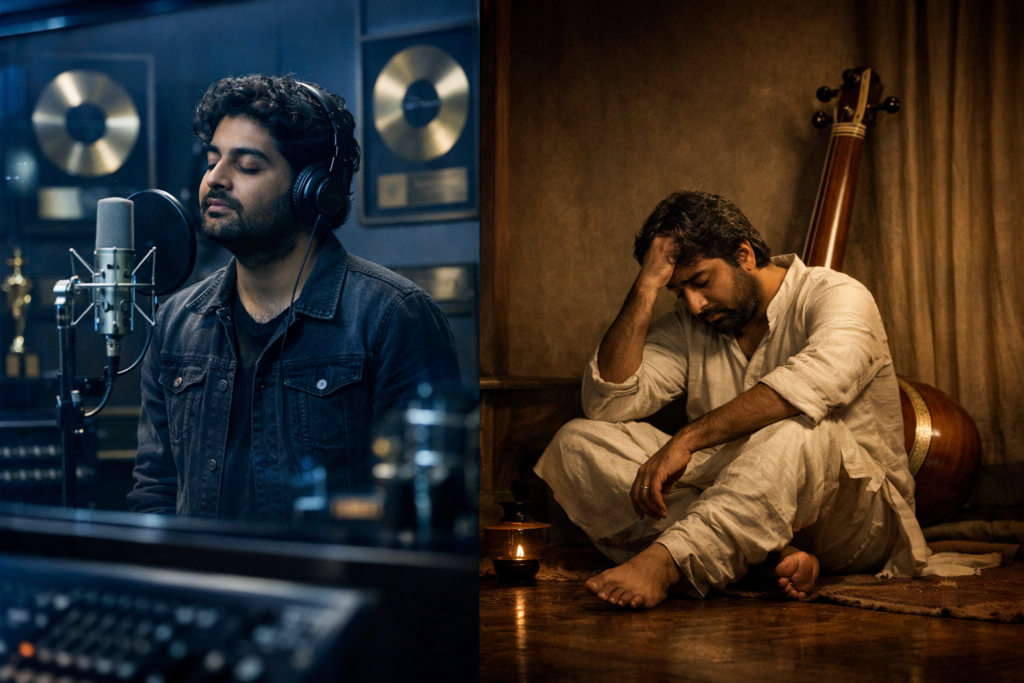
Between 2013 and 2026, Arijit Singh was the emotional grammar of modern India. His reign began with “Tum Hi Ho” from Aashiqui 2, a song that didn’t just launch a superstar but changed the frequency of the Indian romantic ballad. Over 13 years, he became the primary voice for every Bollywood leading man, from the visceral vulnerability of Ranbir Kapoor in Animal to the breezy romance of Shah Rukh Khan.
His record-breaking eight Filmfare Awards are a testament to his versatility, but his true legacy lies in the sound of “modern male vulnerability”. In hits like “Channa Mereya” and “Agar Tum Saath Ho,” he captured the internal collapse of a generation. Statistics confirm his total dominance: Indian listeners hit play on his tracks 7.1 billion times in a single year, and by 2026, he had surpassed Taylor Swift and Ed Sheeran in global followers. His exit marks the death of the “one voice fits all” monoculture that defined 21st-century playback.
The Pivot: A Return to the Sacred Roots
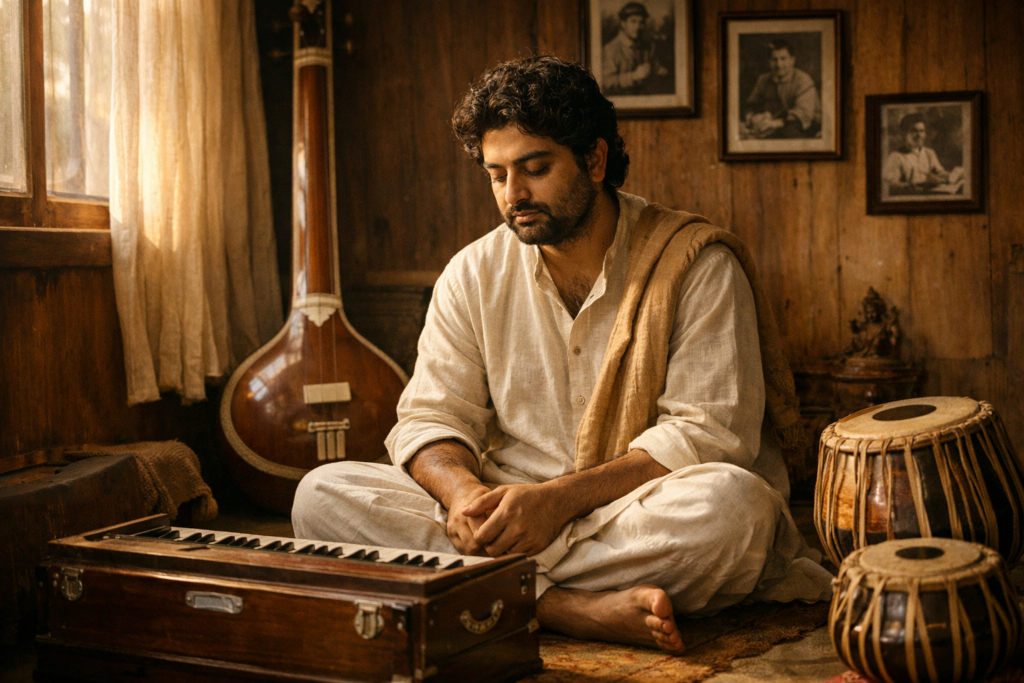
Crucially, Arijit is not quitting music; he is returning to it. His shift toward Indian Classical and Independent Music is a bold, regressive move in an age of hyper-commercialization. For a superstar with a net worth of over ₹414 crore to willingly become a “small artist” again to study Riyaz and Raag is a rare display of integrity.
Trained from age three under the Hazari brothers—Rajendra Prasad, Dhirendra Prasad, and Birendra Prasad—Singh’s foundation was always in classical vocals and tabla. By focusing on his label, Oriyon Music, he is seeking an “artist-first ecosystem” that allows for original storytelling over algorithmic hooks. This pivot is a homecoming to the discipline that shaped him before the Bollywood machine transformed him into a global icon.
Industry Impact: The Power Vacuum
The industry reaction has been a mix of shock and reverence. Composer Amaal Mallik admitted feeling “lost,” stating that “film music will never be the same without you”. Shreya Ghoshal, his most frequent collaborator, offered a more analytical view, calling it the “start of a new phase” and noting that an artist of his caliber cannot be “boxed into a set formula”. Other peers like Badshah called him a “once in a century” talent.
As the industry scrambles to fill the void, the focus shifts to who will inherit the mantle. Yet, the consensus remains that the “Arijit era” was a singular phenomenon. By walking away at his peak, Arijit Singh has ensured his legacy remains untainted by decline. The storm has passed, and in the silence that follows, we might finally hear the music he has always wanted to make. The booth is empty, but for the “Small Artist” from Jiaganj, the real fun is just about to begin.
READ OUR OTHER ARTICLES
- ओडिशा का दीपक पहुंचा बेंगलुरु, Hardik Pandya की उदारता ने मचाया तहलका
 भारत में क्रिकेट केवल एक खेल नहीं, बल्कि एक गहरी सामाजिक भावना है जहाँ खिलाड़ी भगवान की तरह पूजे जाते हैं और प्रशंसक उनके प्रति अटूट स्नेह प्रदर्शित करते हैं. … Read more
 - Iran’s Darkest Day: Screams for Revenge and a Missing Leader
 On Sunday, July 5, 2026, Iran entered the tense and highly charged Khamenei funeral Day 2. This marked a critical moment in a six-day state funeral meant to show the … Read more
 - अजीत कुमार: प्रेरणादायक सफर और वैश्विक उपलब्धियों का महाकाव्य
 भारतीय सिनेमा के परिदृश्य में कुछ ऐसे व्यक्तित्व होते हैं जो पर्दे की चकाचौंध से परे जाकर समाज और संस्कृति पर अपनी अमिट छाप छोड़ते हैं। दक्षिण भारतीय सिनेमा के … Read more
 - Coachella 2026: Highlights and History-Making Moments You Missed!
 The 25th anniversary of the Coachella Valley Music and Arts Festival just wrapped up, and it was absolutely legendary! From April 10–12 and April 17–19, 2026, the Empire Polo Club … Read more
 - वैभव सूर्यवंशी का टीम इंडिया में चयन हो चुका है?
 भारतीय क्रिकेट के इतिहास में कुछ क्षण ऐसे आते हैं जो केवल खेल के आंकड़ों को नहीं बदलते, बल्कि पूरे देश की खेल भावना और भविष्य की दिशा को पुनर्परिभाषित … Read more