

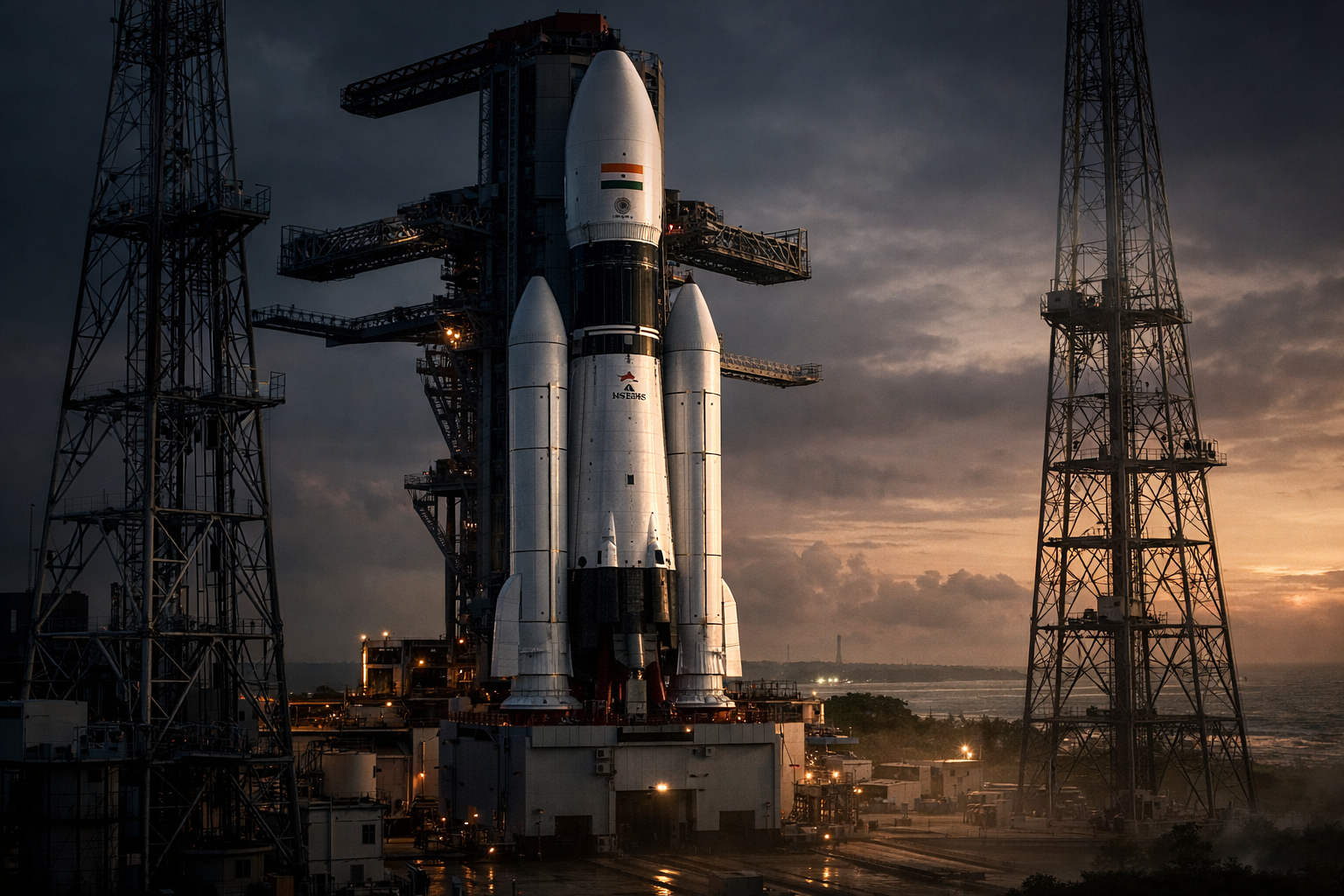
The global space race has shifted gears. While private companies in the West chase lunar commercialization, the Indian Space Research Organisation (ISRO) is days away from a sovereign milestone that will alter the geopolitical map of Low Earth Orbit. This March 2026, the Gaganyaan G1 mission is set to lift off from Sriharikota.
This is not merely a “test flight”; it is the final, high-fidelity dress rehearsal for India’s entry into human spaceflight. The G1 mission profile is designed to be identical to a manned flight, minus the biological astronauts. Instead, it will carry a suite of sensors and a digital twin of a human commander to validate that India can not only launch a crew but bring them home alive.
Mission Specs
- Rocket: Human-Rated LVM3 (HLVM3)
- Payload: Orbital Module (Crew Module + Service Module) & Vyommitra Robot
- Target Orbit: 400 km Low Earth Orbit (LEO)
- Launch Window: March 2026
The Chariot and the Passenger: HLVM3 & Vyommitra
The backbone of this mission is the Human-Rated LVM3 (HLVM3). While the standard LVM3 has been ISRO’s workhorse for satellite launches, the “Human-Rated” variant is a different beast entirely. ISRO has re-engineered the S200 solid boosters and the L110 liquid core stage with a focus on safety margins rather than just thrust. The failure probability has been reduced to less than 1 in 2,000—a stringency required when human lives are on the manifest.
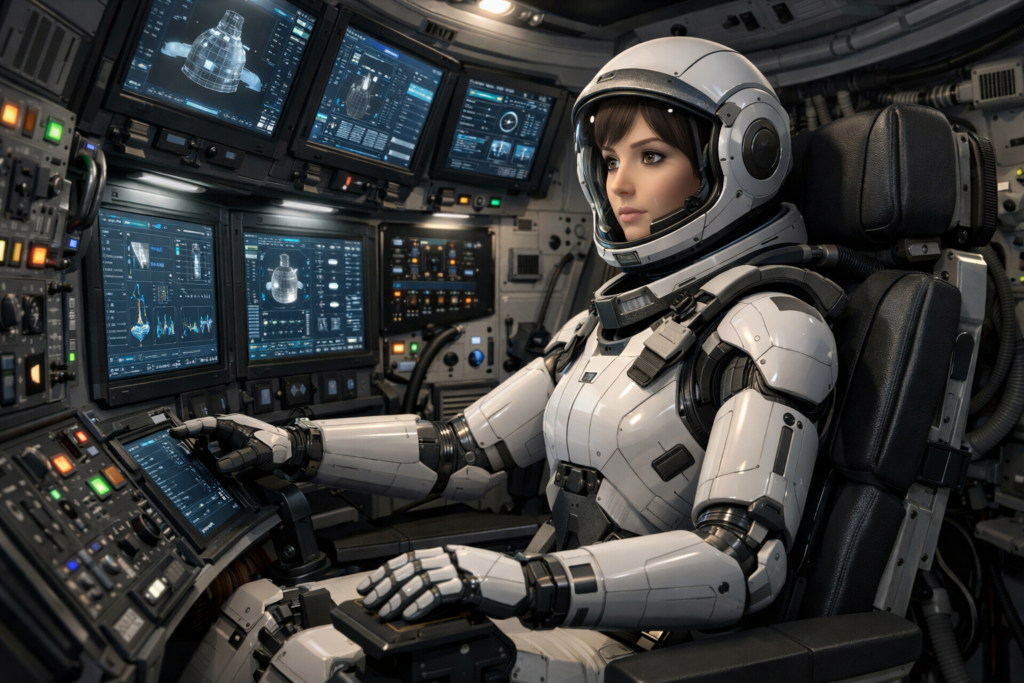
Inside the pressurized Crew Module sits the mission’s sole passenger: Vyommitra. Vyommitra is often called a “half-humanoid,” but that descriptor underplays her engineering utility. She is not a passive dummy. Equipped with biomorphic physical features, she is designed to simulate human metabolic rates (heat and CO2 generation) to stress-test the Environmental Control and Life Support System (ECLSS). During the flight, Vyommitra will actively toggle switches, read control panels, and issue voice alerts in Hindi and English, validating the cockpit’s ergonomics and voice-command systems under microgravity conditions.
The “Zero-Risk” Protocol: Safety Mechanisms
Why launch uncrewed in 2026 when the technology exists? The answer lies in the “Zero-Risk” validation protocol. The G1 mission is primarily a stress test for the Crew Escape System (CES) and the thermal protection tiles.
Spaceflight history is written in contingencies. The HLVM3 features a newly integrated abort logic capable of detecting anomalies in milliseconds. If the rocket deviates from its nominal trajectory, the CES is programmed to jettison the crew module away from the exploding stack, pulling the astronauts to safety with high-thrust solid motors.
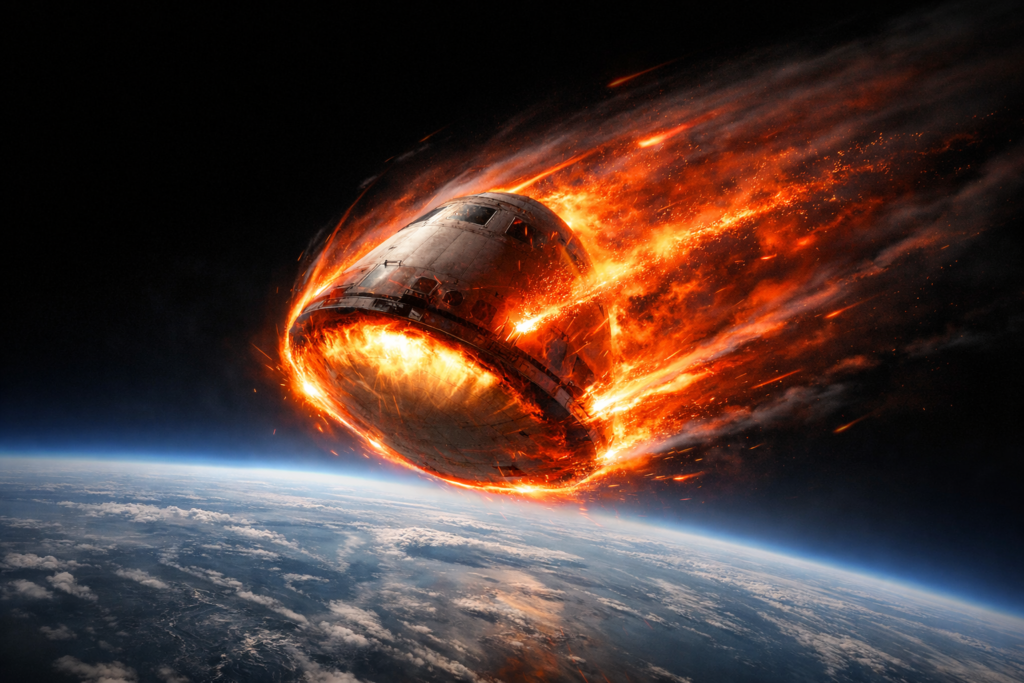
Furthermore, the re-entry phase remains the most dangerous leg of the journey. The G1 module must survive the searing plasma of atmospheric re-entry—temperatures exceeding 2000° C -while maintaining an internal temperature of 25° C for the avionics (and eventually, astronauts). A successful splashdown in the Arabian Sea this March will be the green light for the manned mission.
The Elite Club: Geopolitics in Low Earth Orbit
The strategic implications of a successful G1 launch extend far beyond engineering. Currently, only three nations—the United States, Russia, and China—possess the independent capability to launch humans into orbit. By mastering the full stack of human spaceflight technologies (from life support to re-entry shielding), India signals its transition from a budget-conscious satellite launcher to a top-tier space power. This capability is a prerequisite for the planned Bharatiya Antariksha Station (Indian Space Station), aiming for 2035. In a multipolar world where space is increasingly contested, independent human access to LEO is not just about science; it is about sovereignty.
Conclusion
If the G1 mission executes a flawless splashdown this March, the clock starts ticking for the final act: the H1 mission. With the Vyommitra data verified, ISRO is expected to greenlight the launch of Indian Air Force test pilots (the Gaganyatris) as early as 2027.
The era of “frugal engineering” is over. With Gaganyaan, India is proving it can execute high-stakes, high-precision engineering on the ultimate frontier.
READ OUR OTHER ARTICLES
- ओडिशा का दीपक पहुंचा बेंगलुरु, Hardik Pandya की उदारता ने मचाया तहलका
 भारत में क्रिकेट केवल एक खेल नहीं, बल्कि एक गहरी सामाजिक भावना है जहाँ खिलाड़ी भगवान की तरह पूजे जाते हैं और प्रशंसक उनके प्रति अटूट स्नेह प्रदर्शित करते हैं. … Read more
 - Iran’s Darkest Day: Screams for Revenge and a Missing Leader
 On Sunday, July 5, 2026, Iran entered the tense and highly charged Khamenei funeral Day 2. This marked a critical moment in a six-day state funeral meant to show the … Read more
 - अजीत कुमार: प्रेरणादायक सफर और वैश्विक उपलब्धियों का महाकाव्य
 भारतीय सिनेमा के परिदृश्य में कुछ ऐसे व्यक्तित्व होते हैं जो पर्दे की चकाचौंध से परे जाकर समाज और संस्कृति पर अपनी अमिट छाप छोड़ते हैं। दक्षिण भारतीय सिनेमा के … Read more
 - Coachella 2026: Highlights and History-Making Moments You Missed!
 The 25th anniversary of the Coachella Valley Music and Arts Festival just wrapped up, and it was absolutely legendary! From April 10–12 and April 17–19, 2026, the Empire Polo Club … Read more
 - वैभव सूर्यवंशी का टीम इंडिया में चयन हो चुका है?
 भारतीय क्रिकेट के इतिहास में कुछ क्षण ऐसे आते हैं जो केवल खेल के आंकड़ों को नहीं बदलते, बल्कि पूरे देश की खेल भावना और भविष्य की दिशा को पुनर्परिभाषित … Read more