

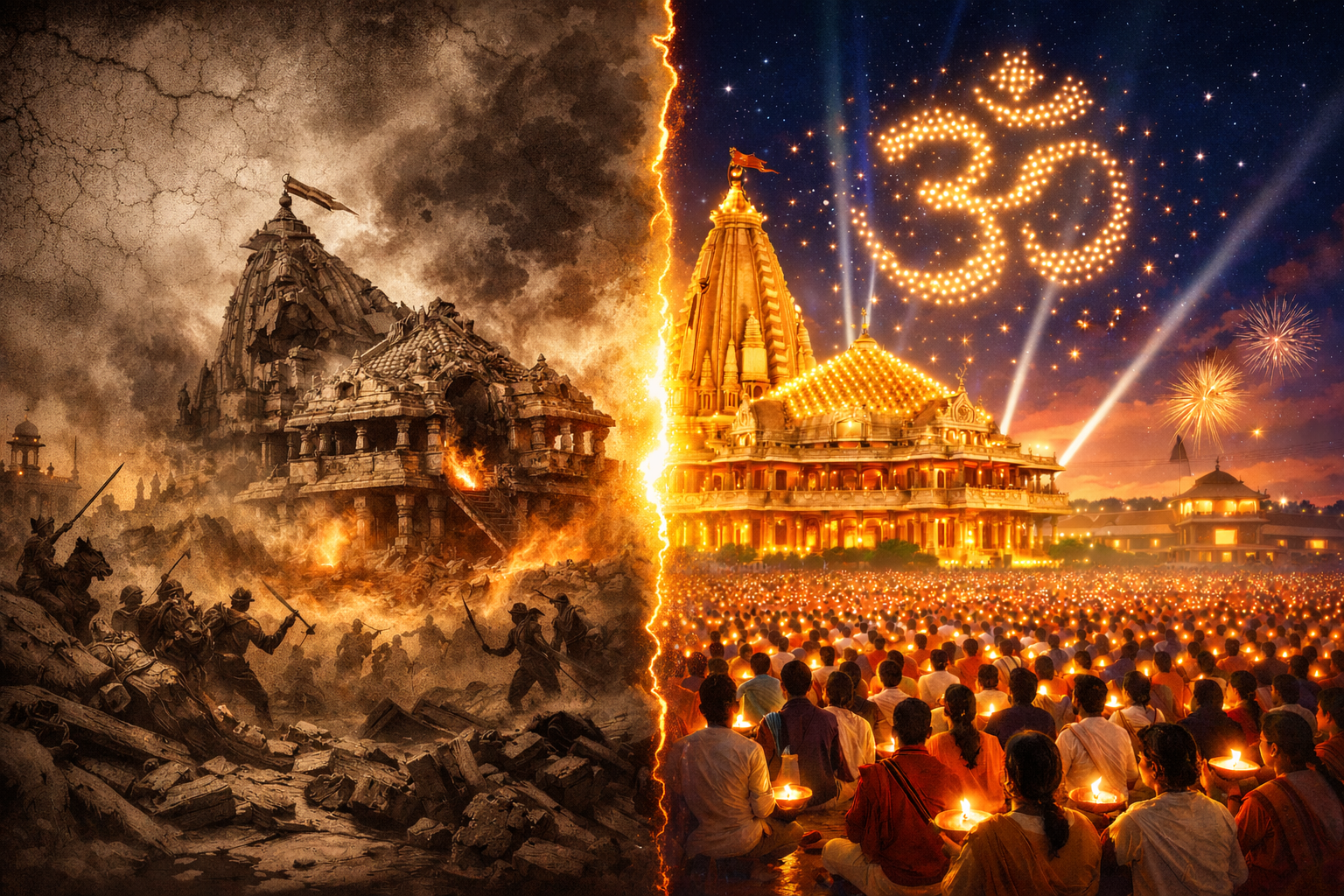
On the shores of the Arabian Sea in Gujarat, a thousand-year-old story has reached its most defining modern chapter. In January 2026, the temple town of Prabhas Patan became the center of a national movement: the Somnath Swabhiman Parv, or the “Festival of Self-Respect.” This four-day observance was not merely a local religious gathering but a profound strategic effort to reshape India’s historical narrative from one of victimization to one of triumph and civilizational continuity.
The timing of this event was no accident. The year 2026 serves as a rare historical bridge, marking exactly one millennium since the first catastrophic invasion of the temple and 75 years since its modern resurrection. For millions of devotees and students of history, this festival is a testament to an “unbroken spirit” that survived even when the physical temple lay in ruins.
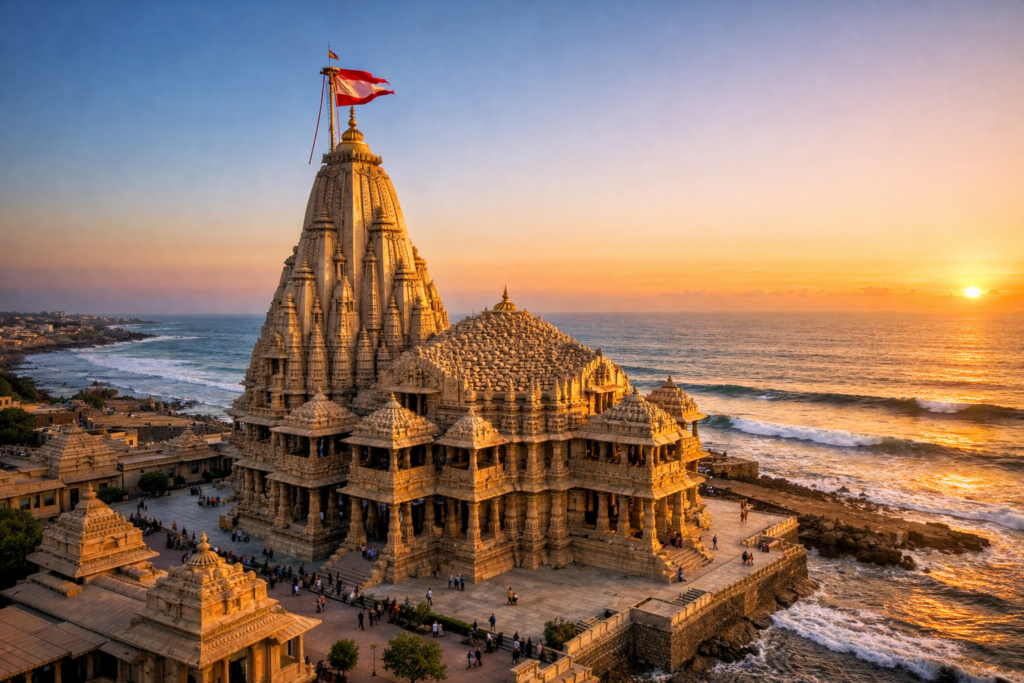
The Convergence of Two Timelines: 1026 and 1951
The primary reason the Somnath Swabhiman Parv is being celebrated now is to honor the convergence of two pivotal milestones in the Indian psyche.
First, the event commemorates 1,000 years since the invasion of 1026 AD. In the first week of January a millennium ago, Mahmud of Ghazni reached the shores of Somnath, leading a siege that ended in mass martyrdom and the destruction of the sacred Jyotirlinga. While history books often focus on the loss of life and the looting of 20 million dinars, the 2026 Parv pivots the focus toward the resilience of those who immediately began the work of renewal.
Second, the festival marks the 75th anniversary of the temple’s modern reopening in 1951. Following India’s Independence, Sardar Vallabhbhai Patel visited the ruins on November 12, 1947, and made a historic vow to rebuild the shrine, viewing its restoration as vital to the nation’s cultural confidence The successful consecration in 1951 by President Rajendra Prasad signaled that a free India was ready to reclaim its heritage.
| Historical Milestone | Date of Reference | National and Spiritual Significance |
| First Recorded Major Attack | January 1026 AD | Marking 1,000 years of resilience against ideological erasure. |
| Sardar Patel’s Resolve | November 12, 1947 | The pivotal vow to rebuild the temple after Independence. |
| Modern Consecration | May 11, 1951 | The 75th anniversary of the reopening by President Rajendra Prasad. |
| Golden Jubilee of Restoration | 2001 | A precursor event highlighting the roles of Patel and K.M. Munshi. |
| Swabhiman Parv 2026 | Jan 8–11, 2026 | A four-day celebration of civilizational courage and future resolve. |
The Philosophy of “Swabhiman”: From Ruin to Renewal
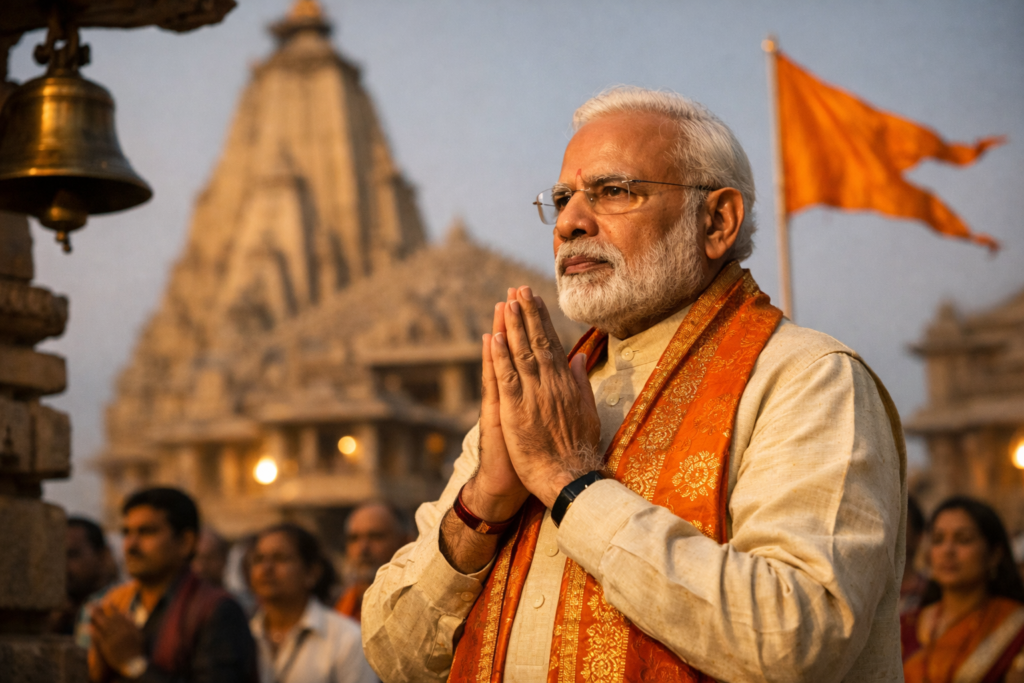
The core “why” behind this event lies in the concept of Swabhiman—Self-Respect. Under the leadership of Prime Minister Narendra Modi, who serves as the Chairperson of the Shri Somnath Trust, the 2026 program was structured to ensure that historical trauma was not forgotten but was instead processed through a lens of moral victory.
The philosophical foundation of the Parv is rooted in the belief that the Somnath Temple is more than a structure of stone; it is a “living archive” of the nation’s soul. As noted by the Prime Minister during the celebrations, while the invaders who sought to destroy the temple are now mere “footnotes in history,” the temple stands tall, its flag flying high as a symbol of the “strength and capabilities of India”.
The discourse during the festival emphasized the transition from “Dev se Desh” (From Deity to Country), suggesting that the restoration of sacred spaces is a precursor to the restoration of the nation’s global standing. By celebrating its survival, India is affirming that its cultural and spiritual essence remains unbroken despite centuries of targeted destruction.
“Akhand Somnath, Akhand Bharat”: A National Mirror
A striking element of the 2026 observance was the slogan “Akhand Somnath, Akhand Bharat,” which appeared on banners throughout the city of Veraval. This phrase treats the temple as a synecdoche—a part that represents the whole—for the nation itself.
The logic is profound: the repeated attempts to destroy Somnath over seven centuries were not merely for economic plunder, as some colonial-era historians claimed, but were ideological attempts to dismantle the Indian identity. Therefore, the temple’s survival is seen as proof of the identity’s permanence. This message of unity in diversity was further reinforced by the participation of pilgrims from across the country, including “bhajan mandalis” from Mumbai and devotees from Tamil Nadu, whose ancestors migrated from Gujarat centuries ago specifically due to these invasions.
Reclaiming the Narrative: 1000 Years of Unbroken Faith
Historically, the Siege of 1026 was a three-day battle of extreme devotion. On January 6, the siege began; on January 7, the defenders launched a ferocious counter-attack to drive the invaders out; and on January 8, a final “dreadful melee” at the temple gates saw over 50,000 devotees lay down their lives to protect the shrine.
The 2026 Swabhiman Parv refuses to let this be a story of defeat. By integrating ancient rituals—like the 72-hour Akhand Omkar Chanting—with 21st-century technology, such as a 3,000-drone show depicting the temple’s “trial by fire,” the event transforms a history of struggle into a source of modern strength.
Conclusion: The Eternal Flag
The Somnath Swabhiman Parv 2026 serves as a powerful reminder that while forces of destruction are finite, the spirit of a civilization rooted in deep spiritual conviction is infinite. Standing as the first among the twelve Jyotirlingas, Somnath continues to be the “cornerstone of Bharat’s spiritual heritage”.
As the waves of the Arabian Sea continue to roar with the same intensity they did a thousand years ago, the flag atop the Somnath Temple tells a clear story: India has not only survived its trials but has emerged with its self-respect and civilizational resolve fully intact. For the reader, the Parv is an invitation to look at history not as a burden, but as the foundation of a “Viksit Bharat” (Developed India) guided by ancient wisdom.
READ OUR OTHER ARTICLES
- ओडिशा का दीपक पहुंचा बेंगलुरु, Hardik Pandya की उदारता ने मचाया तहलका
 भारत में क्रिकेट केवल एक खेल नहीं, बल्कि एक गहरी सामाजिक भावना है जहाँ खिलाड़ी भगवान की तरह पूजे जाते हैं और प्रशंसक उनके प्रति अटूट स्नेह प्रदर्शित करते हैं. … Read more
 - Iran’s Darkest Day: Screams for Revenge and a Missing Leader
 On Sunday, July 5, 2026, Iran entered the tense and highly charged Khamenei funeral Day 2. This marked a critical moment in a six-day state funeral meant to show the … Read more
 - अजीत कुमार: प्रेरणादायक सफर और वैश्विक उपलब्धियों का महाकाव्य
 भारतीय सिनेमा के परिदृश्य में कुछ ऐसे व्यक्तित्व होते हैं जो पर्दे की चकाचौंध से परे जाकर समाज और संस्कृति पर अपनी अमिट छाप छोड़ते हैं। दक्षिण भारतीय सिनेमा के … Read more
 - Coachella 2026: Highlights and History-Making Moments You Missed!
 The 25th anniversary of the Coachella Valley Music and Arts Festival just wrapped up, and it was absolutely legendary! From April 10–12 and April 17–19, 2026, the Empire Polo Club … Read more
 - वैभव सूर्यवंशी का टीम इंडिया में चयन हो चुका है?
 भारतीय क्रिकेट के इतिहास में कुछ क्षण ऐसे आते हैं जो केवल खेल के आंकड़ों को नहीं बदलते, बल्कि पूरे देश की खेल भावना और भविष्य की दिशा को पुनर्परिभाषित … Read more