

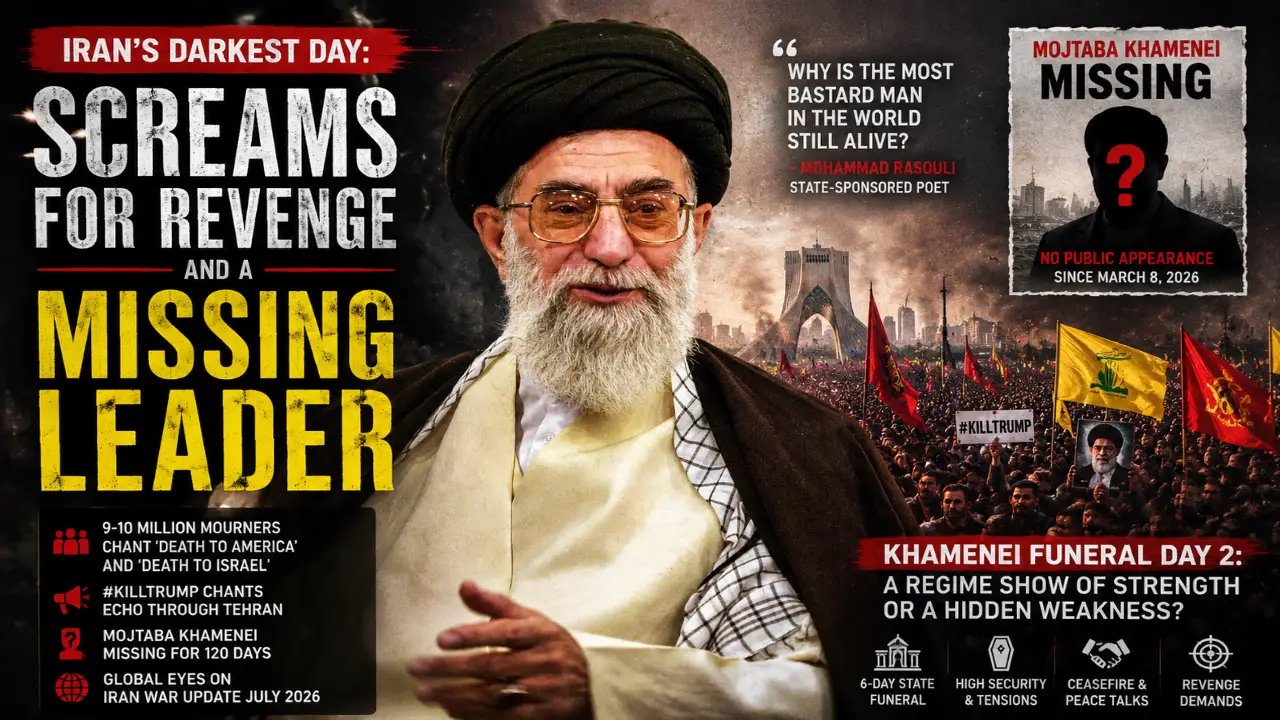
On Sunday, July 5, 2026, Iran entered the tense and highly charged Khamenei funeral Day 2. This marked a critical moment in a six-day state funeral meant to show the world that the country’s leadership remains strong and unbroken. The events unfolded during a fragile, week-long ceasefire that paused the war between Iran and the U.S.-led coalition. As people watch for a US Iran war update July 2026, the Iranian regime is using this public mourning to send a powerful message of defiance. The late Supreme Leader, who ruled for 36 years, was killed in a joint U.S.-Israeli airstrike on February 28, 2026. Now, the regime is turning his funeral into a massive political stage.
Chants at the Grand Mosalla
The main events for Sunday took place at the giant Tehran Grand Mosalla funeral 2026. Huge crowds of an estimated 9 to 10 million mourners flooded the ceremonial grounds. According to the Ayatollah Ali Khamenei funeral CBS News coverage, the atmosphere was incredibly intense. These crowds did not just gather to mourn; they were loudly demanding revenge against their enemies.
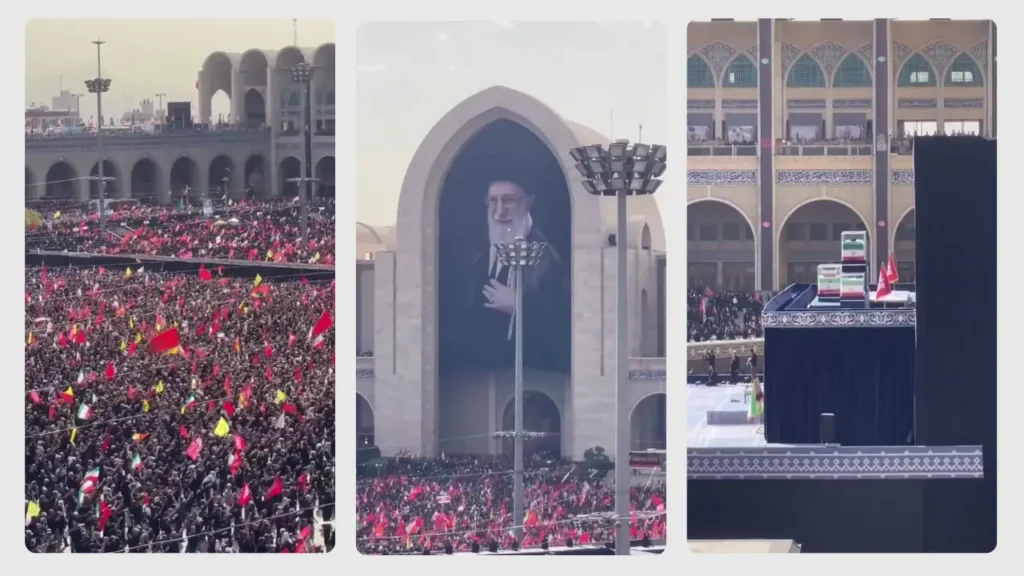
Mourners beat their chests in unison, which is a traditional sign of deep Shia grief. The crowd was filled with bright red flags, which symbolize the promise of revenge, alongside yellow Hezbollah flags. This mix of flags showed that Iran’s proxy forces in the region are still fully active and loyal. The air was filled with loud Iran funeral revenge chants. The crowd chanted “Death to America” and “Death to Israel,” while many held signs with the hashtag “#KillTrump”.
State-sponsored speakers kept the crowd’s anger burning. The well-known poet Mohammad Rasouli took the stage and pointed directly at the American President:
“Why is the most bastard man in the world still alive?”
This state-encouraged anger has two goals. Domestically, it lets everyday Iranians release their anger after months of hard war and economic pain. Externally, it tells Washington and its allies that Iran will not back down, even after losing its long-time leader.
The Empty Throne
While the crowds filled the streets, a massive geopolitical mystery hung over the funeral. Iran’s top political and military leaders stood together near the glass-enclosed casket. However, the newly named Supreme Leader Khamenei’s son, Mojtaba Khamenei was nowhere to be seen.
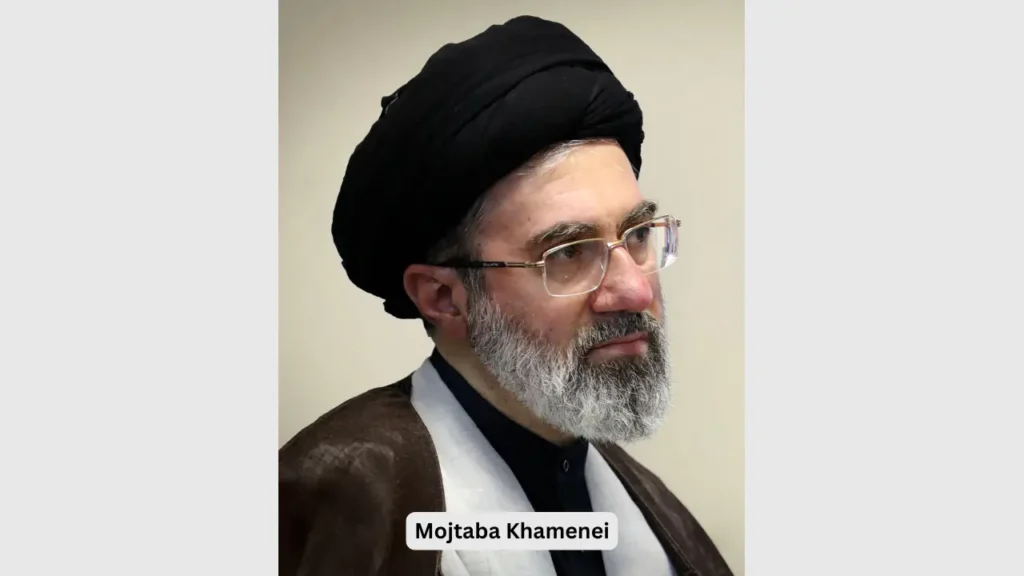
Mojtaba, 56, was selected as the new leader by the Assembly of Experts on March 8, 2026. This happened under intense pressure from the Islamic Revolutionary Guard Corps (IRGC), who wanted a fast transition during the wartime crisis. Yet, the Mojtaba Khamenei missing mystery has now lasted about 120 days. The new leader has not made a single public appearance, video, or voice recording since taking power.
This long absence has sparked deep concern in Iran and intense speculation abroad. Officially, Iran’s Health Ministry claimed Mojtaba only suffered “minor, superficial” injuries during the February 28 airstrike that killed his father. But U.S. and foreign intelligence reports suggest a much more serious reality. U.S. Defense Secretary Pete Hegseth stated that Mojtaba was “wounded and likely disfigured”. Other investigative reports claim he had to undergo three complex surgeries on his leg and is waiting for a prosthetic. Severe facial and lip burns have reportedly made it very hard for him to speak. He was even unable to attend the funeral of his own wife, Zahra Hadad-Adel, who died in the same airstrike.
In Iran’s religious government, a hidden leader is a major problem. The Supreme Leader is expected to be a highly visible spiritual and military guide. Ruling through written letters and audio links makes him look weak. His physical absence leaves a power vacuum. This worries local citizens and signals vulnerability to foreign enemies who are watching to see if the regime is quietly fracturing behind the scenes.
Projecting Unity
To combat these worries, the Iranian government put on a major show of unity during Sunday’s public prayers. The massive funeral prayers at the Grand Mosalla were led by Ayatollah Ja’far Sobhani, a highly respected 97-year-old Shia cleric. His presence was highly symbolic. It gave the official blessing of Iran’s traditional religious center, Qom, to a leadership handoff that critics call a family dynasty.
A powerful group of political and military figures stood directly behind the casket, presenting a united front to the world:
- Ayatollah Ja’far Sobhani: The 97-year-old cleric who led the prayers, helping connect the traditional religious establishment with the state.
- Masoud, Mostafa, and Meysam Khamenei: The three other sons of the late Supreme Leader. Their presence showed that the family fully supports their absent brother’s new role.
- President Masoud Pezeshkian: The head of the government, who has praised Mojtaba’s appointment as the start of a “new era of dignity”.
- Mohammad Bagher Ghalibaf: The influential Parliament Speaker and lead nuclear negotiator, who used the funeral to warn the West of retaliation.
- Ahmad Vahidi: The Revolutionary Guards chief, representing the powerful military forces that are keeping the country stable during this transition.
The regime also welcomed foreign visitors, with delegations from over 100 countries attending. Analysts noticed that the regime played specific Quranic verses during the arrivals of certain groups, using religious symbolism to send silent political messages to regional partners like Pakistan, India, and Saudi Arabia.
The Logistics of a Wartime Funeral
Managing a crowd of millions during a war is a security nightmare. Sunday was declared a national holiday, shutting down Tehran’s normal business and clearing the streets so security forces could set up safe perimeters.
The regime is incredibly cautious because past state funerals in Iran have ended in disaster. During the 1989 burial of Ayatollah Ruhollah Khomeini, the crowd surged, causing the casket to drop and resulting in several deaths. More recently, the 2020 funeral for General Qasem Soleimani in Kerman ended in a horrific stampede that killed at least 56 people.
According to a leaked document from the Iranian Red Crescent published by Die Welt, officials prepared for a worst-case scenario. They estimated that extreme heat of 36°C and massive crowd surges could cause between 1,500 and 3,000 deaths during the Tehran events. To prevent this, the city set up thousands of water stations, deployed emergency medical teams, and even dug extra graves at the local cemetery just in case.
Now, organizers are preparing for the highly complex task of moving the late leader’s casket. The body will travel through several major cities in both Iran and Iraq to gather religious support and unite Shia communities across the region.
Here is the official Ali Khamenei burial schedule:
| Date (2026) | Location / Venue | Key Event & Geopolitical Significance |
|---|---|---|
| July 3–5 | Tehran, Grand Mosalla | Lying-in-state; public mourning and high-security state prayers. |
| July 6 | Tehran Streets | Main street procession; capital-wide farewell march. |
| July 7 | Qom | Procession through the Shia clerical heartland to secure religious backing. |
| July 8 | Najaf & Karbala (Iraq) | Transnational pilgrimage to Iraq’s holiest Shia shrines, highlighting regional ties. |
| July 9 | Mashhad, Imam Reza Shrine | Final burial ceremony in Khamenei’s birthplace at the country’s most sacred site. |
Strategic Signaling and the Ceasefire
The massive crowd and the loud calls for revenge on Khamenei funeral Day 2 come at a highly sensitive diplomatic moment. The temporary ceasefire in the Strait of Hormuz agreed upon to allow the funeral to happen alongside America’s 250th anniversary is incredibly fragile.
U.S. President Donald Trump dismissed the mourning as “fake tears,” boasting at Mount Rushmore that the U.S. had “knocked the hell out of Iran”. He even told Axios that the U.S. could have eliminated Iran’s assembled leaders in “one shot” but chose not to, in order to keep peace talks alive.
However, the huge turnout at the Grand Mosalla acts as a warning to Washington. It shows that even with their leader gone and his successor still hidden, millions of Iranians remain deeply loyal to the regime. As negotiators continue peace talks in Doha, Iran is trying to prove it is bargaining from a position of strength, not total defeat.
READ OUR OTHER ARTICLES
- Iran’s Darkest Day: Screams for Revenge and a Missing Leader
 On Sunday, July 5, 2026, Iran entered the tense and highly charged Khamenei funeral Day 2. This marked a critical moment in a six-day state funeral meant to show the … Read more
 - अजीत कुमार: प्रेरणादायक सफर और वैश्विक उपलब्धियों का महाकाव्य
 भारतीय सिनेमा के परिदृश्य में कुछ ऐसे व्यक्तित्व होते हैं जो पर्दे की चकाचौंध से परे जाकर समाज और संस्कृति पर अपनी अमिट छाप छोड़ते हैं। दक्षिण भारतीय सिनेमा के … Read more
 - Coachella 2026: Highlights and History-Making Moments You Missed!
 The 25th anniversary of the Coachella Valley Music and Arts Festival just wrapped up, and it was absolutely legendary! From April 10–12 and April 17–19, 2026, the Empire Polo Club … Read more
 - वैभव सूर्यवंशी का टीम इंडिया में चयन हो चुका है?
 भारतीय क्रिकेट के इतिहास में कुछ क्षण ऐसे आते हैं जो केवल खेल के आंकड़ों को नहीं बदलते, बल्कि पूरे देश की खेल भावना और भविष्य की दिशा को पुनर्परिभाषित … Read more
 - US-Iran War Alert: Massive Stock Market and Sensex Crash
 If you opened your trading app this Monday and felt a knot in your stomach, you aren’t alone. The Indian stock market is currently going through one of its toughest … Read more