

The global airline industry is facing a massive problem, and everyday travelers are paying the price right now. If you are a family planning a much-needed summer vacation, the India flight ticket price increase 2026 is already here, and it is changing travel budgets overnight. Because of the growing conflict in the Middle East, the global oil supply is a mess, sending airplane fuel prices through the roof. To survive these sudden costs, India’s top airlines are taking emergency action. They are adding mandatory “fuel surcharges” to tickets. This simply means the high cost of global unrest is being passed straight to you, the passenger. This guide breaks down exactly why these fees are happening, how high local taxes in India make the problem worse, and how you can still save money on your upcoming summer travel.
The Root Cause
To understand why flights are suddenly so expensive, we have to look closely at the Middle East. Jet fuel (officially called Aviation Turbine Fuel, or ATF) makes up about 35 to 40 percent of an airline’s total daily costs, so airlines are highly sensitive to fuel prices. The growing US-Israel-Iran conflict has severely disrupted the global oil supply by blocking important shipping routes. As a result, the aviation turbine fuel price increase has been huge. According to the International Air Transport Association’s Jet Fuel Monitor, fuel prices in the affected region have shot up by more than 85 percent recently.
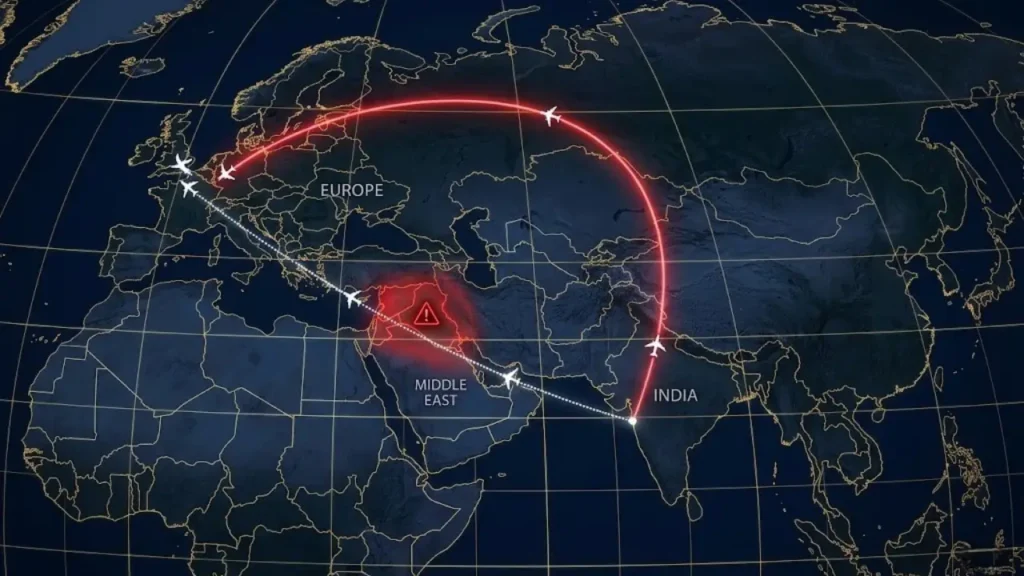
The West Asia conflict impact on flights is about more than just the raw cost of fuel. To keep passengers safe, airlines have to completely change their flight paths to avoid war zones and restricted airspace in the Middle East. These longer routes are incredibly expensive to fly. Flying around these dangerous areas adds hundreds of extra miles to normal trips between Asia, Europe, and North America, burning much more fuel. Experts say that a detour of just a few hours can increase fuel use by 15 to 20 percent. This adds tens of thousands of dollars to the cost of a single long flight.
Longer flights also cause major problems for the flight crew. When flights take hours longer than planned, pilots and flight attendants often hit their strict legal working hour limits. This forces airlines to find backup crews, pay for extra hotel stays, and deal with messy daily schedules. When airlines are paying 85 percent more for fuel and burning 20 percent more of it just to fly safely, ticket prices have to go up.
The Financial Ripple Effect
When asking why are flights so expensive India right now, we also have to look at local taxes. The Indian aviation market has very high taxes that make global oil problems even worse for airlines here. While airlines in North America and Europe pay very low fuel taxes, Indian airlines have to pay an 11 percent central tax, plus high state taxes. This tax burden is especially heavy in major cities. For example, the local tax on jet fuel in Delhi is around 19.40 percent, and Mumbai has similarly high rates. Because jet fuel is not covered by India’s standard Goods and Services Tax (GST), airlines cannot get tax credits. This creates a “tax on tax” situation, resulting in a huge pile of costs they cannot recover.
Indian airlines simply do not make enough profit to absorb these extra costs without help. Even though more people are flying every year, airlines have huge fixed costs and a lot of debt to pay off. Recent government data shows that the Indian airline industry lost over 5,289 crore rupees last year. Even the most successful airlines, like IndiGo, make such small profits per ticket that they cannot survive an 85 percent jump in fuel costs without raising prices. Because of this, airlines have no choice but to add fuel surcharges so they do not have to cancel flights or go out of business entirely.
What Passengers Will Pay
Instead of permanently raising basic ticket prices, airlines use fixed fuel surcharges to cover these sudden costs. India’s biggest airline added the IndiGo fuel surcharge March 2026 for all new bookings starting March 14. IndiGo explained that making up for the entire fuel price jump would require a massive ticket price hike, so they chose a smaller, fixed fee based on the destination, ranging from 425 to 2,300 rupees.
If you are flying within India or to nearby countries, you will pay an extra 425 rupees. Flights to the Middle East have a 900-rupee fee, and flights to Southeast Asia and Africa have an 1,800-rupee fee. The highest charge is for flights to Europe, which now cost an extra 2,300 rupees per ticket.
The Air India ticket hike ATF followed a phased plan starting March 12, 2026, for both Air India and Air India Express. Phase one added a flat 399-rupee charge for domestic flights and nearby countries. Short international flights also went up, with a 10-dollar fee for the Middle East, a 60-dollar fee for Southeast Asia, and a 90-dollar fee for Africa. Phase two, starting March 18, hit long flights the hardest. The fee for Europe went up to 125 dollars, while flights to North America and Australia saw a massive 200-dollar surcharge.
Following the bigger airlines, the Akasa Air fuel charge started on March 15, 2026. Because they fly to many different regions, they added a fee ranging from 199 to 1,300 rupees, depending on where the flight goes and how long it takes.

To show exactly how much more you will pay, the table below compares the new fees for the biggest Indian airlines.
| Travel Region / Route Category | IndiGo Surcharge (Effective March 14, 2026) | Air India Group Surcharge (Effective March 12 & 18, 2026) |
| Domestic India & SAARC | ₹425 | ₹399 |
| West Asia / Middle East | ₹900 | $10 (approx. ₹830) |
| Southeast Asia | ₹1,800 | $60 (approx. ₹4,980)* |
| Europe | ₹2,300 | $125 (approx. ₹10,375)* |
| North America / Australia | N/A (Does not operate direct) | $200 (approx. ₹16,600)* |
(Note: Air India’s international fees are the total extra charge added to your base ticket price.)
The Global Context
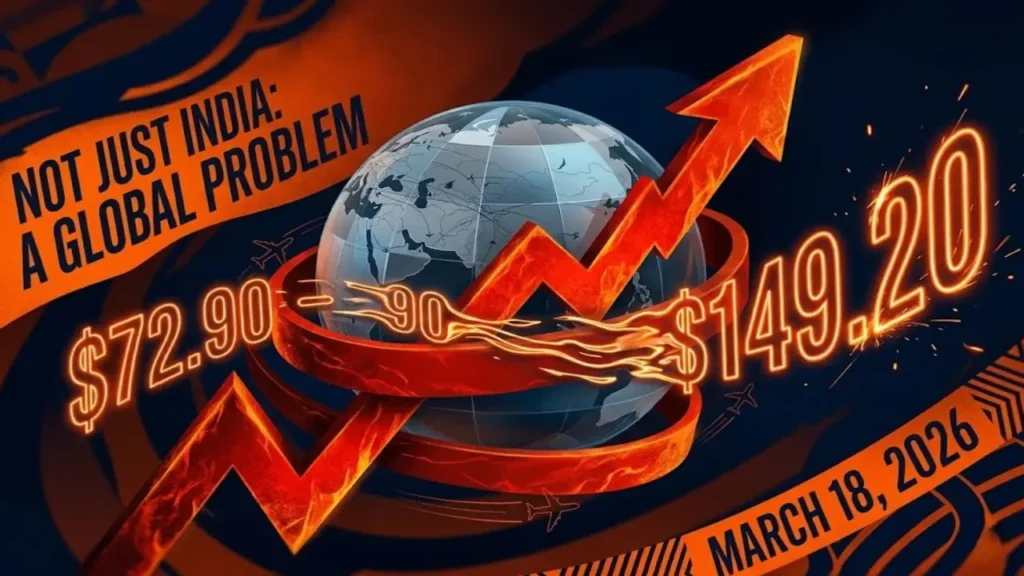
This is a worldwide problem, not just an Indian one. Major international airlines are also struggling to keep up with the costs. For example, Cathay Pacific (based in Hong Kong) had to double its passenger fuel fees on long flights starting March 18, 2026. Passengers flying from Hong Kong to North America, Europe, the Middle East, or Africa saw their fuel fees jump from 72.90 dollars to 149.20 dollars per ticket.
In other parts of the world, Air New Zealand had to cancel about 1,100 domestic flights, affecting over 44,000 passengers, just to save fuel, while also raising prices on long flights. Many big airlines use a strategy called “fuel hedging,” which means they sign contracts to buy fuel months in advance to lock in a cheaper price. However, this crisis is so bad that even airlines with these contracts are finding that those deals are not enough to protect them from such a massive, sudden price spike.
Practical Strategies
Since the global oil market is still very unstable, these new fees are probably just the beginning. If the conflict continues, ticket prices will likely keep going up. If you are planning a summer 2026 vacation, you need to be extremely smart about your budget.

Travel experts agree: if you plan to fly in June or July, you must book your tickets right now. Prices will almost certainly keep rising as summer gets closer and airlines feel the full weight of these new fuel costs. Waiting even a few weeks could cost you hundreds of dollars in higher base fares, entirely on top of the new surcharges.
If your travel dates are flexible, use that to your advantage. Flying in the middle of the week like Tuesday, Wednesday, or Thursday usually means cheaper base tickets, which helps make up for the new fuel fees. Also, check out smaller, regional airports instead of only looking at big hubs like Delhi or Mumbai. Smaller airports sometimes have cheaper flights, and because fuel taxes vary by state, you might find a noticeably better deal just by flying out of a different city.
Right now, when cash prices are very high, using your airline miles and credit card points is a great idea. Using points can help you skip the high base fares entirely. However, you still need to pay attention, because many airlines still make you pay the new fuel surcharges even when you book a free ticket with miles. Always compare the total cash you have to pay before booking. Finally, try to pack light to avoid paying extra for heavy bags, and always compare prices across multiple airlines before making your final choice.
The Future of Fares
These sudden fuel fees prove that cheap, easy air travel is very sensitive to world events. Until the Indian government changes how it taxes airplane fuel like adding it to the standard GST system to lower the heavy tax burden airlines and passengers will continue to suffer every time global oil prices jump. For now, travelers need to adjust to this new reality of suddenly changing prices. To protect your wallet, the best thing you can do is book early, stay flexible, and carefully compare all your options before you travel.
READ OUR OTHER ARTICLES
- ओडिशा का दीपक पहुंचा बेंगलुरु, Hardik Pandya की उदारता ने मचाया तहलका
 भारत में क्रिकेट केवल एक खेल नहीं, बल्कि एक गहरी सामाजिक भावना है जहाँ खिलाड़ी भगवान की तरह पूजे जाते हैं और प्रशंसक उनके प्रति अटूट स्नेह प्रदर्शित करते हैं. … Read more
 - Iran’s Darkest Day: Screams for Revenge and a Missing Leader
 On Sunday, July 5, 2026, Iran entered the tense and highly charged Khamenei funeral Day 2. This marked a critical moment in a six-day state funeral meant to show the … Read more
 - अजीत कुमार: प्रेरणादायक सफर और वैश्विक उपलब्धियों का महाकाव्य
 भारतीय सिनेमा के परिदृश्य में कुछ ऐसे व्यक्तित्व होते हैं जो पर्दे की चकाचौंध से परे जाकर समाज और संस्कृति पर अपनी अमिट छाप छोड़ते हैं। दक्षिण भारतीय सिनेमा के … Read more
 - Coachella 2026: Highlights and History-Making Moments You Missed!
 The 25th anniversary of the Coachella Valley Music and Arts Festival just wrapped up, and it was absolutely legendary! From April 10–12 and April 17–19, 2026, the Empire Polo Club … Read more
 - वैभव सूर्यवंशी का टीम इंडिया में चयन हो चुका है?
 भारतीय क्रिकेट के इतिहास में कुछ क्षण ऐसे आते हैं जो केवल खेल के आंकड़ों को नहीं बदलते, बल्कि पूरे देश की खेल भावना और भविष्य की दिशा को पुनर्परिभाषित … Read more