

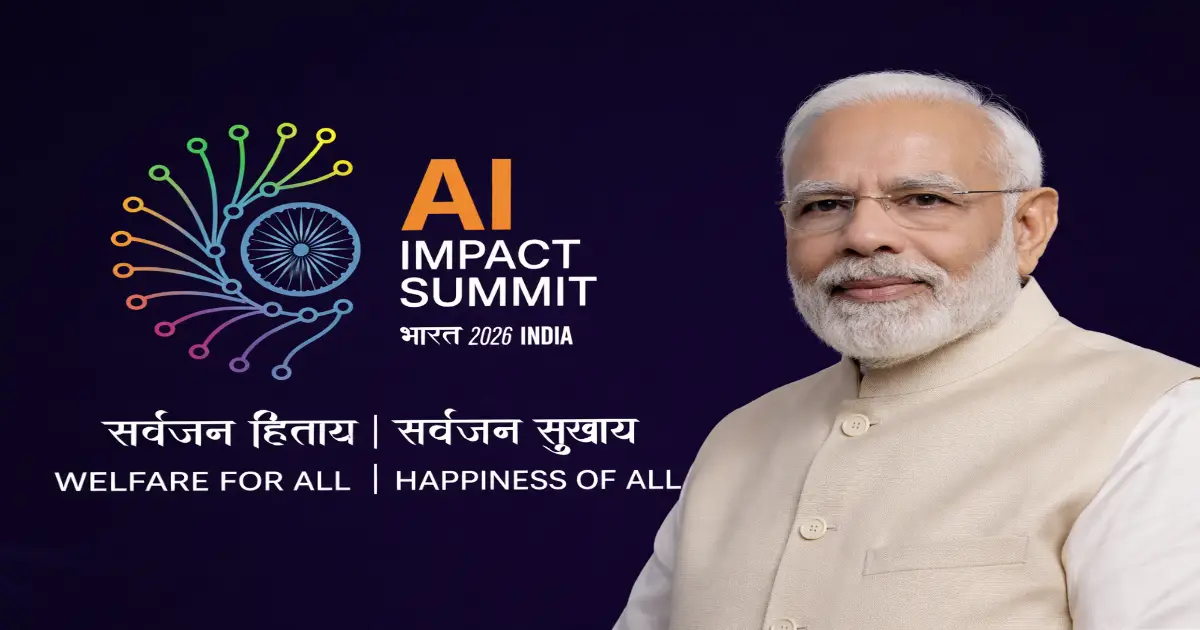
The traffic in New Delhi is famously gridlocked, but inside the conch-shell-inspired walls of Bharat Mandapam, the road to the future is being mapped with startling velocity. At the India AI Impact Summit 2026 (Feb 16–20), the air is thick with the scent of high-stakes diplomacy and the low-frequency hum of server racks—a visceral reminder that the “Davos of Digital” has officially arrived.
The Gathering
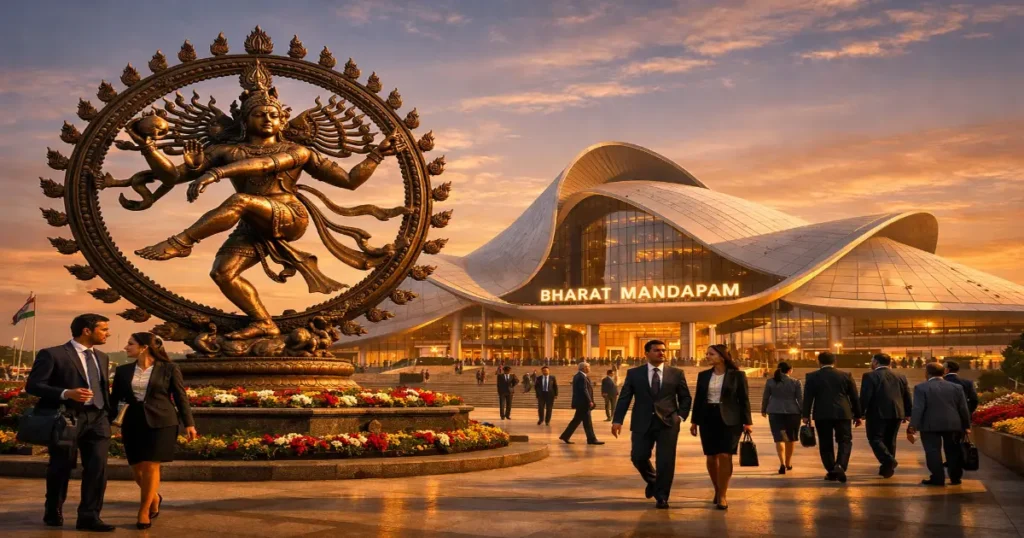
The visual is unmistakable: the 123-acre Bharat Mandapam complex, the hallowed ground of the G20, is now filled with the “Who’s Who” of the silicon order. The arrival of the AI elite—Jensen Huang of Nvidia, Sundar Pichai of Google, and Sam Altman of OpenAI—marks a definitive shift in the global gravitational pole. As they walk past the 29-foot bronze Nataraja statue, the symbolism is clear: India is no longer a mere participant in the digital age, but its choreographer.
This gathering represents a historic pivot. Previous AI safety summits in Bletchley Park and Seoul focused heavily on existential risk and catastrophic danger . But in New Delhi, the focus has moved to the Global South, where the priority is deployment, not just doomsday scenarios. For the leaders gathered here, the question isn’t whether AI will kill us, but whether it will reach the billions who need it fast enough to change their lives.
The Core Conflict
The primary theme of the summit is bridging the “AI Divide”—the growing gap between the “AI Haves” (US/China) and the “AI Have-Nots”. High-income nations disproportionately benefit from AI advancements, while the Global South risks being relegated to passive consumers of models that lack cultural and linguistic context.
The Global South AI Strategy being forged here rejects this “Digital Colonialism”. In the opening session, the call was not for safety frameworks alone, but for “Democratizing Intelligence”. As one official noted during a plenary, “We must manufacture intelligence locally rather than hoarding it in Silicon Valley”.
The Indian Strategy
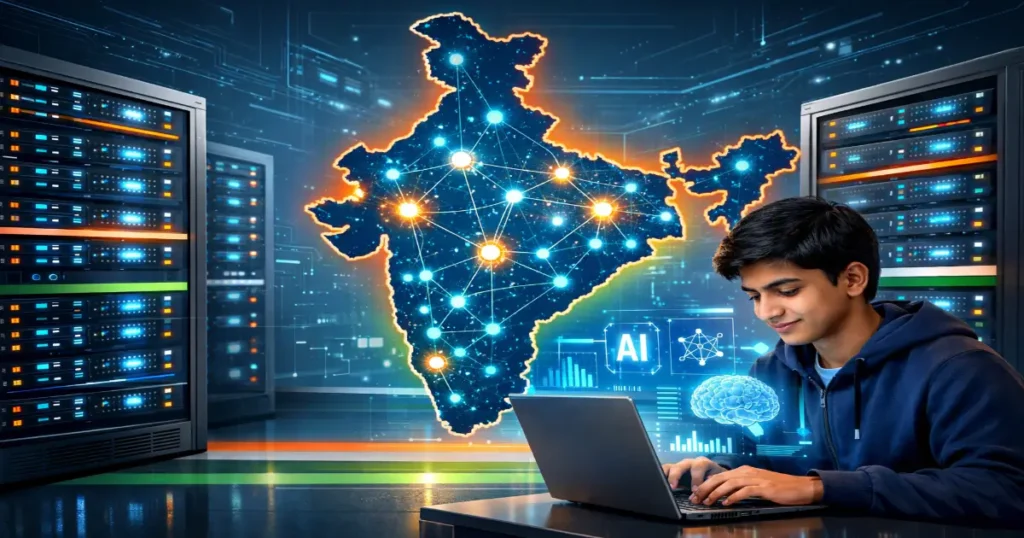
At the heart of this movement is the PM Modi AI Vision, which emphasizes Sovereign AI Infrastructure. India isn’t just offering its massive data wealth; it is demanding compute sovereignty. Through the IndiaAI Mission, the government is aggressively pursuing partnerships with Nvidia to build local AI clouds, aiming to add nearly 25,000 GPUs in the current procurement round alone.
By subsidizing compute costs to under $1 per hour, India is making world-class hardware accessible to a student in a Tier-3 city for less than the price of a coffee. This is supported by “AIKosh,” a national data marketplace that houses over 1,400 datasets and 200 models, enabling the development of “Indianised” language models like Bhashini, which now supports 23 local languages.
The Big Tech Angle
Why have Altman and Huang descended on Delhi? Because India represents the industry’s most critical “AI factory” and its biggest open frontier for revenue. With China largely inaccessible and Western markets saturated, India offers what every AI giant craves: massive scale, a thriving start-up ecosystem, and the world’s largest pool of AI-skilled talent.
For Big Tech, the goal is enterprise adoption within India’s vast IT services sector. They are here to convert free ChatGPT users into paying enterprise customers while ensuring their architectures become the foundational standard for India’s digital public infrastructure.
Conclusion
The West may be worried about AI killing humans; India is worried about AI not reaching them. The summit concludes with the Delhi Declaration, a document that codifies a fundamental shift from safety to impact. By prioritizing the “Three Sutras”—People, Planet, and Progress—the declaration ensures that AI serves as a tool for inclusive growth rather than a concentrated weapon of economic dominance.
The Jensen Huang Delhi Visit and the presence of his peers signal that the “Mandapam Mandate” is the new global standard. As the world’s elite depart, they leave with the understanding that while the code may be written in Silicon Valley, its true impact will be decided in the heart of India.
READ OUR OTHER ARTICLES
- ओडिशा का दीपक पहुंचा बेंगलुरु, Hardik Pandya की उदारता ने मचाया तहलका
 भारत में क्रिकेट केवल एक खेल नहीं, बल्कि एक गहरी सामाजिक भावना है जहाँ खिलाड़ी भगवान की तरह पूजे जाते हैं और प्रशंसक उनके प्रति अटूट स्नेह प्रदर्शित करते हैं. … Read more
 - Iran’s Darkest Day: Screams for Revenge and a Missing Leader
 On Sunday, July 5, 2026, Iran entered the tense and highly charged Khamenei funeral Day 2. This marked a critical moment in a six-day state funeral meant to show the … Read more
 - अजीत कुमार: प्रेरणादायक सफर और वैश्विक उपलब्धियों का महाकाव्य
 भारतीय सिनेमा के परिदृश्य में कुछ ऐसे व्यक्तित्व होते हैं जो पर्दे की चकाचौंध से परे जाकर समाज और संस्कृति पर अपनी अमिट छाप छोड़ते हैं। दक्षिण भारतीय सिनेमा के … Read more
 - Coachella 2026: Highlights and History-Making Moments You Missed!
 The 25th anniversary of the Coachella Valley Music and Arts Festival just wrapped up, and it was absolutely legendary! From April 10–12 and April 17–19, 2026, the Empire Polo Club … Read more
 - वैभव सूर्यवंशी का टीम इंडिया में चयन हो चुका है?
 भारतीय क्रिकेट के इतिहास में कुछ क्षण ऐसे आते हैं जो केवल खेल के आंकड़ों को नहीं बदलते, बल्कि पूरे देश की खेल भावना और भविष्य की दिशा को पुनर्परिभाषित … Read more