

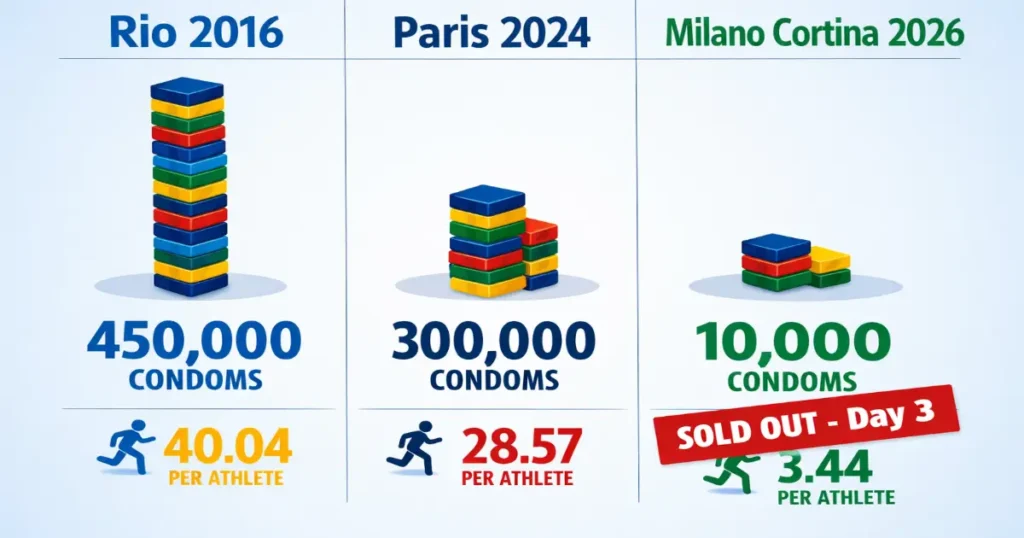
| Olympic Games Event | Total Condoms Distributed | Athlete Population | Condoms Per Athlete (Total Stay) | Supply Status |
| Rio 2016 (Summer) | 450,000 | 11,238 | 40.04 | Surplus |
| Paris 2024 (Summer) | 300,000 | 10,500 | 28.57 | Adequate |
| Milano Cortina 2026 (Winter) | 10,000 | 2,900 | 3.44 | SOLD OUT (Day 3) |
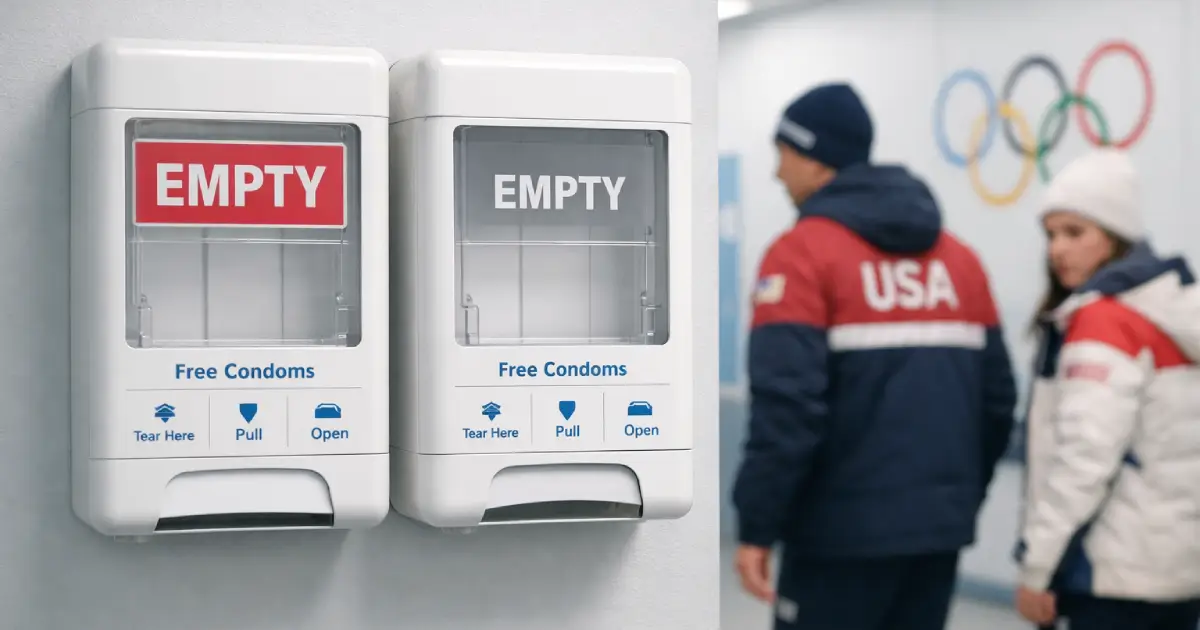
The most impressive display of stamina at the Milano Cortina 2026 Winter Games didn’t happen on the ice—it happened in the bedroom. We’re only 72 hours into the festivities, and the Olympic Village has already managed to vaporize its entire inventory of prophylactics. While the rest of the world is focused on medal counts, the 2,900 elite athletes in Italy have been busy setting a world record in a different kind of discipline. Within three days, the village faced a total Olympic Village Condom Shortage, as the initial stock of 10,000 Condoms was completely depleted, leaving late-comers staring at empty dispensers and wondering if they should have spent less time at the opening ceremony and more time at the health clinic.
The Record
While official results were still being tabulated for the biathlon, the internal metrics of the village were already off the charts. According to a viral La Stampa Report, the supply of free contraceptives vanished with a velocity that would make a downhill skier weep. We aren’t talking about a slow burn over a two-week stay; we are talking about a strategic reserve being obliterated in a single weekend. The speed of the disappearance was so absolute that by the time International Condom Day rolled around on February 13, the bins were as empty as a stadium after a curling blowout.
The anecdotal evidence from the ground suggests a state of “polite panic.” One anonymous athlete told La Stampa, “The supplies ran out in just three days. They promised us more will arrive, but who knows when”. It’s the kind of quote that perfectly encapsulates the Olympic experience: precision training for four years, only to be defeated by a failure in basic logistics.
The Napkin Math of Olympic Intimacy
Let’s look at the numbers, because the math is honestly more impressive than a perfect score in figure skating. With approximately 2,900 athletes participating in the Milano Cortina 2026 Games and a total initial supply of 10,000 Condoms, the math works out to roughly 3.4 units per athlete for the entire sixteen-day event.
If we model the consumption rate for those first 72 hours, the intensity is staggering. If C represents the total condoms (10,000), A represents the number of athletes (2,900), and t represents the time in days (3), the daily consumption rate per athlete (R) is:
When you consider that a significant chunk of these athletes are likely still in “monk mode” ahead of their finals, the “active” population is clearly pulling double—or triple—shifts. It turns out that when you take 2,900 humans in peak physical condition and put them in a high-pressure bubble, they don’t just want to play air hockey.
The Planning Fail
The central question is how the organizers could have been so catastrophically “stingy” with their health supplies. When compared to previous Games, the figure of 10,000 Condoms looks like a rounding error. Paris 2024 provided 300,000 units, and Rio 2016 went full “Project X” with a record 450,000. Even allowing for the smaller athlete pool of the Winter Games, the per-capita reduction in Italy is jarring.
The organizers likely fell for the “Winter Games Fallacy”—the idea that athletes staying in cold, isolated mountain cabins in locations like Cortina d’Ampezzo would naturally be less social than their summer counterparts. Apparently, they forgot that cold weather is the ultimate catalyst for “indoor activities.” After years of training in isolation, the end of the pandemic-era “intimacy bans” has resulted in a massive rebound effect. The athletes aren’t just back; they’re making up for lost time.
The Fontana Defense
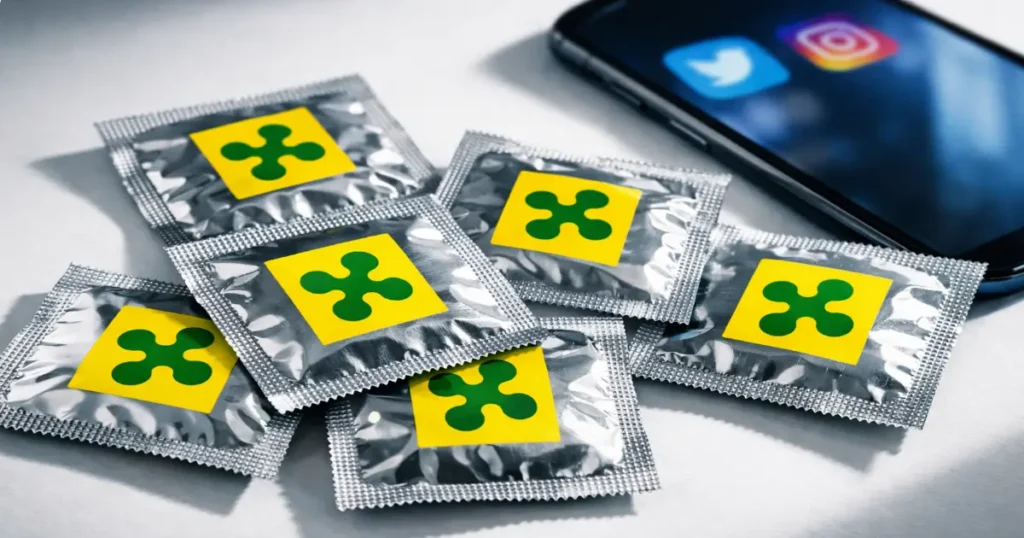
Lombardy Governor Attilio Fontana was forced to play damage control as the internet began to roast his administration. Trying to maintain a dignified front, Fontana took to social media to explain that providing free condoms is “standard health practice since 1988,” a tradition started at the Seoul Olympics. He insisted the topic “shouldn’t cause embarrassment,” though it’s hard not to be a little embarrassed when your “standard practice” runs dry before the first gold medal is even handed out. Fontana even shared a viral video from Spanish figure skater Olivia Smart, who showed off the items—stamped with the yellow Lombardy logo—as if they were rare Pokémon cards.
Souvenirs vs. Actual Usage
The La Stampa Report sparked a heated debate: are these athletes actually that busy, or is there a “Souvenir Effect” at play? It is a well-documented Olympic phenomenon for athletes to hoard branded gear. Former US figure skater Adam Rippon famously confessed to swiping about 3,000 units at the 2018 PyeongChang Games just to give them to friends as novelty keepsakes.
Conclusion
As the organizers scramble for a restock, the Milano Cortina 2026 “Condom Crisis” has become the first true viral legend of the Games. It’s a reminder that beneath the Gore-Tex and the professional intensity, these are young adults in a high-adrenaline environment. The organizers may have failed the “napkin math” of intimacy, but the athletes have proven that their stamina is world-class, both on and off the clock. For the future host cities, the lesson is clear: when the temperature drops, the demand goes up. The “Gold Medal” for Village endurance has already been claimed, and it only took 72 hours.
READ OUR OTHER ARTICLES
- ओडिशा का दीपक पहुंचा बेंगलुरु, Hardik Pandya की उदारता ने मचाया तहलका
 भारत में क्रिकेट केवल एक खेल नहीं, बल्कि एक गहरी सामाजिक भावना है जहाँ खिलाड़ी भगवान की तरह पूजे जाते हैं और प्रशंसक उनके प्रति अटूट स्नेह प्रदर्शित करते हैं. … Read more
 - Iran’s Darkest Day: Screams for Revenge and a Missing Leader
 On Sunday, July 5, 2026, Iran entered the tense and highly charged Khamenei funeral Day 2. This marked a critical moment in a six-day state funeral meant to show the … Read more
 - अजीत कुमार: प्रेरणादायक सफर और वैश्विक उपलब्धियों का महाकाव्य
 भारतीय सिनेमा के परिदृश्य में कुछ ऐसे व्यक्तित्व होते हैं जो पर्दे की चकाचौंध से परे जाकर समाज और संस्कृति पर अपनी अमिट छाप छोड़ते हैं। दक्षिण भारतीय सिनेमा के … Read more
 - Coachella 2026: Highlights and History-Making Moments You Missed!
 The 25th anniversary of the Coachella Valley Music and Arts Festival just wrapped up, and it was absolutely legendary! From April 10–12 and April 17–19, 2026, the Empire Polo Club … Read more
 - वैभव सूर्यवंशी का टीम इंडिया में चयन हो चुका है?
 भारतीय क्रिकेट के इतिहास में कुछ क्षण ऐसे आते हैं जो केवल खेल के आंकड़ों को नहीं बदलते, बल्कि पूरे देश की खेल भावना और भविष्य की दिशा को पुनर्परिभाषित … Read more