


The Ratna Bhandar Inventory Status 2026
| Chamber | 1978 Recorded Count | 2026 Audit Status | Composition (Approximate) | The Risk |
| Bhitara Bhandar | ~367 Gold Items | Under Final Tally | 4,364 bhari Gold; 14,878 bhari Silver | Discrepancy means potential theft |
| Bahara Bhandar | ~79 Gold Items | Verification Complete | 8,175 bhari Gold; 4,671 bhari Silver | Audit mismatch with usage logs |
| Daily Use Articles | 8 Gold / 23 Silver | Continuous Audit | 299 bhari Gold; 2,693 bhari Silver | Physical degradation/loss |
| Total Benchmark | 454 Gold / 293 Silver | 90-Day Deadline | 128.38 kg Gold; 221.53 kg Silver | Legal/Religious catastrophe |
The high-domed silences of the 12th-century Shree Jagannath Temple, traditionally echoing with the rhythmic chanting of Vedic hymns, are currently vibrating with a different, more clinical sound: the ticking of a judicial clock. For over forty-six years, the contents of the Bhitara Bhandar, the temple’s legendary inner treasury, were shrouded in a veil of myth and administrative opacity. What was once spoken of in hushed tones as a hoard of unimaginable wealth, protected by celestial guardians and mythical serpents, is now being transitioned into the cold, surgical lines of a digital spreadsheet. The Orissa High Court, in a landmark order issued in February 2026, has demanded that the mystery be replaced with a definitive, item-by-item tally, ending decades of speculation that have haunted the Odia psyche.
The 90-Day Ultimatum
The suspense that has gripped Odisha reached its zenith on February 12, 2026, when the Division Bench of the Orissa High Court, led by Chief Justice Chakradhari Sharan Singh, issued a peremptory directive to the State Government. The Court has granted exactly three months—a 90-day deadline—to finalize the Ratna Bhandar Inventory. The mandate is clear: every ring, necklace, and crown recovered from the inner vault must be tallied against the foundational 1978 Gold List.
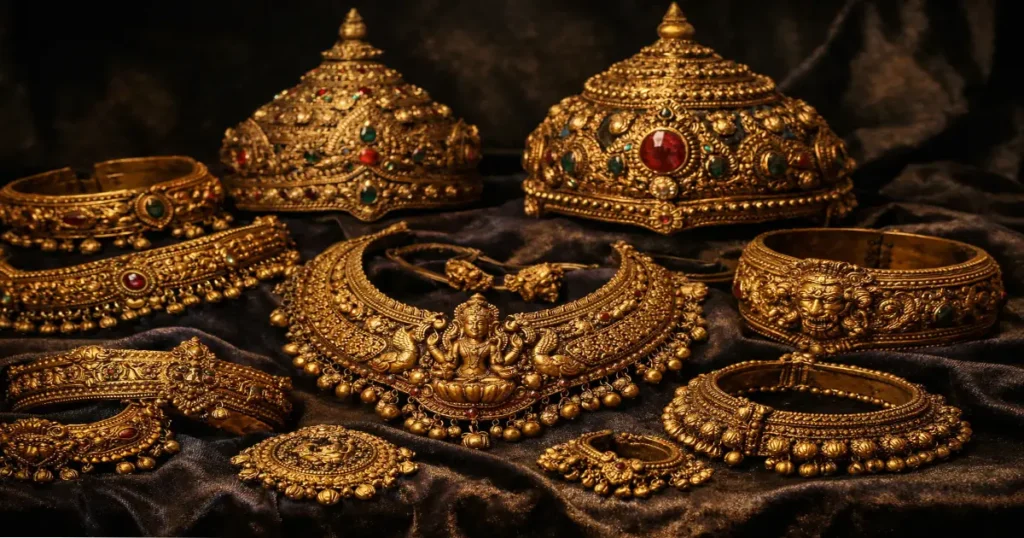
This 1978 benchmark recorded a staggering 128.38 kg of gold and 221.53 kg of silver . The Court’s logic for this sudden urgency is rooted in the need to extinguish the “Missing Keys” controversy once and for all . By demanding a public accounting, the judiciary aims to quell persistent public suspicion regarding potential theft or the substitution of antique jewelry with modern fakes. The bench warned that “no complacency” can be shown, as the state is the legal guardian of the deity, who is considered a perpetual minor in the eyes of the law.
The “Bhitara Bhandar” Mystery
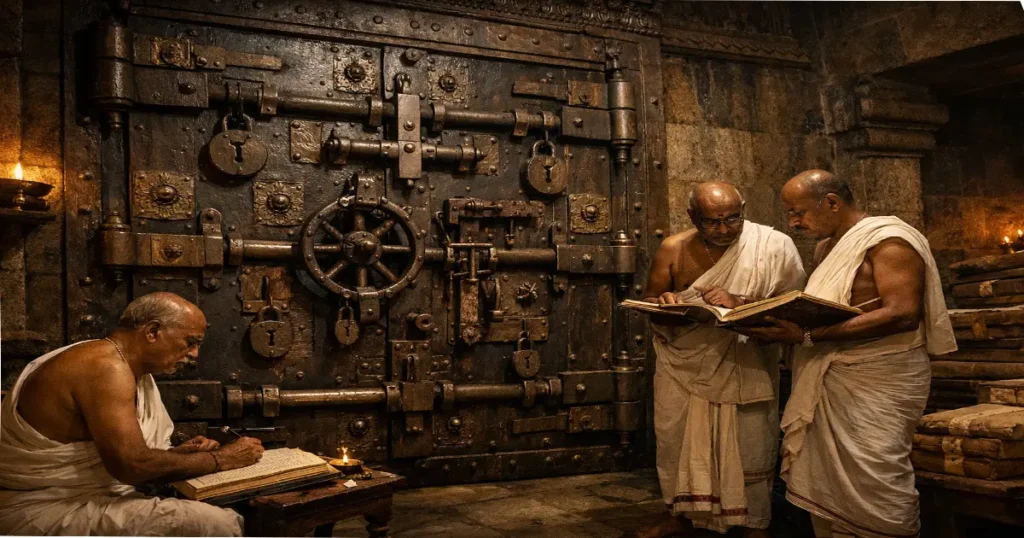
The Bhitara Bhandar, or inner chamber, had not been formally inventoried since 1978, though a brief, non-audit opening occurred in 1985 . It was only in July 2024 that the doors were finally breached by an expert committee, an event marked by both high-tech security and ancient superstition. Fearing the presence of mythical cobras, the administration had “Snake Helpline” volunteers and medical teams on standby; however, the only residents found were startled bats.
The challenge of the current audit lies in the sheer physicality of the treasure. Much of the jewelry is ancient, fragile, and described in the temple’s Record of Rights (RoR) using archaic Odia terms that require linguistic experts to decipher. Furthermore, the Archaeological Survey of India (ASI) has been working simultaneously to repair structural cracks in the chamber’s limestone walls. The treasures were temporarily shifted to a secure strongroom during these repairs and were only returned to the refurbished vault in late 2025. Now, the Justice Biswanath Rath Committee must navigate these cramped, dimly lit quarters to ensure the weight and purity of every item matches the century-old ledgers.
Myth vs. Spreadsheet
For 46 years, the treasure of Lord Jagannath was a spiritual myth—a concept of infinite wealth that required no earthly validation. In the popular imagination, the vault was a bottomless pit of gold donated by medieval kings like Anangabhima Deva and Kapilendra Deva. However, the High Court’s order effectively secularizes this divine hoard. The transition from myth to spreadsheet is a moment of profound tension for the temple’s traditionalists, who view the audit as a potential desecration of the Lord’s “Gupta” (secret) wealth .
Yet, the audit is a political necessity. The “Missing Keys” saga, which began in April 2018 when the Puri Collector could not produce the keys for a structural inspection, became a central campaign plank in the 2024 elections. The Bharatiya Janata Party (BJP) utilized the controversy to accuse the previous Biju Janata Dal (BJD) administration of a “criminal nexus” and gross negligence . Prime Minister Narendra Modi famously alluded to the keys being taken to Tamil Nadu, turning the Bhitara Bhandar into a symbol of Odia pride and political accountability. This judicial intervention ensures that the promises made on the campaign trail are now fulfilled under the shadow of legal contempt.
The Outcome
What happens if the 2026 tally does not match the 1978 list? The legal and religious fallout would be nothing short of catastrophic. If even a single bhari of gold is missing, it would trigger a massive criminal investigation into decades of temple management . Under the Commissions of Inquiry Act, 1952, such a discrepancy would be treated as a “clear breach of trust,” potentially leading to the prosecution of high-ranking officials and servitors.
On a religious level, the loss of the Lord’s property is viewed as a spiritual violation. Devotees believe that the gold of Jagannath is inviolable; any evidence of pilferage would shatter the institutional trust of millions. The Justice Biswanath Rath Committee is thus performing a dual role: they are both auditors of gold and custodians of faith. To ensure absolute transparency, the committee is employing experts from the Reserve Bank of India (RBI) to use modern weighing scales and digital photography to create a permanent, tamper-proof record.
The Countdown to May 2026
By May 2026, the 90-day window will close, and the truth will finally emerge from the darkness of the vault. The state government is now forced to act with an alacrity that was missing for decades. As the final items are weighed and documented, the people of Odisha wait with bated breath to see if the gold of ancient monarchs still remains in the service of the Lord. The countdown has begun. The era of mystery is ending, and the era of accountability is here. By the time the next Rath Yatra rolls around, Odisha will know if its most sacred treasure is truly intact.
READ OUR OTHER ARTICLES
- ओडिशा का दीपक पहुंचा बेंगलुरु, Hardik Pandya की उदारता ने मचाया तहलका
 भारत में क्रिकेट केवल एक खेल नहीं, बल्कि एक गहरी सामाजिक भावना है जहाँ खिलाड़ी भगवान की तरह पूजे जाते हैं और प्रशंसक उनके प्रति अटूट स्नेह प्रदर्शित करते हैं. … Read more
 - Iran’s Darkest Day: Screams for Revenge and a Missing Leader
 On Sunday, July 5, 2026, Iran entered the tense and highly charged Khamenei funeral Day 2. This marked a critical moment in a six-day state funeral meant to show the … Read more
 - अजीत कुमार: प्रेरणादायक सफर और वैश्विक उपलब्धियों का महाकाव्य
 भारतीय सिनेमा के परिदृश्य में कुछ ऐसे व्यक्तित्व होते हैं जो पर्दे की चकाचौंध से परे जाकर समाज और संस्कृति पर अपनी अमिट छाप छोड़ते हैं। दक्षिण भारतीय सिनेमा के … Read more
 - Coachella 2026: Highlights and History-Making Moments You Missed!
 The 25th anniversary of the Coachella Valley Music and Arts Festival just wrapped up, and it was absolutely legendary! From April 10–12 and April 17–19, 2026, the Empire Polo Club … Read more
 - वैभव सूर्यवंशी का टीम इंडिया में चयन हो चुका है?
 भारतीय क्रिकेट के इतिहास में कुछ क्षण ऐसे आते हैं जो केवल खेल के आंकड़ों को नहीं बदलते, बल्कि पूरे देश की खेल भावना और भविष्य की दिशा को पुनर्परिभाषित … Read more