


In 2026, the image of a child sits in sharp contrast to generations past. Instead of skinned knees and neighborhood hide-and-seek, modern childhood is often defined by the soft blue glow of a tablet and the rhythmic tap of a touchscreen. Recent data from the World Health Organization (WHO) reveals a startling trend: nearly 1 in 10 adolescents now show signs of “problematic” social media use, with some studies suggesting up to one-third of teenagers exhibit addictive behaviors toward their devices.
But this isn’t just about “kids being kids” in a new era. We are witnessing a fundamental shift in how the human brain develops under the influence of 24/7 connectivity.
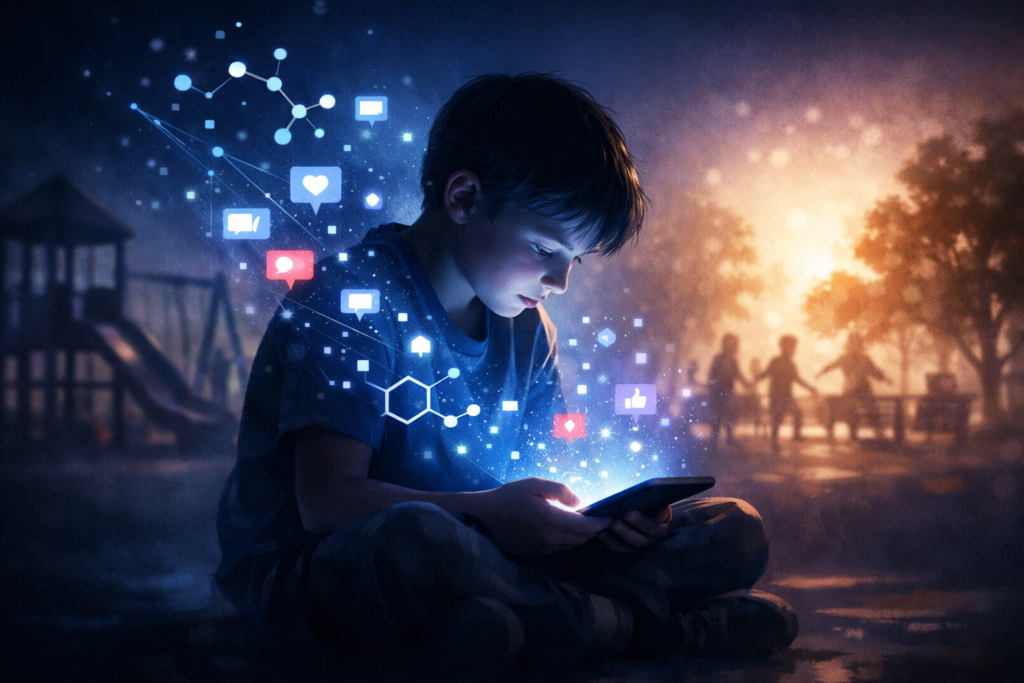
Why the Digital World is So Addictive
To understand the “why,” we have to look past the screen and into the brain. Technology is not neutral; it is engineered to be sticky.
- The Dopamine Loop: Every “like,” “level up,” or viral video triggers a burst of dopamine—the brain’s reward chemical. For a developing brain, which has a highly active reward center but an under-developed prefrontal cortex (the “braking system”), these micro-rewards are nearly impossible to resist.
- The “Slot Machine” Effect: Psychologists compare social media feeds to slot machines. You pull the lever (scroll), and you don’t know what you’ll get. That unpredictability is exactly what creates compulsive behavior.
- The Fear of Missing Out (FOMO): In a world where social lives happen in real-time online, being offline feels like social exclusion.For a teenager, whose primary developmental goal is peer connection, “logging off” feels like a threat to their survival.
The Impact: More Than Just “Wasted Time”
The consequences of digital over-saturation reach far beyond academic procrastination. It is affecting the very architecture of the young brain and the health of the body.
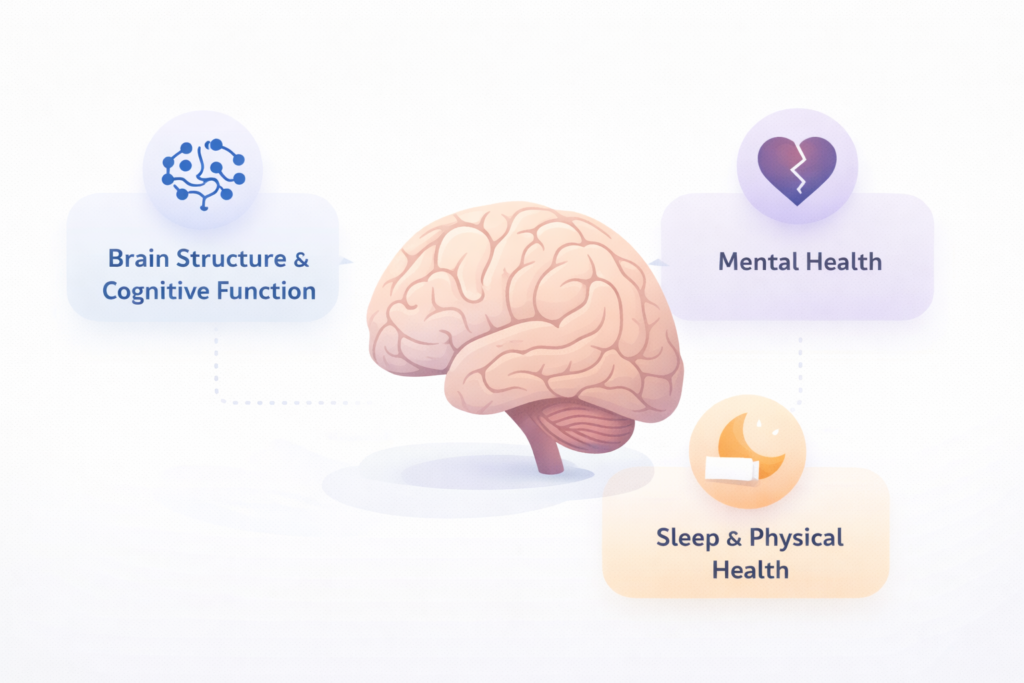
1. Brain Structure and Cognitive Function
Research published in the Journal of the American Medical Association (JAMA) indicates that excessive screen time—particularly over four hours a day—is linked to developmental delays in communication and problem-solving. Neuroimaging has even shown a thinning of the brain’s cortex in children with high screen usage, the area responsible for processing sensory information.
2. The Mental Health Crisis
There is a direct, measurable link between digital addiction and the rise in childhood anxiety and depression. When children spend their formative years comparing their “behind-the-scenes” life to everyone else’s “highlight reel,” self-esteem plummets. Furthermore, the anonymity of the digital world has made cyberbullying a pervasive, 24-hour threat that kids cannot escape, even in the safety of their bedrooms.
3. Physical Health and Sleep
The impact is also physical. The blue light emitted by screens suppresses melatonin, the hormone that regulates sleep. A sleep-deprived child is more prone to irritability, poor focus, and long-term metabolic issues like obesity. We are seeing a generation that is more sedentary than ever, trading physical play for virtual achievement.
Finding the Balance: Strategies for 2026
We cannot—and should not—completely remove technology from children’s lives. It is a vital tool for learning and future careers. However, we must move from passive consumption to intentional usage.
| Strategy | Action Step |
| The 2:2:1 Rule | Encourage 2 hours of study, 2 hours of physical play, and 1 hour of recreational screen time. |
| Tech-Free Zones | Make the dining table and bedrooms “No-Phone Zones” to protect sleep and family connection. |
| Model the Behavior | Children do what you do, not what you say. Put your own phone away during family time. |
| Digital Literacy | Teach kids how algorithms work. When they understand they are being manipulated for engagement, they gain a sense of agency. |
The Bottom Line
The digital world is a magnificent resource, but it is a “high-calorie” environment for the mind. Just as we wouldn’t let a child eat only candy, we cannot let them consume only digital content. By setting boundaries today, we aren’t just limiting their screen time; we are protecting their ability to focus, connect, and thrive in the physical world.
READ OUR OTHER ARTICLES
- Know the Real Reason Behind Tarun Kumar’s Death Over a Holi Balloon
 The Holi festival turned tragic in southwest Delhi this year. On Wednesday, March 4, 2026, the narrow lanes of a JJ Colony in Uttam Nagar became the center of a … Read more
 - T20 World Cup Final 2026: India vs New Zealand
 The cricket world is getting ready for its biggest event. On Sunday, March 8, 2026, the T20 World Cup 2026 final will take place. The stage is set for a … Read more
 - 1,000-Year-Old Kakatiya Vishnu Idol Found in Telangana
 The quiet forests of the Jayashankar Bhupalpally district in Telangana recently gave up a secret they had been keeping for a thousand years. In March 2026, as the summer heat … Read more
 - Kerala Set to Manufacture BrahMos Missile on 180-Acre
 India’s plan to become self-reliant in defense took a major leap forward on March 2, 2026. On this day, the Kerala Cabinet made a historic decision to give 180 acres … Read more
 - Why Aman Gupta Chose His Birthday to Reveal OFF/BEAT ?
 On March 3, 2026, the Indian startup world saw a digital shift that was as much about legacy as it was about the future. Aman Gupta, the famous co-founder of … Read more