

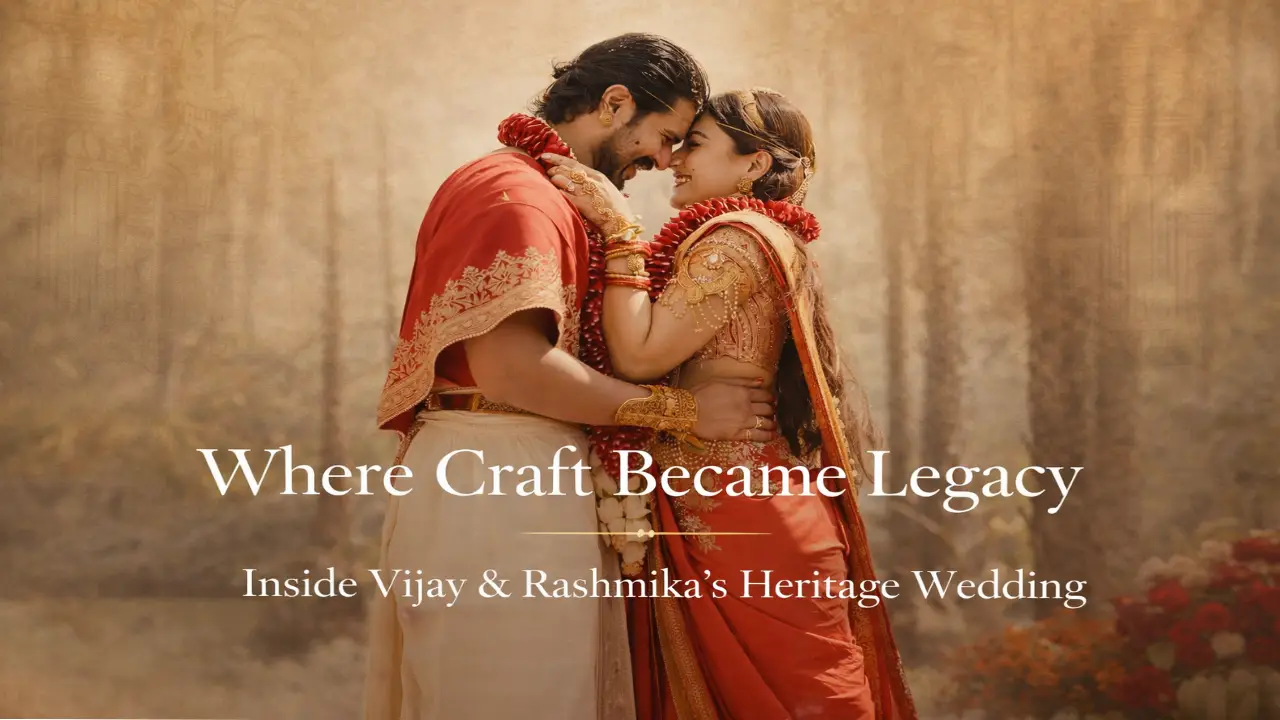
For a long time, celebrity weddings in India seemed to follow a very specific script. We saw a sea of pastel colors, minimalist decor, and a focus on what would look best on a social media feed. But on February 26, 2026, Vijay Deverakonda and Rashmika Mandanna, fondly called “ViRosh” by millions, decided to rewrite the rules. Beautifully organized by RVR Eventz&Design at the secluded Mementos by ITC Hotels, Ekaaya Udaipur, their wedding wasn’t just a party; it was a 300-day project dedicated to saving ancient crafts and celebrating deep-rooted traditions.
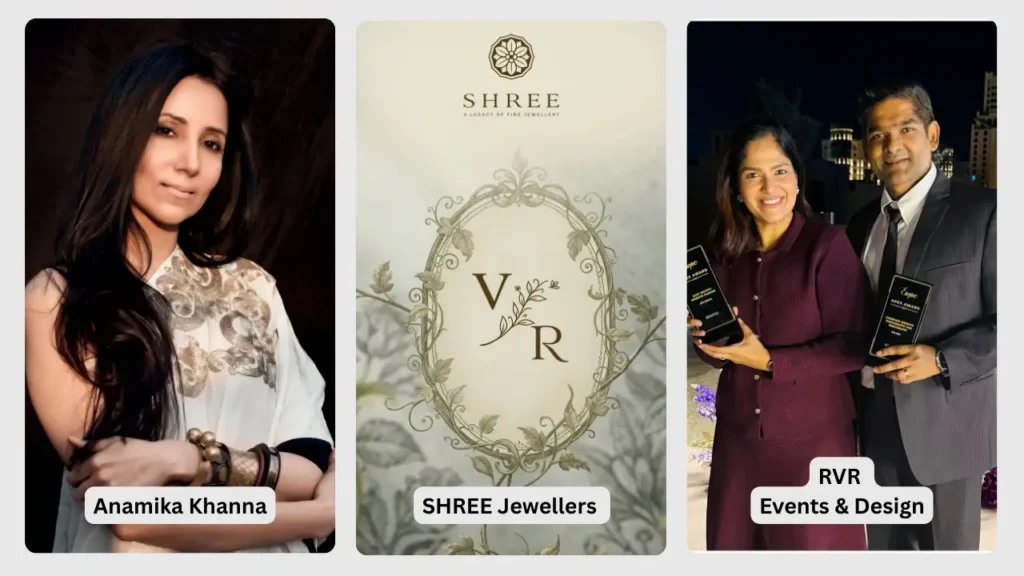
To bring this vision to life, the couple turned to the masters of their craft. Designer Anamika Khanna led the fashion narrative with a theme of “Heritage over Trends,” while the experts at SHREE Jewellers in Hyderabad spent ten months hand-carving gold masterpieces. The wedding itself was a beautiful mix of two cultures: a traditional Telugu Hindu ceremony in the morning to honor Vijay’s roots and a Kodava/Coorg ceremony in the afternoon for Rashmika. Throughout the day, every detail featured meaningful symbols like the Lakshmi motif for divinity, the elephant for wisdom, and the tiger for strength.
The 10-Month Jewelry Journey
The most incredible part of the ViRosh wedding was the jewelry. Most stars pick pieces off a shelf, but Vijay and Rashmika spent ten months working closely with Abhishek Agarwal and Kaushik Kumar of SHREE Jewellers. Their goal was to create “regalia”, items that felt like they belonged to a king and a goddess rather than just modern accessories.
The technical skill involved was remarkable. They used Nakshi work, which is a way of hand-carving gold to make it look like a 3D sculpture, and Rava granulation, where tiny gold beads are fused onto the surface one by one. Instead of the usual shiny gold, they chose an antique matte finish. This gave the jewelry a soft, “heirloom” glow, making the pieces look like they had been passed down through generations of royalty.
Vijay as King
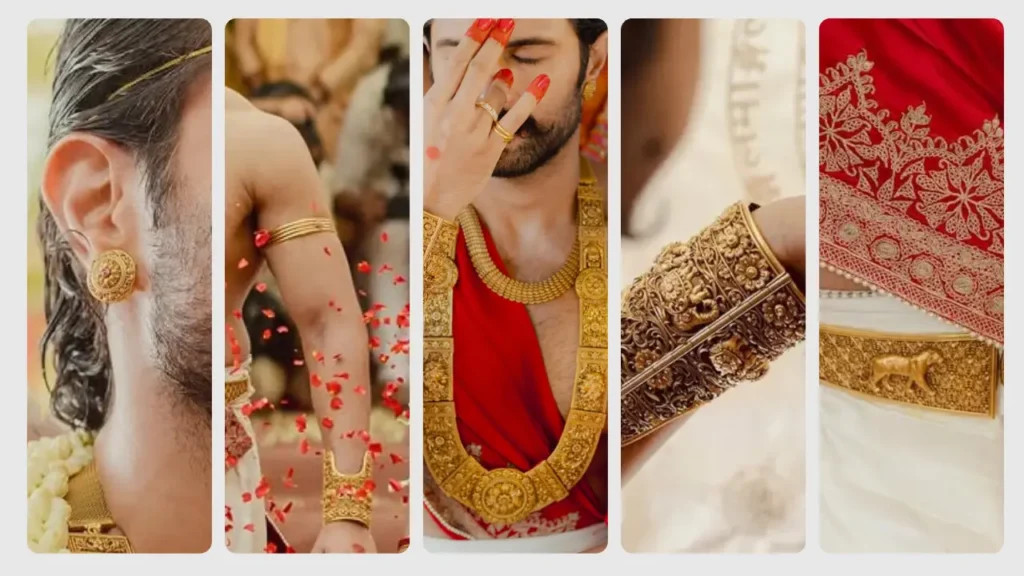
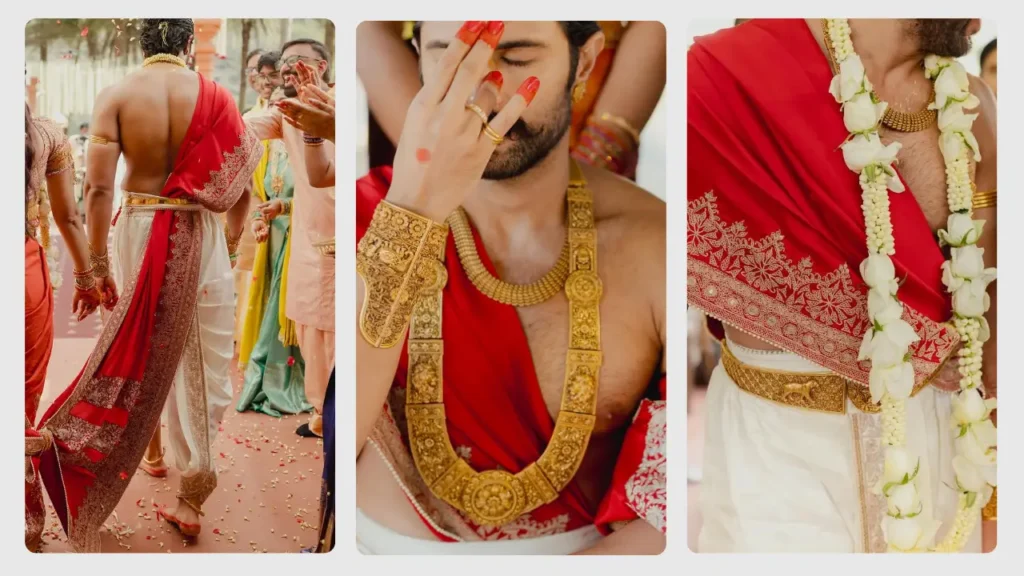
While grooms often stay understated, Vijay leaned into unapologetic maximalism. His jewelry was designed to give him the “authority of a mythic king”. He wore prominent coin-sized ear studs (Kadukkan) and a structured wrist cuff that felt like it was pulled from a historical epic.
His look featured two layered temple necklaces, one long and one short that stood out against his ivory attire. Most uniquely, Vijay wore an armlet (Bajuband) and rare ankle kadas, pieces seldom seen on modern grooms but deeply rooted in royal South Indian history. His jewelry was packed with meaning: elephant motifs represented wisdom and longevity, while tiger elements symbolized agility and power.
Rashmika as Goddess
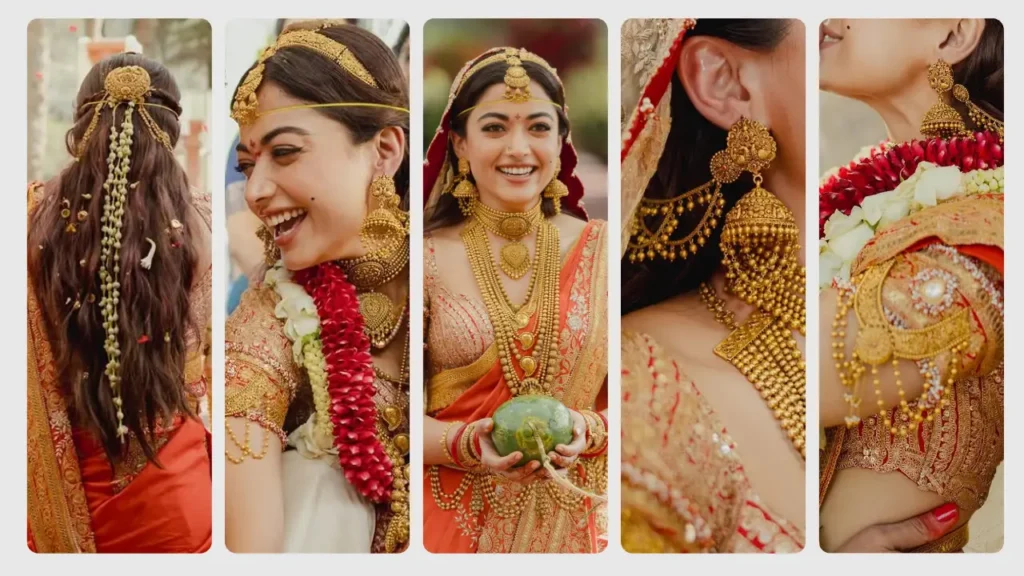
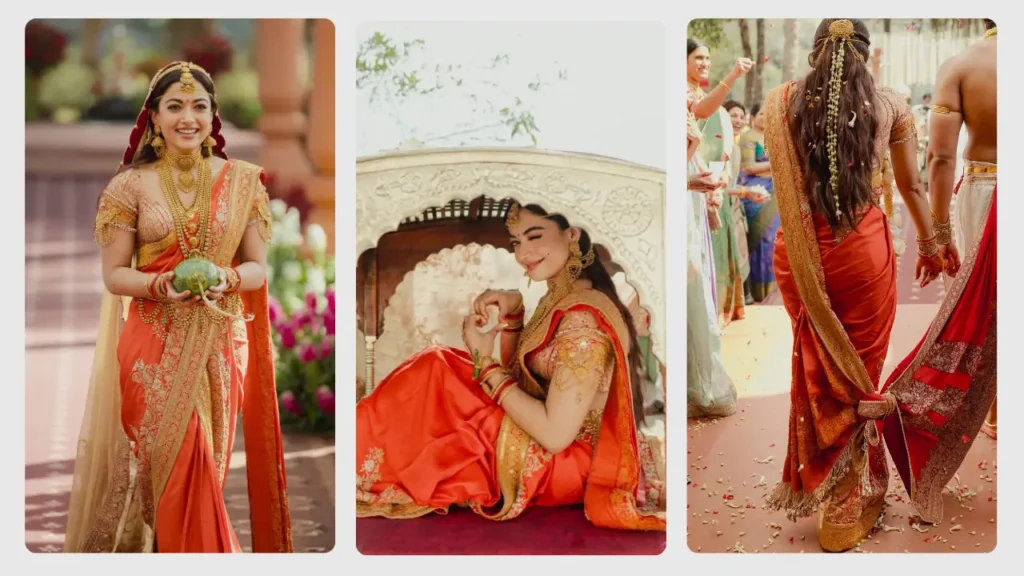
For Rashmika, the team created 11 bespoke pieces to complete her “living goddess” silhouette.
| Ornament | Key Detail |
| Lakshmi Haram | A layered necklace featuring the Goddess of prosperity. |
| Jada Billa | Ornate gold discs that decorated her long braid. |
| Mathapatti | A broad forehead band that framed her face. |
| Oddiyanam | A wide gold waist belt carved with temple scenes. |
| Hathphool | Delicate hand chains connecting her rings to her wrists. |
Anamika Khanna‘s Role
Vijay and Rashmika led an “Anti-Pastel Movement,” choosing the saturated, meaningful colors of the Southern landscape over trendy muted shades.
Vijay’s Vanasingaram
Vijay’s outfit was a masterclass in textile history. He wore a sharply tailored ivory dhoti paired with a striking vermillion angavastram. The anchor of his look was the Vanasingaram weave, which translates to “the glory of the forest”.
This is an incredibly difficult technique where artisans weave intricate nature scenes, tigers, elephants, and sacred trees, directly into the material itself rather than embroidering them on top. By choosing this hyper-regional handloom, Vijay made a loud statement: pure, traditional Indian textiles can rival any modern designer “bling”. He even added a traditional touch by wearing red alta dye on his fingers and palms, symbolizing auspicious beginnings.
Rashmika’s Crimson and Rust Saree
Rashmika’s saree was a rich, deep crimson and rust silk, colors associated with the iron-rich soil of the Deccan. Anamika Khanna used temple-house motifs embroidered across the fabric in antique gold zari. These designs were inspired by the ancient architecture of Hyderabad, turning her saree into a “canvas of devotion”. Her look was finished with a golden veil featuring a secret message in gold calligraphy: “In every lifetime”.
A Tale of Two Cultures
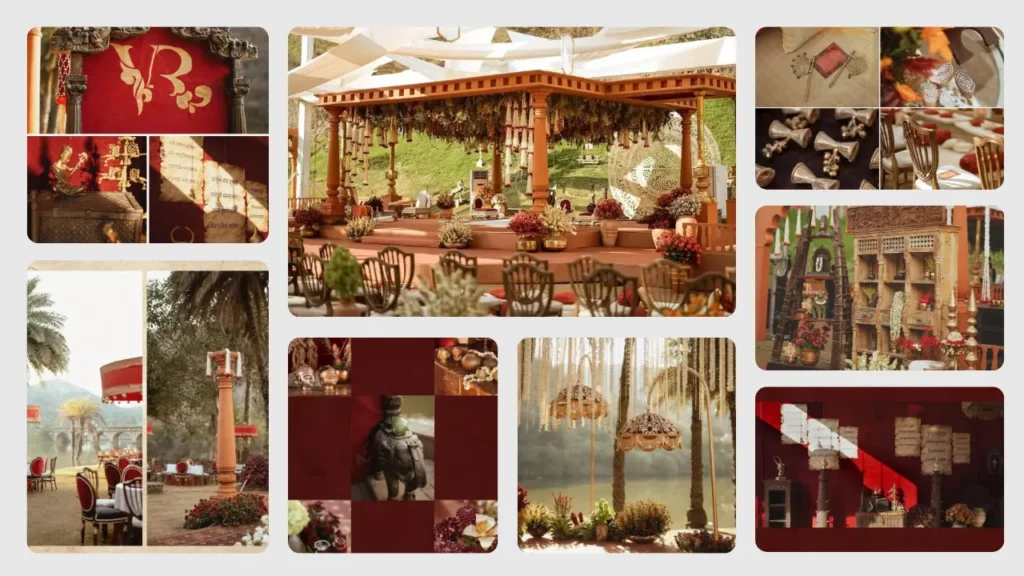
The hilltop retreat of ITC Mementos provided a peaceful canvas for their two distinct ceremonies.
The Morning Telugu Rite
The day began at 10:10 AM with Vijay’s Telugu heritage. This ceremony treats the couple as the divine pair Lakshmi and Vishnu. A key moment was the Jeelakarra Bellam, where they placed a paste of cumin and jaggery on each other’s heads. This symbolizes that they will stay together through the bitter and sweet times of life. During this rite, Vijay wore the Bhashikam, an intricate forehead ornament that matched Rashmika’s, symbolizing their unified thoughts.
The Evening Kodava Warrior Tradition
In the evening, the vibe shifted to honor Rashmika’s Kodava (Coorgi) roots. Vijay changed into a traditional white kupya (a long tunic) cinched with a red-and-gold chele (waistband) and wore a peta (turban).
The highlight was the Baale Birud ritual, a spirited display of warrior heritage. Family members used a traditional warrior knife called an odikathi to slash through nine banana stems in single, neat strokes. This ritual symbolizes the groom’s triumph and his ability to protect his new family.
The Legacy
As the sun set over the Aravalli Hills, it was clear the ViRosh wedding had redefined celebrity “branding” as heritage conservation. Every hand-carved piece of gold and every hand-loomed thread was a choice to protect India’s fading artisanal skills.
Despite the grandeur, the couple kept the emotion at the center. In a heartfelt note, Vijay recalled how he simply missed having her around in his daily life, at meals, at the gym, and in quiet moments. He ended with the touching line: “So, I made my best friend my life partner. 26.02.2026”. The ViRosh wedding proved that true luxury is found in the continuity of craft, the honoring of roots, and the courage to choose heritage over trends.
READ OUR OTHER ARTICLES
- T20 World Cup Final 2026: India vs New Zealand
 The cricket world is getting ready for its biggest event. On Sunday, March 8, 2026, the T20 World Cup 2026 final will take place. The stage is set for a … Read more
 - 1,000-Year-Old Kakatiya Vishnu Idol Found in Telangana
 The quiet forests of the Jayashankar Bhupalpally district in Telangana recently gave up a secret they had been keeping for a thousand years. In March 2026, as the summer heat … Read more
 - Kerala Set to Manufacture BrahMos Missile on 180-Acre
 India’s plan to become self-reliant in defense took a major leap forward on March 2, 2026. On this day, the Kerala Cabinet made a historic decision to give 180 acres … Read more
 - Why Aman Gupta Chose His Birthday to Reveal OFF/BEAT ?
 On March 3, 2026, the Indian startup world saw a digital shift that was as much about legacy as it was about the future. Aman Gupta, the famous co-founder of … Read more
 - Who’s Behind ViRosh’s Wedding Jewelry & Outfits?
 For a long time, celebrity weddings in India seemed to follow a very specific script. We saw a sea of pastel colors, minimalist decor, and a focus on what would … Read more
The 10-Month Jewelry Journey