

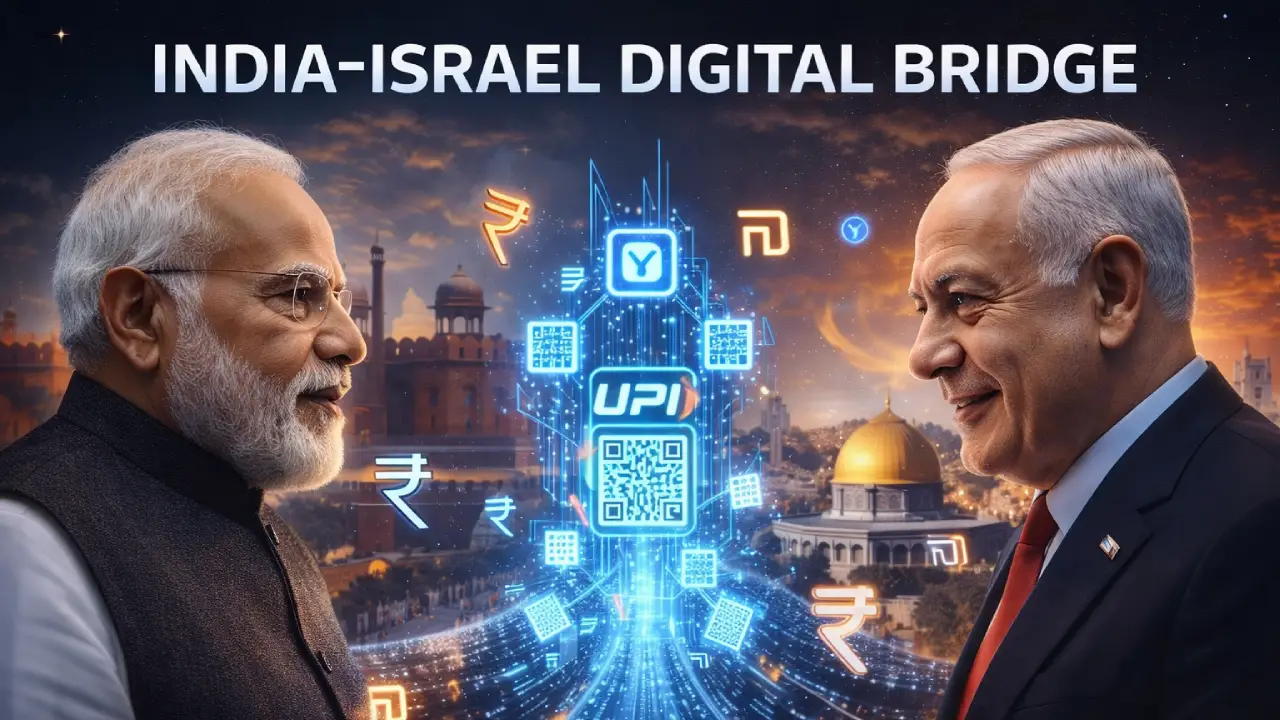
On February 26, 2026, a major event took place in Jerusalem that changed the way India and Israel work together. During a high-level state visit by the India’s Prime Minister, the two countries officially raised their relationship to a “Special Strategic Partnership for Peace, Innovation and Prosperity”. This is the highest level of diplomatic friendship India offers to its closest partners. At the center of this big announcement was a new deal to bring India’s Unified Payments Interface (UPI) to Israel. This was made possible through a partnership between NPCI International (NIPL) and Israel’s payments operator, MASAV. It marks a moment where India becomes a primary digital partner for Israel, showing that the two nations are now more connected than ever before.
This launch was not just a small agreement for travelers. It was the main pillar of a much larger plan that included 16 or 17 landmark agreements signed in Jerusalem. These deals cover many different areas, such as Artificial Intelligence (AI), defense, space technology, and even mineral exploration. By launching UPI in Israel, both countries are creating a “digital bridge” that helps all these other sectors work better together. It shows that India is no longer just a buyer of technology, but a provider of world-class digital systems.
How Payment System Works
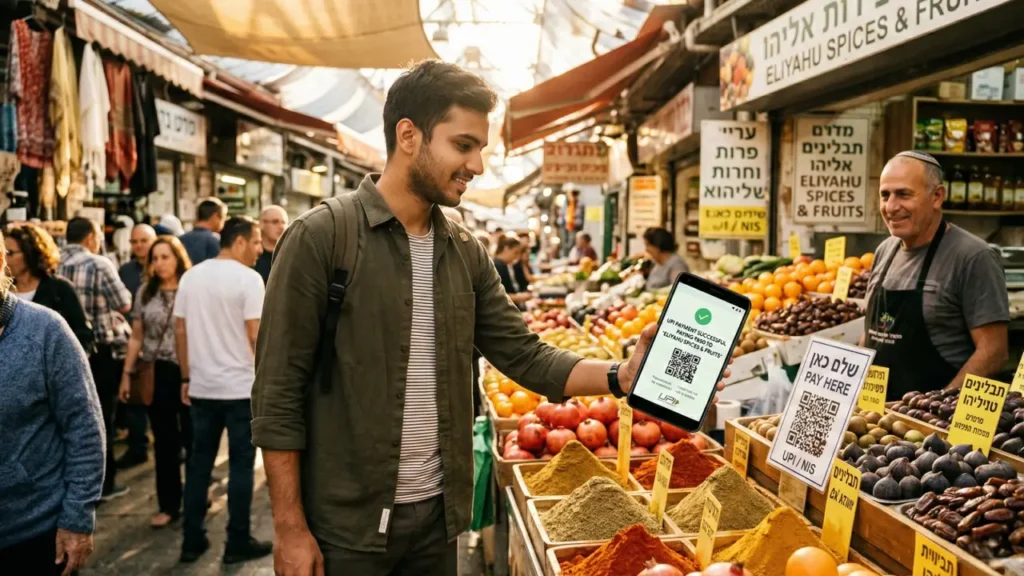
For everyday people, this new deal means using a phone to pay for things is about to get much easier. Indian travelers visiting famous markets in Tel Aviv, Jerusalem, or Haifa can now use their favorite UPI apps to scan QR codes and pay directly from their bank accounts. This removes the need to carry lots of physical cash or pay the very high fees that usually come with using international credit cards. The system is designed to be fast and safe, with money moving between accounts in just a few seconds.
For Israel, choosing India’s digital system is a massive deal. Israel is a world leader in cybersecurity and high-tech innovation. By picking India’s Digital Public Infrastructure (DPI) model, Israel is telling the world that India’s technology is the best in class. It serves as a huge validation for the “India Stack,” which is a group of digital tools that India uses to help millions of people access banking and government services. This partnership shows that India’s digital model is not just for developing countries, but is a perfect fit for the world’s most advanced tech hubs as well.
Helping Workers and Families
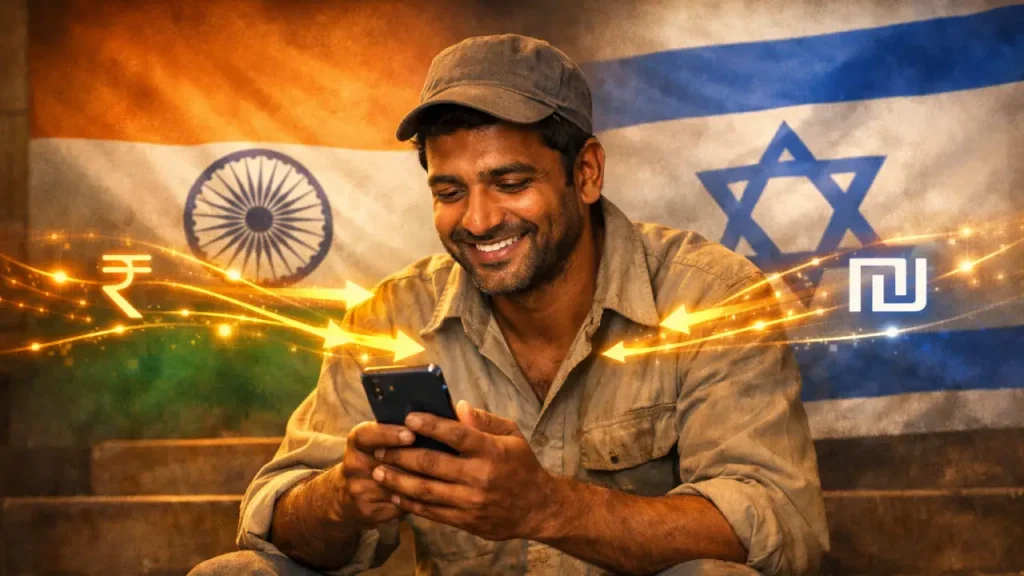
Beyond shopping and tourism, this digital bridge serves a very important human purpose. India and Israel recently signed protocols to bring up to 50,000 more Indian workers to Israel over the next five years. These workers will help in many different areas, including building houses, taking care of the elderly, working in factories, and even serving in restaurants. For a long time, these workers found it difficult and expensive to send their hard-earned money back home to their families in India.
With the new UPI-MASAV link, these workers can now send money home instantly and at a much lower cost. Experts believe that this new way of sending money called a “remittance corridor”, could reduce transaction fees by 2% to 3%. For a small business or a worker sending money every month, these savings add up to a lot over time. This is a real-world example of how “fintech diplomacy” makes the lives of thousands of Indian families better by putting more money directly into their hands.
The Bigger Geopolitical Picture
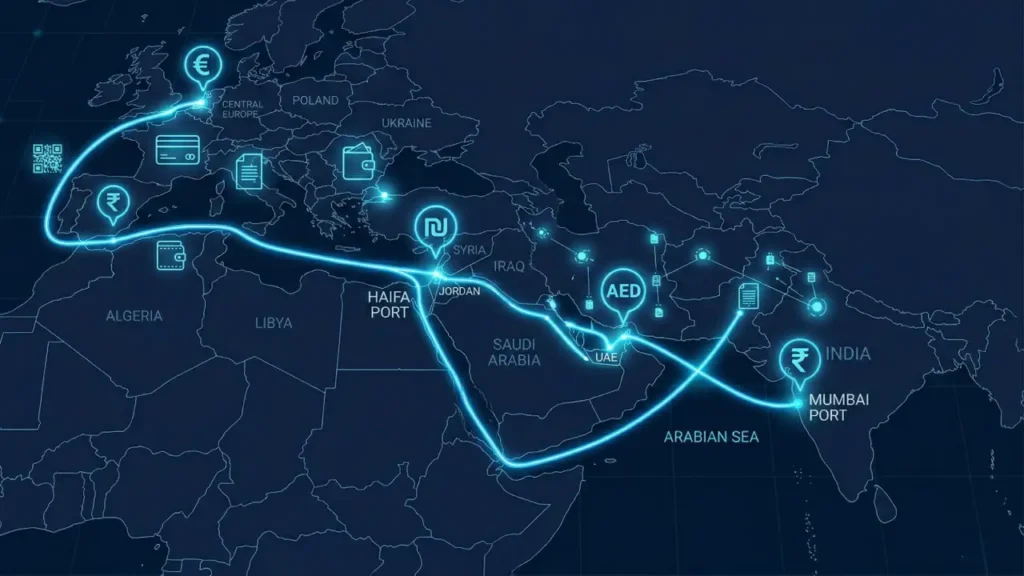
This fintech launch is about more than just money; it is about power and long-term planning. It fits perfectly into two big global projects: the I2U2 group and the India-Middle East-Europe Economic Corridor (IMEC). The I2U2 is a group made up of India, Israel, the UAE, and the USA that focuses on joint projects in water, energy, and food security. The IMEC is even more ambitious; it aims to link India to Europe through a path of rails and ports across the Middle East, including the Haifa Port in Israel.
By setting up a common digital payment system across these countries, India is building the “soft infrastructure” for a massive trade route. If a business in Mumbai can pay a partner in Haifa as easily as sending a text message, trade will grow much faster. This also helps the two countries finish their Free Trade Agreement (FTA), which they have been discussing for a long time. The first round of these trade talks finished right as the UPI deal was announced, showing that both countries want to remove every barrier that stands in the way of doing business together.
Technology, Security, and Future
The partnership also focuses on keeping the digital world safe. Along with the payment link, the two countries agreed to set up an Indo-Israel Cyber Centre of Excellence in India. Since more people are paying for things online, the risk of cyberattacks is also growing. This new center will help both countries share the best ways to protect their money and data from hackers. They are also planning a multi-year program to train experts and test their systems against digital threats.
Looking even further ahead, India and Israel are exploring the use of Artificial Intelligence (AI) and the “Digital Shekel”. One of the 16 agreements focuses on using AI for mineral exploration and improving schools. By sharing their best minds, India gets access to Israel’s amazing innovation skills, while Israel gets to work with India’s massive pool of talented workers and its huge market.
Conclusion
The launch of UPI in Israel on February 26, 2026, is a sign of a new era. It turns a relationship that was once mostly about defense and agriculture into a deep partnership of technology and innovation . As the digital Rupee and the Shekel begin to work together, they create a bond between the two nations that is built for the 21st century. This “Digital Bridge” ensures that India and Israel will grow together in a future that is more connected, more secure, and more prosperous for everyone.
READ OUR OTHER ARTICLES
- Know the Real Reason Behind Tarun Kumar’s Death Over a Holi Balloon
 The Holi festival turned tragic in southwest Delhi this year. On Wednesday, March 4, 2026, the narrow lanes of a JJ Colony in Uttam Nagar became the center of a … Read more
 - T20 World Cup Final 2026: India vs New Zealand
 The cricket world is getting ready for its biggest event. On Sunday, March 8, 2026, the T20 World Cup 2026 final will take place. The stage is set for a … Read more
 - 1,000-Year-Old Kakatiya Vishnu Idol Found in Telangana
 The quiet forests of the Jayashankar Bhupalpally district in Telangana recently gave up a secret they had been keeping for a thousand years. In March 2026, as the summer heat … Read more
 - Kerala Set to Manufacture BrahMos Missile on 180-Acre
 India’s plan to become self-reliant in defense took a major leap forward on March 2, 2026. On this day, the Kerala Cabinet made a historic decision to give 180 acres … Read more
 - Why Aman Gupta Chose His Birthday to Reveal OFF/BEAT ?
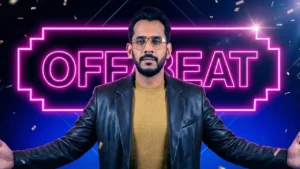 On March 3, 2026, the Indian startup world saw a digital shift that was as much about legacy as it was about the future. Aman Gupta, the famous co-founder of … Read more