

Timeline of Events: The Final Flight of VT-SSK
| Time (IST) | Event Description | Location / Context |
| 08:10 AM | Takeoff from Mumbai International Airport | Chhatrapati Shivaji Maharaj International Airport |
| 08:18 AM | Initial radio contact with Baramati Ground Control | 30 nautical miles inbound from Pune Approach |
| 08:30 AM | First landing attempt initiated; pilots report Runway 11 not in sight | Baramati Airfield (Uncontrolled) |
| 08:35 AM | Execution of a “go-around” maneuver to reposition for a second approach | Baramati Airspace |
| 08:42 AM | Second approach initiated; pilots confirm visual contact with Runway 11 | Final Approach Path |
| 08:43 AM | ATC provides final landing clearance; no read-back received from cockpit | Baramati Tower Frequency |
| 08:44 AM | Signal disappears from radar; flames observed near the runway threshold | Runway 11 Threshold |
| 08:45 AM | Aircraft impacts ground, followed by multiple secondary explosions | Baramati Airfield Perimeter |
| 08:50 AM | Emergency responders reach the wreckage; no survivors identified | Baramati Crash Site |
The Fatal Final Approach
The timeline reveals a pilot struggling with visibility. After a failed first attempt at 8:30 AM, the crew initiated a “go-around,” a standard safety maneuver. During the second attempt, the pilots briefly reported the runway was in sight and received landing clearance at 8:43 AM. Crucially, the cockpit failed to provide a “read-back” of this clearance—a standard protocol in aviation. Seconds later, the aircraft lost balance at an altitude of approximately 100 feet, tilted sharply, and impacted the ground near the threshold of Runway 11. Eyewitnesses described a “ball of fire” and “4-5 explosions” as the jet’s fuel tanks ignited, leaving no possibility for rescue operations. The identification of the remains was so challenging that authorities had to rely on personal effects, including Ajit Pawar’s wristwatch and clothing, to confirm the loss.
A Fortress Paralyzed by Grief
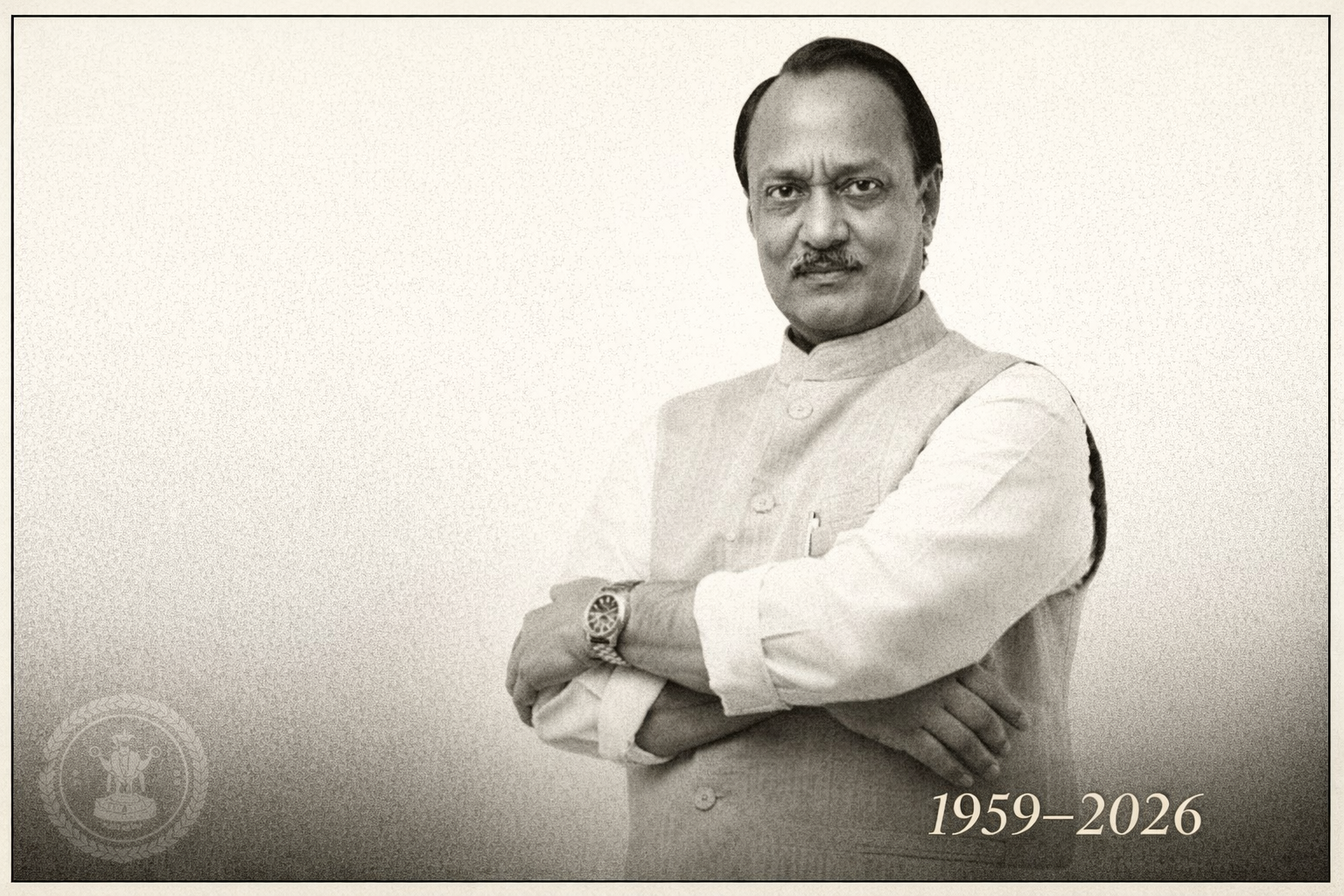
The morning of January 28, 2026, began with the usual disciplined hum that defined the life of Maharashtra’s most relentless administrator, but it ended in a silence so profound that it has paralyzed the state’s political heartland. At approximately 8:45 AM, the Learjet 45 Crash involving the aircraft registered as VT-SSK claimed the life of Deputy Chief Minister Ajit Pawar, aged 66, alongside four others in a fireball on the edge of the Baramati Airfield. For a leader whose entire political identity was built on the foundation of the Baramati “fortress”—a region he meticulously nurtured from a rural outpost into an industrial and agricultural exemplar—the irony of his end occurring on this home turf is as staggering as it is tragic. The shockwaves have not merely rippled through the local taluka but have shattered the delicate equilibrium of the Mahayuti alliance in Mumbai and the corridors of power in New Delhi.
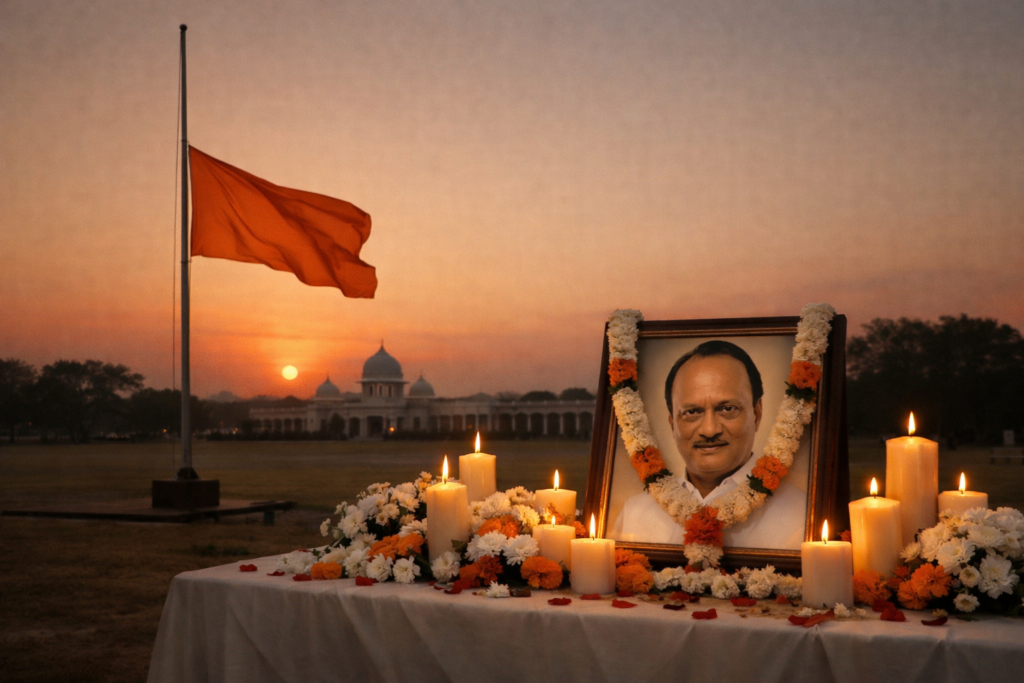
As news of the tragedy broke, the state government immediately declared a three-day period of State Mourning, with the national flag lowered to half-mast on all public buildings. This is not just the loss of a sitting constitutional head; it is the sudden removal of the state’s most effective administrative “engine,” a man who bridged the gap between the rural cooperative movement and the modern financial complexities of India’s richest state. From the frantic scenes at the crash site near Runway 11 to the somber gatherings at the Vidya Pratishthan ground, the sense of a vacuum is absolute. Maharashtra today mourns a “Man of the Masses” whose absence threatens to rewrite the political future of the state just as it was entering a critical electoral cycle.
The Anatomy of a Tragedy: Investigating Flight VT-SSK
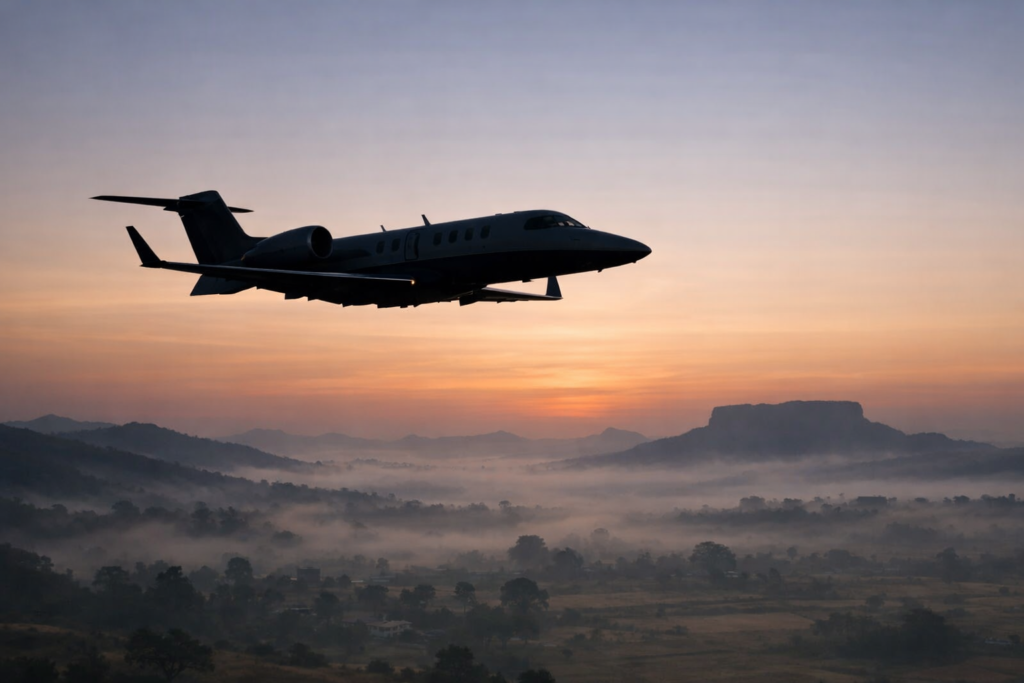
The investigation into the destruction of VT-SSK has been swiftly elevated to the highest levels of civil aviation scrutiny. The Aircraft Accident Investigation Bureau (AAIB), led by Director General G.V.G. Yugandhar, and the Directorate General of Civil Aviation (DGCA) have converged on Baramati to reconstruct the final moments of a flight that should have been routine. The aircraft, a Bombardier Learjet 45 manufactured in 2010, was operated by the Delhi-based non-scheduled operator VSR Ventures Pvt. Ltd.. This twin-engine business jet, a mainstay of corporate and political travel in India, was designed for the very short-to-medium-haul missions that Ajit Pawar frequently undertook to maintain his hyper-local connection with his electorate.
Technical Specifications and Aircraft History
The ill-fated jet was powered by Honeywell TFE731-20BR engines and had logged 4,915 flight hours prior to the accident. Records indicate that the aircraft’s airworthiness review certificate was valid until September 2026, and its last regulatory audit in February 2025 had yielded no “Level-I” safety findings—a designation for critical non-compliance. However, the investigation must now reconcile this ostensibly clean record with the catastrophic failure observed by eyewitnesses.
| Casualty List: Flight VT-SSK | Position / Affiliation | Experience / Background |
| Ajit Pawar | Deputy Chief Minister | 6-term Deputy CM, NCP President |
| Capt. Sumit Kapoor | Pilot-in-Command | 16,000+ Flying Hours |
| Capt. Shambhavi Pathak | First Officer | 1,500 Flying Hours |
| Vidhit Jadhav | Personal Security Officer | Head Constable, Mumbai Police |
| Pinky Mali | Flight Attendant | VSR Ventures Staff |
Despite the vast experience of Captain Kapoor—a veteran with 16,000 hours—the approach to Baramati presented environmental hazards that proved insurmountable. Baramati is an uncontrolled airfield, lacking the sophisticated Instrument Landing System (ILS) found at major airports. This requires pilots to rely on visual meteorological conditions (VMC). On the morning of January 28, dense fog had descended upon the region, dropping visibility to a precarious 3,000 meters.
VSR Ventures: A Pattern of Excursions?
The crash has inevitably turned a harsh spotlight on VSR Ventures. The company, which operates a fleet of 17 aircraft, has now seen two major accidents involving Learjet 45s in Maharashtra in less than three years. In September 2023, another VSR-operated jet, registered as VT-DBL, crash-landed at Mumbai airport during heavy rain. While there were no fatalities in the 2023 incident, the similarities—low visibility, landing phase instability, and a runway excursion—are too striking for the AAIB to ignore. The probe will scrutinize whether the operator’s training protocols for uncontrolled airfields and marginalized weather conditions were sufficient, particularly for high-stakes VIP transport.
The “Dada” Legacy: An Administrator Par Excellence
To understand the magnitude of the loss for Maharashtra, one must look beyond the tragic headlines to the 40-year career of the man affectionately known as “Dada” (elder brother). Ajit Pawar was the quintessential “workaholic” of Indian politics, a leader who viewed administration not as a matter of grand rhetoric, but as a series of problems to be solved with clinical precision.
The 6 AM Work Culture
Ajit Pawar’s reputation was anchored in his legendary 6 AM meetings. Long before the state bureaucracy in Mumbai had stirred, Pawar would be in his office or on a project site, reviewing files and demanding accountability from senior officials. His punctuality was not merely a personal quirk but a political statement in a state often bogged down by slow-moving projects. As the Finance and Planning Minister, he presided over the formulation of Maharashtra’s 7-lakh crore budget, often pulling up fellow ministers for a lack of departmental efficiency. His tenure in the Irrigation and Water Resources ministries, though not without controversy, saw the expansion of the Krishna Valley projects that transformed the lives of millions of farmers in Western Maharashtra.
The Pawar Paradox: Ambition and Split
His relationship with his uncle, the venerable Sharad Pawar, was the defining narrative of his life. Mentored by the elder Pawar since the 1980s, Ajit was for decades the loyal executor of the “Pawar legacy”. However, the 2023 split of the Nationalist Congress Party (NCP) marked a watershed moment. Driven by a desire for “stability and progress”—and perhaps frustrated by the lack of clear succession within the undivided party—Ajit Pawar led a rebellion that saw him join the Mahayuti government as Deputy Chief Minister. The subsequent legal victory, where the Election Commission recognized his faction as the “real” NCP and awarded him the ‘Clock’ symbol, was the final confirmation of his independent political stature.
Yet, those close to him noted that the familial bond never truly severed. Even as he fought his uncle in the courts, he sought a “thaw” in recent months, collaborating on local body elections in Pune and Pimpri-Chinchwad. His death on the way to a campaign rally for the Zilla Parishad elections emphasizes that for Ajit Pawar, politics was always local, always on the ground, and always about the next challenge.
The Baramati Fortress: A Model of Development
Ajit Pawar didn’t just represent Baramati; he built it. The region is often cited by national leaders, including Prime Minister Narendra Modi and Vice President Venkaiah Naidu, as an “exemplar of rural development”. From the state-of-the-art Krishi Vigyan Kendra to the industrial clusters that house global manufacturing giants, the “Baramati Model” was Ajit Pawar’s pride and joy.
Agricultural and Industrial Innovation
Pawar was a fierce advocate for integrating technology into the agricultural sector. In his final months, he was championing the use of Artificial Intelligence (AI) to monitor crop health and soil quality, hosting India’s first Agriculture Hackathon in Pune. He understood that for the sugar belt of Maharashtra to survive the challenges of climate change and labor shortages, it had to evolve. His influence over the cooperative sugar factories and milk dairies provided him with an unbreakable grassroots connection that made him nearly invincible in the Baramati Assembly seat, which he won seven times, often with massive margins.
| Ajit Pawar’s Legislative Tally (Baramati Assembly) | Election Year | Victory Margin (Approx) |
|---|---|---|
| 1991(By-election) | First Win | 86,000+ |
| 1995-2014 | Retained | Consolidated |
| 2019 | Retained | Record Margin |
| 2024 | Current Term | 1,00,000+ |
This editorial dominance was not a product of chance but of a meticulous, year-round engagement with his constituents. It is said that in 2019, while his opponents toured the entire constituency, Ajit Pawar needed only a week of campaigning to secure his seat—his work had already done the talking.

The Political Vacuum and the Future of the Mahayuti
The death of Ajit Pawar creates a seismic shift in the Mahayuti alliance. He was the “Force Multiplier” who brought the crucial Maratha-OBC social coalition to the BJP-Shiv Sena government. His ability to navigate the complex world of the cooperative sector in Western Maharashtra was a skill set that neither Chief Minister Devendra Fadnavis nor Deputy CM Eknath Shinde could easily replicate.
The Succession Crisis
Within his faction of the NCP, the loss is total. Ajit Pawar was the undisputed head, the primary strategist, and the face of the party. While senior leaders like Sunil Tatkare and Praful Patel are seasoned politicians, they lack the “Dada” factor—the raw, grassroots authority that Ajit Pawar commanded. The family legacy now falls upon his widow, Sunetra Pawar, and his sons Parth and Jay. Sunetra, currently a Rajya Sabha MP, is seen as a symbolic custodian of the legacy, but she lacks the administrative and legislative experience of her late husband. Parth Pawar’s previous electoral setbacks and Jay Pawar’s focus on business interests leave the party’s long-term leadership in a state of deep uncertainty.
Speculation of Reunification
The most profound question looming over Maharashtra is whether this tragedy will lead to a reunification of the two NCP factions. Before the crash, reports had already surfaced of a potential “reconciliation” through strategic local alliances. With the loss of its chief executor, there is growing speculation that Sharad Pawar may move to stabilize the “Pawar Empire” by bringing Ajit’s family and supporters back into the fold of the NCP (Sharadchandra Pawar). Such a move would fundamentally alter the “triple-engine” math of the Mahayuti government and could reshape the state’s political map ahead of the 2029 general elections.
Conclusion: The End of an Era
As the sun sets over the charred wreckage in Baramati, Maharashtra realizes it has lost more than just a Deputy Chief Minister. It has lost a man who, for all his controversies and sharp elbows, lived and breathed the development of his state. Ajit Pawar was a leader of another time—a time of 6 AM meetings, of handshakes that meant more than contracts, and of a commitment to the “last man in the queue” that was forged in the dust of rural Pune.
His final ride in the Learjet 45 Crash at the Baramati Airfield marks the end of a 40-year political journey that shaped the destiny of modern Maharashtra. As the state enters a period of State Mourning, the focus shifts to the legacy he leaves behind—a legacy of industrial parks, irrigation canals, and a brand of politics that was as bold as it was effective. For the “Man of the Masses,” there will be no more 6 AM meetings, but the impact of his work will be felt for generations. The “Dada” of Baramati is gone, and with him, a significant piece of Maharashtra’s political soul.
READ OUR OTHER ARTICLES
- Know the Real Reason Behind Tarun Kumar’s Death Over a Holi Balloon
 The Holi festival turned tragic in southwest Delhi this year. On Wednesday, March 4, 2026, the narrow lanes of a JJ Colony in Uttam Nagar became the center of a … Read more
 - T20 World Cup Final 2026: India vs New Zealand
 The cricket world is getting ready for its biggest event. On Sunday, March 8, 2026, the T20 World Cup 2026 final will take place. The stage is set for a … Read more
 - 1,000-Year-Old Kakatiya Vishnu Idol Found in Telangana
 The quiet forests of the Jayashankar Bhupalpally district in Telangana recently gave up a secret they had been keeping for a thousand years. In March 2026, as the summer heat … Read more
 - Kerala Set to Manufacture BrahMos Missile on 180-Acre
 India’s plan to become self-reliant in defense took a major leap forward on March 2, 2026. On this day, the Kerala Cabinet made a historic decision to give 180 acres … Read more
 - Why Aman Gupta Chose His Birthday to Reveal OFF/BEAT ?
 On March 3, 2026, the Indian startup world saw a digital shift that was as much about legacy as it was about the future. Aman Gupta, the famous co-founder of … Read more