

A Case Study on India’s Spiritual Heritage and Global Cultural Importance
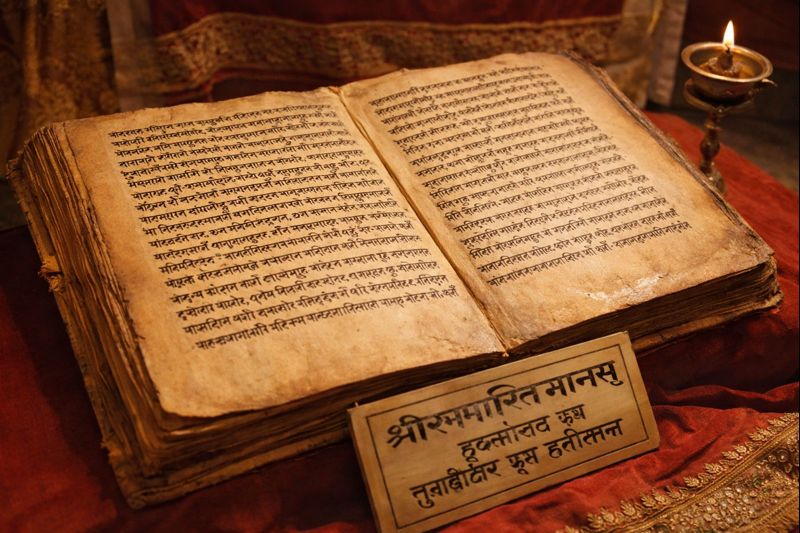
In a moment of great pride for India’s cultural and spiritual legacy, UNESCO officially recognized the illustrated manuscripts of the Ramcharitmanas in May 2024 by inscribing them in the Memory of the World Asia-Pacific Regional Register. This announcement confirms something that devotees and historians have always believed:
the original handwritten legacy of Goswami Tulsidas Ji is still preserved and respected across generations.
The Ramcharitmanas is not just a religious text. It is a cultural bridge that connects faith, literature, philosophy, and history. Written in the 16th century, it brought the story of Lord Ram to the common people in Awadhi, making divine knowledge accessible to every household.
What Did UNESCO Recognize?
UNESCO included two historic manuscripts of the Ramcharitmanas:
- 📜 One manuscript personally written by Goswami Tulsidas Ji in the 16th century
- 🌍 Another manuscript translated into Arabic in the 18th century, showing the epic’s global influence beyond India
This recognition proves that Ramcharitmanas is not only an Indian treasure but a world heritage of literature and spirituality.
Where Is the Original Manuscript Preserved?
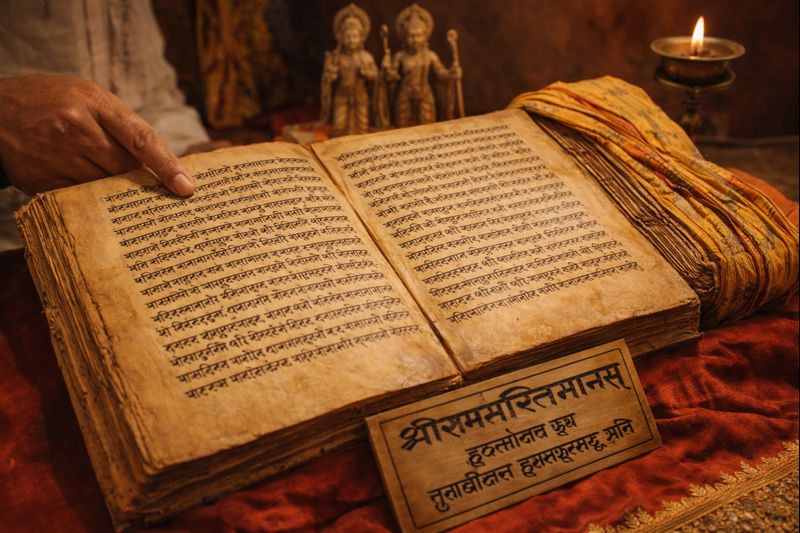
- The original handwritten pages by Goswami Tulsidas Ji are preserved at:
🛕 Ramcharit Manas Mandir, Rajapur (Uttar Pradesh) – his birthplace - A complete copy written in 1647 was earlier preserved at:
🛕 Hanuman Temple, Tulsi Ghat, Varanasi
Unfortunately, this precious manuscript was stolen in 2011, a tragic loss to India’s heritage.
Why This Recognition Is So Important
UNESCO’s recognition does three powerful things:
- Protects ancient manuscripts for future generations
- Validates India’s literary and spiritual heritage globally
- Raises awareness about manuscript preservation
It also proves that India’s spiritual texts are not myths, but living history preserved through physical evidence.
Ramcharitmanas: More Than a Religious Book
Ramcharitmanas shaped:
- Indian moral values
- Devotion culture
- Temple traditions
- Bhakti movement literature
It inspired poets, saints, and scholars across centuries and languages.
Case Study: How Ancient Literature Achieves Global Recognition
This recognition becomes a perfect example of:
| Factor | Impact |
|---|---|
| Faith | Keeps tradition alive |
| Preservation | Saves physical manuscripts |
| Scholars | Validate authenticity |
| UNESCO | Gives global acceptance |
Together, they turn devotion into documented history.
Additional Important Information
- 📚 Ramcharitmanas was composed between 1574–1576
- ✍️ Written in Awadhi, not Sanskrit, to reach common people
- 🕉️ It follows the Bhakti movement philosophy
- 🌏 Translated into multiple languages across centuries
- 🏛️ Stored using traditional manuscript conservation methods
- 📜 Illustrated versions make it historically valuable artwork
Highlights (Key Points in Short)
- 🏆 UNESCO recognized Ramcharitmanas manuscripts in May 2024
- ✍️ Original manuscript written by Goswami Tulsidas Ji still exists
- 🕌 One manuscript translated into Arabic in the 18th century
- 🛕 Original pages preserved at Rajapur, Uttar Pradesh
- 🚨 1647 manuscript stolen from Varanasi in 2011
- 🌍 Shows global spiritual and cultural influence of Indian literature
- 📚 One of the most important religious texts in world history
- 🧭 A living example of India’s manuscript preservation success
Why This Matters for Today’s Generation
In the age of digital content and AI, this discovery reminds us:
“True knowledge does not disappear. It survives through faith, care, and history.”
The Ramcharitmanas is proof that ancient Indian wisdom was not lost—it was protected, honored, and now globally acknowledged.
Final Thoughts
The UNESCO recognition of Ramcharitmanas manuscripts is not just a news update.
It is a historic validation of India’s soul, literature, and spiritual identity.
This case study teaches us:
- Heritage must be preserved
- Faith deserves documentation
- Culture becomes immortal when protected
India’s spiritual history has once again taken its rightful place on the world stage.