

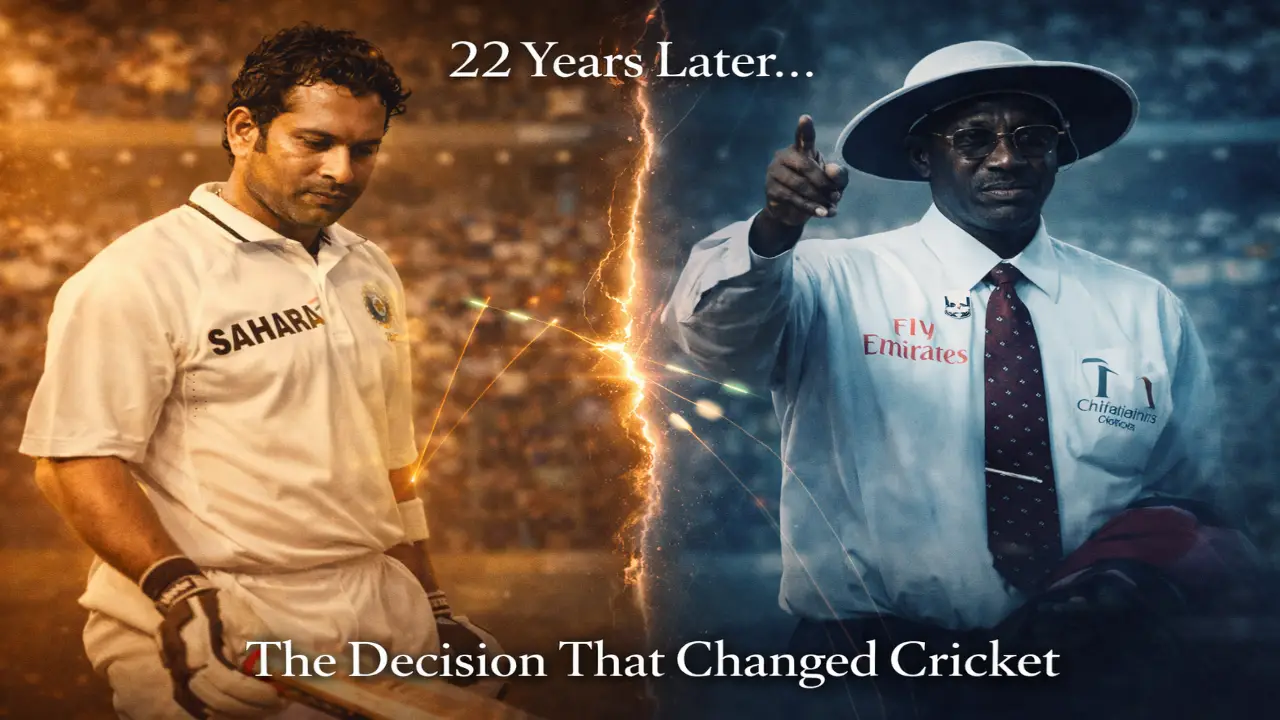
The passage of time in cricket is usually measured in decades, centuries, and the steady accumulation of records. Yet, for over twenty years, a single moment of silence in Brisbane remained an unhealed wound in the sport’s collective memory of Indians, especially for Sachin Tendulkar. In February 2026, the silence was finally broken not by the roar of a crowd, but by the reflective voice of a man who once held the power of life and death over the game’s greatest icons. Steve Bucknor, the veteran Jamaican umpire whose “slow death” finger once dictated the rhythm of international cricket, stepped before the West Indies Cricket Umpires Association to offer a confession that had been 8,105 days in the making.
The 2026 Admission
On February 24, 2026, during a candid hour-long interview that reverberated from Kingston to Kolkata, the 79-year-old Steve Bucknor addressed the ghosts that had followed him since his retirement in 2009. The focus of this reflection was the infamous 2003 Gabba Test, a match where a single decision against Sachin Tendulkar became the definitive case study for why cricket needed better technology.
Bucknor’s admission was simple and direct. “Giving Sachin Tendulkar out leg before wicket… was a mistake,” he stated, finally acknowledging the weight of a call that had been debated for over two decades. He reflected on how an umpire’s “howler” remains a permanent part of their legacy. Bucknor revealed that even in his quiet years in Jamaica, he was reminded daily of that December afternoon in Brisbane. His philosophy in 2026 seemed to be one of weary acceptance: “In life, mistakes happen… and life goes on,” he remarked. This confession was more than a personal apology; it was a look back at a time when an umpire’s word was final and could not be challenged by any machine.

A Moment of Disbelief
To understand why this apology matters, one must travel back to the high-pressure atmosphere of the 2003-04 Border-Gavaskar Trophy. India arrived in Australia as underdogs, facing a world-conquering side led by Steve Waugh. The Gabba, known for its steep bounce and fast surface, was the stage for the opening match.
The flashpoint happened during India’s first innings. Sachin Tendulkar, carrying the hopes of a billion people, had just arrived at the crease. He was batting on 3 when he faced the Australian pacer, Jason Gillespie. The delivery was sharp, pitching outside off-stump and jogging back toward the batter. Tendulkar, displaying his classic judgment, decided to shoulder arms. He tucked his bat away, confident that the bounce of the Brisbane pitch would carry the ball safely over the stumps.
The ball struck him high on the right pad. Jason Gillespie and wicketkeeper Adam Gilchrist led a thunderous appeal. Bucknor paused, processed the moment, and then slowly raised his finger. Tendulkar stood frozen in disbelief before starting the long walk back for a three-ball duck.
The “Dreadful Decision”
The controversy of the LBW was rooted in the physics of the Gabba pitch. The surface is famous for its vertical bounce. Replays and later analysis showed that the ball hit Tendulkar above the knee roll while he was standing tall. Statistically, on such a bouncy pitch, a ball hitting that high was certain to pass over the stumps.
The reaction from the commentary box was instant. The late Tony Greig, a voice synonymous with the drama of the game, was shocked. “That is a dreadful decision,” Greig famously told millions of viewers. “Have a look at this, look at the bounce and movement.” Greig’s sharp assessment was finally confirmed 22 years later by the very man who made the call.
The Pre-DRS Reality
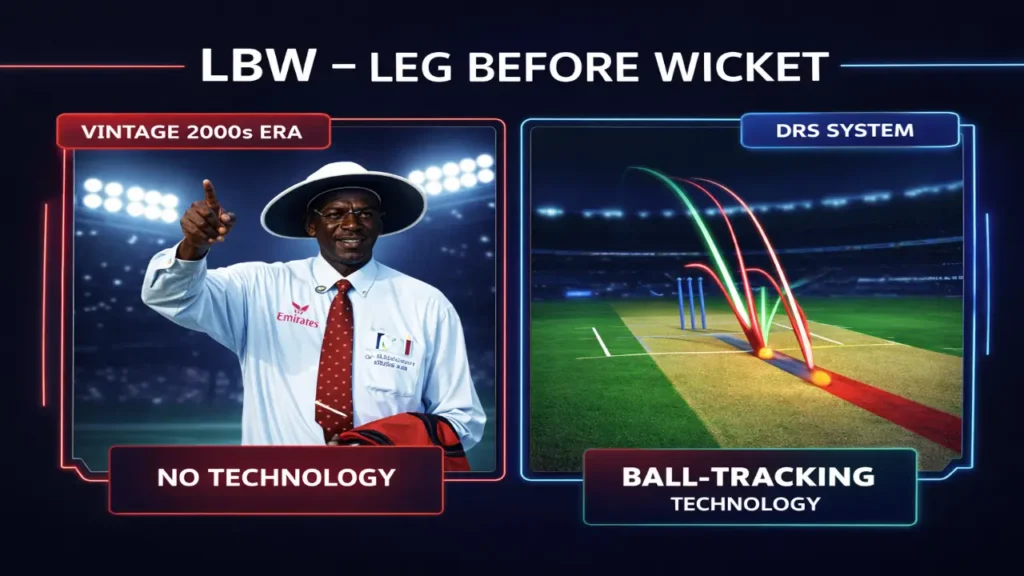
In the early 2000s, the pre-DRS era cricket world was a very different place for match officials. Umpires like Bucknor were expected to be perfect in a high-pressure environment without any technological help. There was no “safety net” like the Decision Review System (DRS) to fix an obvious mistake.
In his 2026 reflection, Bucknor discussed the mental toll of this job. He described pressure as something “natural” that every official must live with. He noted that he tried to see every player as just a “batter” to remain fair, but the fame of someone like Tendulkar made every decision feel like a massive event. Without ball-tracking, umpires had to rely entirely on their eyes and experience, often under the heat of the sun and the noise of aggressive appeals.
The Bucknor-Tendulkar Equation
The 2003 Brisbane error was not the only time Bucknor’s finger frustrated Indian fans. It became part of what many felt was a pattern of “howlers” involving Tendulkar. Two years after the Gabba incident, the drama moved to the historic Eden Gardens in Kolkata during a series against Pakistan.
Tendulkar was batting fluently on 52 and seemed set for a big score. He faced a ball from Abdul Razzaq that moved away. Tendulkar missed the shot, and the ball passed clearly without hitting the bat. However, Bucknor again raised his finger for a caught-behind dismissal. Replays were clear: there was a wide gap between the bat and the ball. This moment convinced many that the relationship between the umpire and the “Master Blaster” was uniquely cursed.
The Master’s Wit
Despite these setbacks, Sachin Tendulkar was famous for how he handled poor decisions. He usually accepted the verdict with a quiet look of surprise and walked off the field without arguing. Years later, his frustration turned into humor.
In August 2025, just months before Bucknor’s apology, Tendulkar hosted a popular Ask Me Anything (AMA) session on Reddit. When a fan asked for his thoughts on Steve Bucknor, Tendulkar gave a reply that went viral: “When I am batting, give him boxing gloves to wear (so he can’t raise his finger).”
This joke perfectly captured the years of tension in a lighthearted way. During that same session, when a fan questioned if it was really him, Tendulkar famously asked, “Abhi Aadhaar bhi bheju kya?” (Should I send my Aadhaar card also?). This sharp wit showed that Tendulkar had moved past the controversies with his dignity and humor intact.
The Final Word
The February 2026 apology from Steve Bucknor finally closes a major chapter in cricket history. The 2003 Gabba error served as a catalyst for the game to embrace technology, moving away from the absolute power of the umpire toward the accuracy of the machine. While modern technology has made the sport fairer, it has also changed the human drama that once defined it. Bucknor’s confession is a final reminder of an era where a single finger could change the course of a match and where even the most experienced masters could make a mistake.
READ OUR OTHER ARTICLES
- Know the Real Reason Behind Tarun Kumar’s Death Over a Holi Balloon
 The Holi festival turned tragic in southwest Delhi this year. On Wednesday, March 4, 2026, the narrow lanes of a JJ Colony in Uttam Nagar became the center of a … Read more
 - T20 World Cup Final 2026: India vs New Zealand
 The cricket world is getting ready for its biggest event. On Sunday, March 8, 2026, the T20 World Cup 2026 final will take place. The stage is set for a … Read more
 - 1,000-Year-Old Kakatiya Vishnu Idol Found in Telangana
 The quiet forests of the Jayashankar Bhupalpally district in Telangana recently gave up a secret they had been keeping for a thousand years. In March 2026, as the summer heat … Read more
 - Kerala Set to Manufacture BrahMos Missile on 180-Acre
 India’s plan to become self-reliant in defense took a major leap forward on March 2, 2026. On this day, the Kerala Cabinet made a historic decision to give 180 acres … Read more
 - Why Aman Gupta Chose His Birthday to Reveal OFF/BEAT ?
 On March 3, 2026, the Indian startup world saw a digital shift that was as much about legacy as it was about the future. Aman Gupta, the famous co-founder of … Read more