

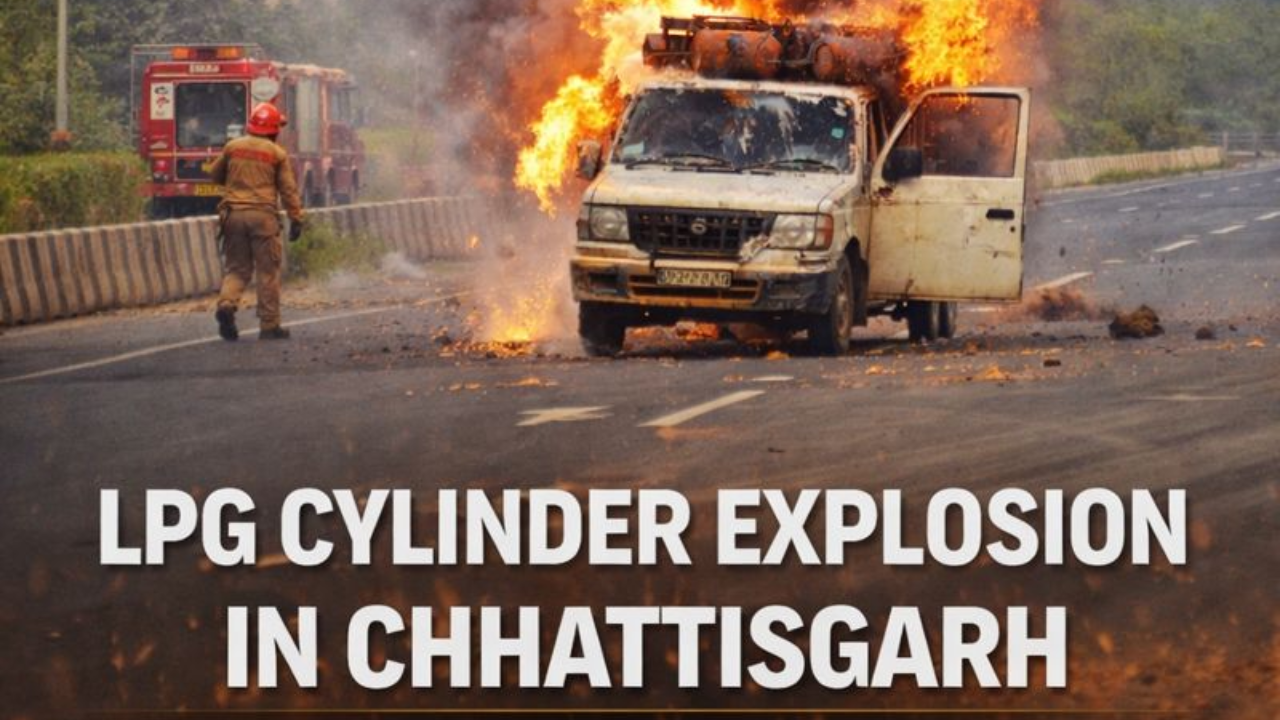
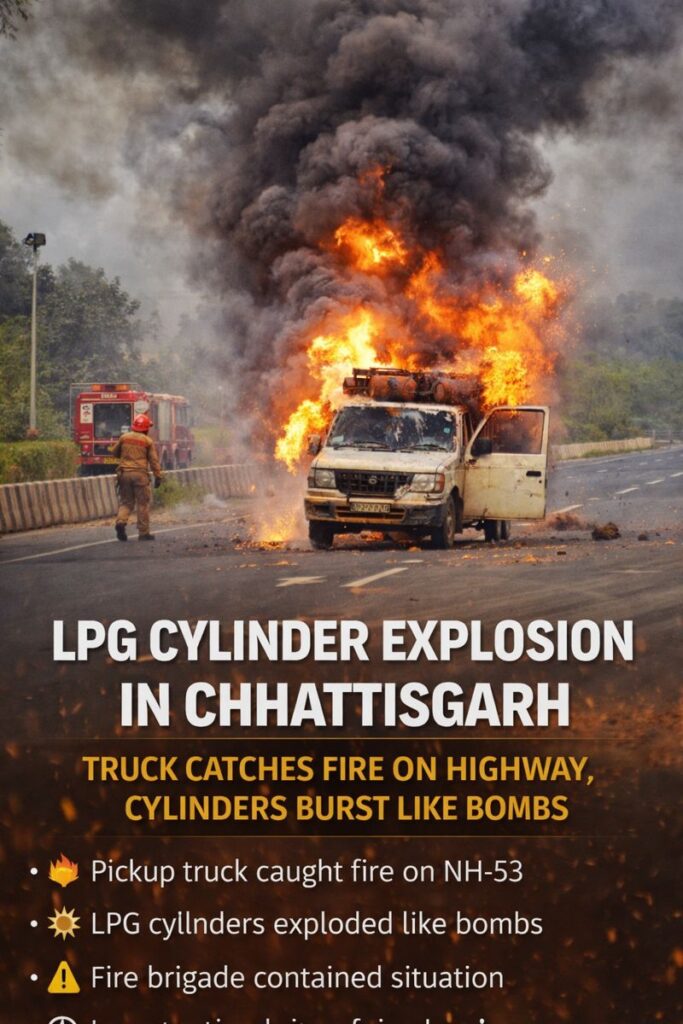
A shocking incident of an LPG cylinder explosion in Chhattisgarh has once again raised serious concerns about the transportation and safety of gas cylinders on Indian highways. The incident took place near Mahasamund district on National Highway 53, where a pickup vehicle loaded with LPG cylinders suddenly caught fire, leading to a series of powerful explosions. Eyewitnesses described the scene as terrifying, saying the cylinders were bursting “like bombs” one after another.
LPG CYLINDER BLAST VIDEO
According to preliminary reports, the pickup van was carrying multiple LPG cylinders when it suddenly caught fire while moving on the highway. Within moments, flames spread rapidly, and the intense heat caused the cylinders to explode sequentially.
Each explosion created loud blasts, flames, and heavy smoke, forcing vehicles on the highway to stop at a safe distance. Traffic movement was immediately halted, and people nearby ran for cover in fear.
Local police and fire brigade teams rushed to the spot and managed to control the situation after significant effort.
Why LPG Cylinder Explosions Are So Dangerous
An LPG cylinder explosion is extremely dangerous because:
- LPG is highly flammable
- Cylinders are under high pressure
- Heat causes gas expansion leading to blasts
- Explosions can spread fire rapidly
- Nearby vehicles and people are at serious risk
When multiple cylinders are loaded together, the danger increases many times. One blast triggers others, creating a chain reaction.
Possible Causes Behind the Accident
While the investigation is still ongoing, experts believe the explosion could have been caused by:
- Gas leakage from one or more cylinders
- Poor storage or faulty valves
- Overheating due to engine or road friction
- Improper packing and lack of safety covers
- Violation of LPG transport safety rules
Such incidents usually happen when safety protocols are ignored.
Legal and Safety Violations Under Scanner
Transporting LPG cylinders requires strict permissions and safety measures under Indian law. Cylinders must be:
- Properly sealed
- Transported in approved vehicles
- Kept away from ignition sources
- Monitored by trained personnel
Authorities are now investigating whether the vehicle had valid permits and followed standard safety guidelines.
Case Study: What This Incident Teaches Us
The LPG cylinder explosion in Chhattisgarh serves as a critical case study for road safety and hazardous material transport:
- Highway transport of LPG is risky without strict monitoring
- One small spark can lead to massive destruction
- Emergency response time is crucial
- Public safety depends on proper enforcement of transport laws
This incident highlights the urgent need for better checks on vehicles carrying dangerous goods.
Growing Risk of LPG Accidents in India
In recent years, incidents involving LPG cylinders catching fire in:
- Homes
- Restaurants
- Transport vehicles
- Storage warehouses
have increased. Most of these cases are linked to negligence, illegal storage, or outdated equipment.
The Chhattisgarh case is another reminder that LPG safety is not optional—it is essential.
How Such Accidents Can Be Prevented
To prevent future tragedies, authorities and transporters must:
- Conduct regular vehicle safety inspections
- Use fire-resistant transport containers
- Train drivers in emergency handling
- Monitor illegal LPG transportation
- Ensure strict punishment for violations
For the public:
- Avoid parking near LPG-carrying vehicles
- Maintain distance if you see fire or leakage
- Report unsafe transport activities
Highlights (Key Points)
- 🔥 LPG cylinder explosion in Chhattisgarh shocked the nation
- 🚛 Pickup van caught fire on NH-53 near Mahasamund
- 💥 Cylinders exploded one after another like bombs
- 👮 Police and fire brigade controlled the situation
- ⚠️ No confirmed casualties, but major risk to life
- 📜 Investigation into safety violations underway
- 🛑 Shows dangers of unsafe LPG transportation
- 🔍 Raises demand for stricter transport rules
Why This News Matters
The LPG cylinder explosion in Chhattisgarh is not just a viral video. It is a wake-up call. India uses LPG in millions of homes daily, and careless handling anywhere can cost lives everywhere.
This incident shows that road safety is not limited to traffic rules alone. It also includes the safe movement of hazardous materials like gas cylinders.
Final Thoughts
This terrifying incident near Mahasamund proves how one small mistake in LPG handling can turn into a major disaster. While no lives were lost, it reminds us how thin the line is between safety and catastrophe.
Stricter laws, better enforcement, and public awareness are the only ways to ensure such incidents do not repeat. The LPG cylinder explosion in Chhattisgarh must serve as a lesson, not just a headline.