


The landscape of Indian intellectual property and constitutional law has reached a transformative milestone with the recent interim order passed by the Delhi High Court in the matter of Raj Shamani & Anr v. John Doe / Ashok Kumar & Ors. This ruling, delivered by Justice Manmeet Pritam Singh Arora, is not merely a localized victory for a single content creator; it represents a comprehensive judicial validation of the commercial value inherent in digital fame. By extending the protective shield of Personality Rights to a YouTuber and podcaster, the court has officially signaled that the “assetization” of a digital persona is now a recognized legal reality in India.
Before diving into the analysis, the following table summarizes the specific legal boundaries established by Justice Arora’s order:
| Category of Activity | Judicial Status (Raj Shamani Order) | Legal Rationale |
| Selling Fake Courses/Crypto | Prohibited (Restrained) | Commercial misappropriation and fraudulent use of identity. |
| AI Voice Cloning/Deepfakes | Prohibited (Restrained) | Misleading the public and unauthorized use of identifiable attributes. |
| Unauthorized Podcast Clips | Prohibited (Restrained) | Infringement of Copyright and Figuring Out trademark rights. |
| Impersonation Chatbots | Prohibited (Restrained) | Protection of free speech; distinct legal defenses are involved. |
| Parody and Satire Videos | Permitted (Excluded) | Public domain metadata does not inherently imply endorsement. |
| General Hashtag Usage | Permitted (Excluded) | Public domain metadata; does not inherently imply endorsement. |
From Legacy Icons to the Creator Economy
For decades, the concept of Personality Rights in India was the exclusive domain of silver-screen legends and cricketing titans. The judicial precedents set by icons such as Amitabh Bachchan and Anil Kapoor established a high bar for what constitutes a “protectable persona”. In Amitabh Bachchan v. Rajat Nagi, the Delhi High Court protected the actor’s baritone voice and “KBC” likeness from unauthorized lottery scams. Similarly, in Anil Kapoor v. Simply Life India, the court extended protection to catchphrases like “Jhakaas” and AI-generated digital replicas used for commercial gain.
However, the Raj Shamani order marks a paradigm shift. It recognizes that a contemporary content creator, with over 22 million followers and 8 billion yearly views, commands a level of goodwill and commercial reach that rivals legacy celebrities. The court observed that Shamani is a “known face in India,” particularly in the field of content creation, and that his name, image, voice, and likeness are uniquely identifiable attributes exclusively associated with him. This recognition validates the transition of the creator economy from an informal sector to a professionalized industry where digital identity is a multi-million dollar asset.
The “Deepfake” Defense
The impetus for this legal action was not a matter of vanity but a response to a sophisticated, multi-pronged attack on Shamani’s brand and the financial safety of his audience. As a prominent “finfluencer” (financial influencer), Shamani’s brand is built on authority and trust. The plaintiffs presented evidence of high-quality Deepfake Protection violations, where AI cloned Shamani’s voice and face to endorse products he explicitly avoids, such as cricket betting apps and high-risk cryptocurrency schemes.
These AI-generated replicas were used to lure unsuspecting followers into handing over financial data or investing in fraudulent platforms. One of the most dangerous elements identified was the creation of automated Telegram chatbots that mimicked Shamani’s tone and persona to offer exclusive “investment advice” and solicit funds. This highlights a growing safety issue in the digital era: when an influencer’s identity is hijacked by AI, it becomes a weapon for mass financial fraud. The court recognized that such morphed content causes “immediate reputational harm” and demeans the dignity of the individual.

The Legal Deep Dive: Why the “John Doe” Order is Essential
A central feature of Justice Arora’s ruling is the issuance of a John Doe Order (also known as an Ashok Kumar order in India). This is an injunction directed at unknown or unidentified defendants. Originating from English law during the reign of King Edward III, these orders have evolved from tools against cable piracy in the early 2000s into indispensable weapons against digital infringers.
In the internet age, the John Doe Order is necessary because digital scammers operate from the shadows—using shifting IP addresses, anonymous domain registrations, and encrypted platforms. It is practically impossible for a rights owner to identify every infringer before seeking relief. By granting this order, the Delhi High Court empowered Shamani to serve the injunction on intermediaries like Google, Meta, and Telegram, compelling them to take down infringing content without the need for a pre-identified defendant. The court also mandated a 72-hour window for platforms to disclose “Basic Subscriber Information” (BSI) of the anonymous uploaders, forcing tech giants into an active role in identity protection.
The “Meme” Safety Valve
The most intellectually rigorous aspect of the judgment is the court’s refusal to curb satirical content. While the court was swift to ban commercial scammers, it intentionally “hit the brakes” when Shamani sought to enjoin parody videos and the use of his name in hashtags. Justice Manmeet Pritam Singh Arora remarked that as a public persona, Shamani must afford the public “that much leeway”.
This “Leeway Doctrine” reinforces that Personality Rights (derived from the Right to Privacy under Article 21) cannot steamroll Freedom of Speech. The court noted that hashtags like #RajShamani do not inherently indicate endorsement and are part of public domain metadata. Crucially, the judge separated the “critics” from the “scammers,” ruling that parody, satire, and criticism involve fundamentally different legal defenses than pure Commercial Misappropriation. By refusing to ban “roast” videos—including a specific parody involving an interview with Adolf Hitler—the court established a critical precedent: the right to monetize one’s persona does not include the right to immunity from mockery.

Conclusion
The Raj Shamani ruling signals that the Indian judiciary has finally “caught up” to the reality of the creator economy. By protecting the Figuring Out trademark and podcast content under the Copyright Act, the court has validated the corporate structure of modern influencers. This case sets a roadmap for smaller creators, proving that “influence” is a tradeable commodity that deserves the same level of protection as a Bollywood star’s legacy.
As AI technology continues to evolve, this balance between identity protection and the “right to be mocked” will serve as the foundational bedrock for digital identity in India. For Raj Shamani, the order is a shield against the scammers who sought to harvest his audience’s trust. For the legal system, it is a defining moment where digital presence is formally recognized as a professional asset.
READ OUR OTHER ARTICLES
- Know the Real Reason Behind Tarun Kumar’s Death Over a Holi Balloon
 The Holi festival turned tragic in southwest Delhi this year. On Wednesday, March 4, 2026, the narrow lanes of a JJ Colony in Uttam Nagar became the center of a … Read more
 - T20 World Cup Final 2026: India vs New Zealand
 The cricket world is getting ready for its biggest event. On Sunday, March 8, 2026, the T20 World Cup 2026 final will take place. The stage is set for a … Read more
 - 1,000-Year-Old Kakatiya Vishnu Idol Found in Telangana
 The quiet forests of the Jayashankar Bhupalpally district in Telangana recently gave up a secret they had been keeping for a thousand years. In March 2026, as the summer heat … Read more
 - Kerala Set to Manufacture BrahMos Missile on 180-Acre
 India’s plan to become self-reliant in defense took a major leap forward on March 2, 2026. On this day, the Kerala Cabinet made a historic decision to give 180 acres … Read more
 - Why Aman Gupta Chose His Birthday to Reveal OFF/BEAT ?
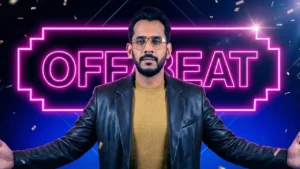 On March 3, 2026, the Indian startup world saw a digital shift that was as much about legacy as it was about the future. Aman Gupta, the famous co-founder of … Read more