

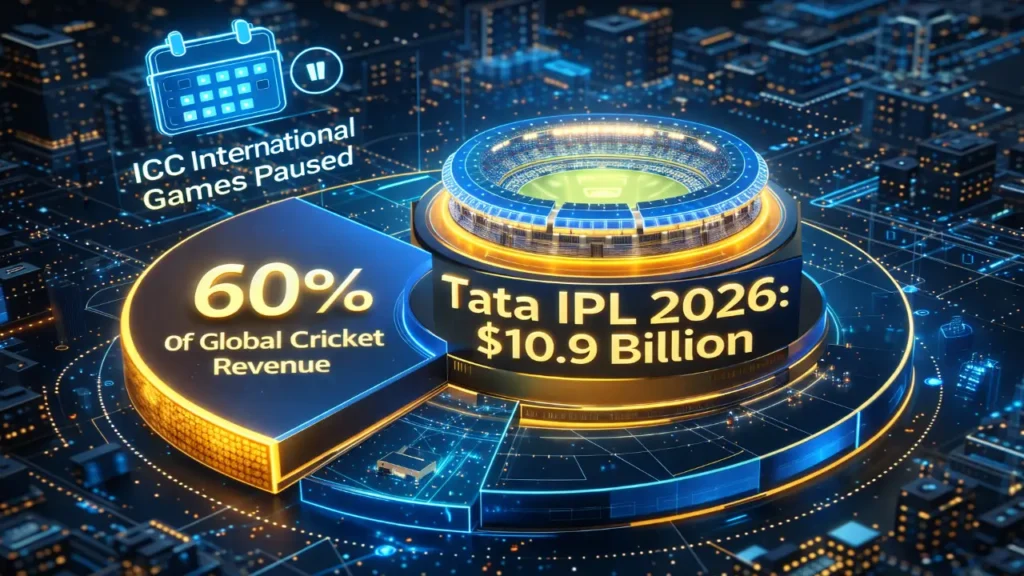
The Indian Premier League (IPL) is a perfect mix of elite sports, big business, and mass entertainment. Since it started, it has changed world cricket forever, moving the sport’s money-making center to India. As it enters its new season, the Tata IPL 2026 is a massive business worth over $10.9 billion. It makes up about 60% of all cricket revenue globally. The league is so big that the International Cricket Council (ICC) pauses most other international games just for the IPL. This report breaks down the league’s history, how it works, the companies funding it, and its huge impact on the world today.
How It All Started
To understand the history of IPL and its success today, we must look back to 2007. That year, the Indian national team had an early exit from the 50-over World Cup. This caused TV viewership to drop sharply, hurting the sport’s income. At the same time, the Board of Control for Cricket in India (BCCI) faced a major threat: a private, rival league called the Indian Cricket League (ICL) was taking players.
The BCCI needed a strong response. In September 2007, a young Indian team won the first-ever Twenty20 World Cup. This victory proved that the short, three-hour T20 format could attract a massive audience and bring fans back to the sport.
Riding this wave, the BCCI launched the IPL in 2008. Lalit Modi, a BCCI official at the time, was the mastermind behind the Lalit Modi IPL start. He used a city-based team model similar to the English Premier League. The strategy was simple: target people who didn’t normally watch cricket, like women, children, and casual fans who found traditional matches too long and boring.
Modi mixed fast-paced cricket with Bollywood glamour, creating what he called “cricketainment”. With celebrity owners, cheerleaders, and stadium music, the IPL became a prime-time family show. The very first team auction raised $723.59 million, proving the model was a huge success and quickly putting the rival ICL out of business.
How It Works
To understand how IPL auction works, you must look at its strict rules. Instead of teams buying players privately, the IPL uses a player auction. This prevents the richest owners from hoarding all the best talent. Here are the main rules for the 2026 cycle:
- Salary Caps: For the 2026 season, the salary cap for each team is set at ₹120 crore (about $14.4 million).
- Squad Rules: Teams must carefully build a squad of 18 to 25 players. To make sure local Indian talent gets a chance to shine, teams can only have a maximum of eight overseas players in their squad, and only four can play in a match at the same time.
- Overseas Player Limits: There is a new rule for overseas players to stop them from demanding too much money. Their maximum pay is now capped at ₹18 crore, or whatever the highest price was in the previous major auction. Also, if a foreign player agrees to play but drops out without a good medical reason, they face a two-year ban from the league.
- The Impact Player: A hot topic is the “Impact Player” rule, which lets teams swap a player during the game. This means teams can bring in an extra batter or bowler when needed. While this leads to exciting, high-scoring games, critics say it ruins the development of “all-rounders” (players who can both bat and bowl), because teams just use single-skill specialists instead.
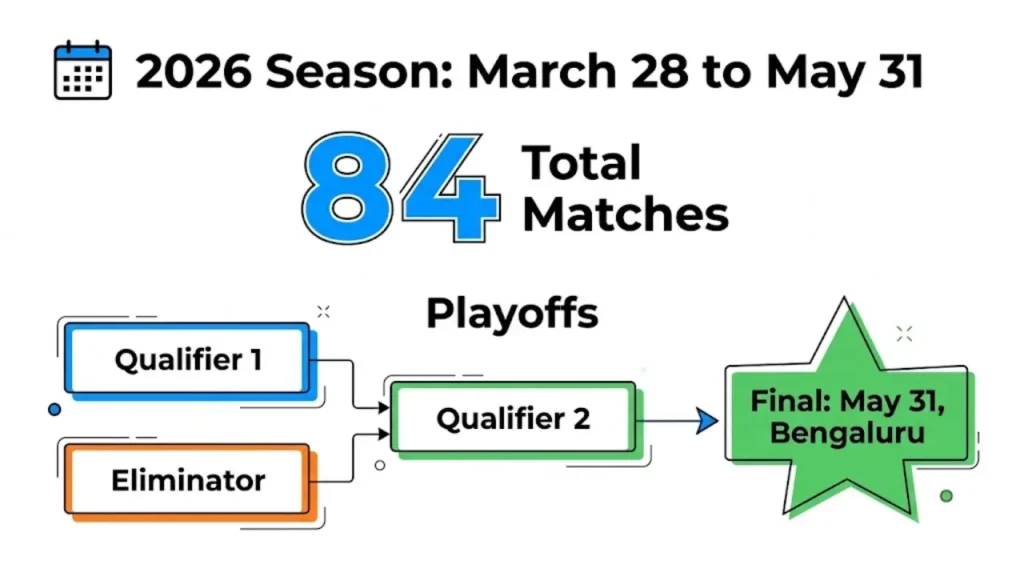
- Tournament Format: In 2026, the league has grown to 84 matches, up from 74. The season runs from March 28 to May 31. After the league stage, the top four teams enter the Playoffs, which include Qualifier 1, an Eliminator, Qualifier 2, and the Final match on May 31 in Bengaluru.
The Corporate Giants
The IPL’s wealth comes from three main groups: broadcasters, sponsors, and team owners.
Broadcasters
TV and digital streaming rights, known as IPL media rights, are the biggest moneymakers. In the beginning, Sony bought the TV rights for $1 billion. Today, the media rights for the 2023–2027 cycle are worth an amazing $6.2 billion (₹48,390 crore). The BCCI smartly split the rights: Disney Star shows the games on traditional TV, while Viacom18 streams them online for free on JioCinema. Because of this deal, one IPL match is now worth about $13.4 million, making it the second most valuable sports league per match in the world, right behind the American NFL.

Sponsors
The title sponsor has changed over the years, from DLF to Pepsi, Vivo, and Dream11. Today, India’s giant Tata Group holds the rights, paying ₹2,500 crore ($336 million) for five years. The IPL also adapts quickly to problems. When the Indian government banned real-money gaming, the BCCI lost Dream11 as a major jersey sponsor. But they quickly bounced back by signing a ₹270-crore deal with Google’s AI platform, Gemini, showing how attractive the league is to global tech brands.
Franchise Owners
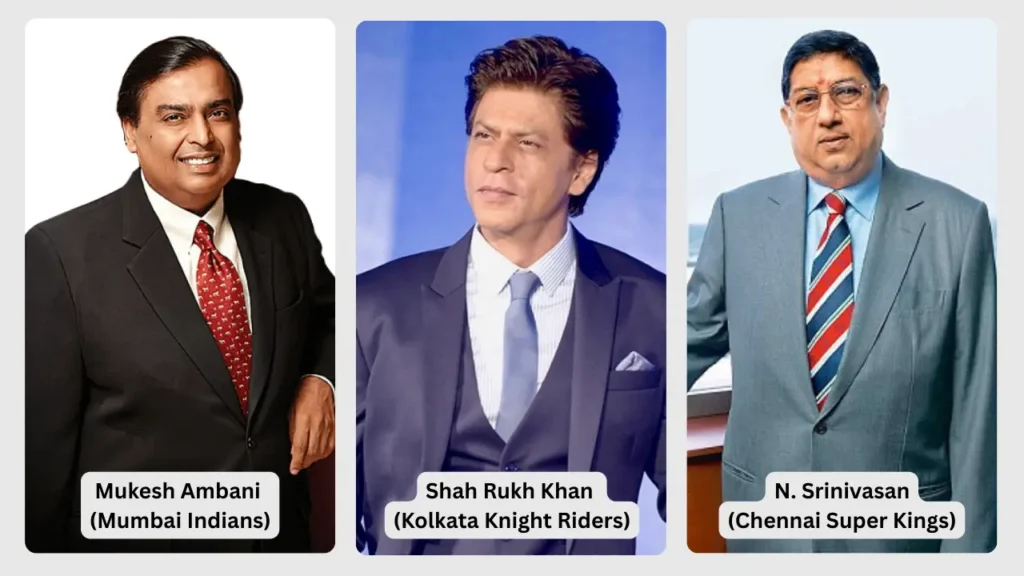
IPL franchise owners are some of the richest people in the world. They include Mukesh Ambani (Mumbai Indians), N. Srinivasan’s India Cements (Chennai Super Kings), and Bollywood star Shah Rukh Khan (Kolkata Knight Riders). These owners use the teams to promote their other businesses. For example, Reliance uses the Mumbai Indians to bring more users to their Jio phone network. Recently, large global investment firms have also bought teams. For example, CVC Capital Partners bought the new Gujarat Titans, showing that IPL teams are viewed as highly profitable and safe investments around the world.
The Present
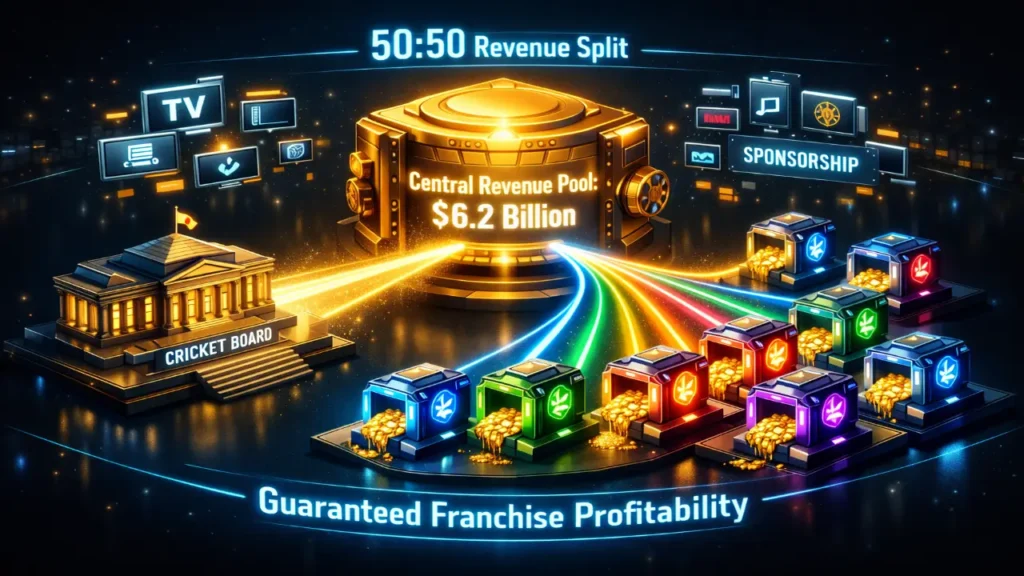
The secret to the business model of IPL is how it shares its money. The billions of dollars made from TV rights and central sponsors go into a central pool. This creates a huge BCCI IPL revenue that benefits everyone. The BCCI keeps about 50% to run Indian cricket, and the other 50% is divided equally among the 10 teams. This guarantees that even teams that lose on the field still make a lot of money and stay highly profitable.
Localized Economic Impact
Today, the 10-team league greatly impacts India’s local economy. When matches are played, the host cities see a massive boom in business. For example, in Ahmedabad, where the huge Narendra Modi Stadium is located, local property owners make high profits by renting out apartments for short stays during match days. Hotels and restaurants also see huge increases in customers during the normally slow summer months.
The league also creates thousands of jobs in areas like tourism, security, and broadcasting. Even small businesses selling team flags and shirts see a big jump in sales when the matches come to town.
Global Supremacy
Globally, the IPL now controls the cricket calendar. The ICC gives the IPL a two-and-a-half-month window where almost no major international cricket is played. Other national cricket boards happily let their star players join the IPL because they rely on the BCCI’s wealth and goodwill to survive. The money players make in a few weeks of the IPL is often much more than what they earn playing for their country all year.
Conclusion
What started as a risky experiment in 2008 has become a sports empire. The Tata IPL 2026 is a multi-billion dollar business that perfectly blends cricket, corporate wealth, and Bollywood entertainment. By generating huge broadcast deals and creating massive local economic boosts, the IPL is the true center of world cricket.
While there are debates about rules like the Impact Player, the league’s financial success is undeniable. The Indian Premier League is no longer just a cricket tournament; it is a global business giant that leads the sports world today. As it expands to 84 matches, the league promises to bring even more excitement, money, and global attention to the sport of cricket.
READ OUR OTHER ARTICLES
- Unsafe DMs: Meta Ends Instagram End-to-End Encryption
 The digital world is shifting, and everyday internet users are caught right in the middle. If you rely on Instagram to send private messages to friends, family, or business partners, … Read more
 - India Flight Ticket Price Increase at IndiGo, Air India and Akasa
 The global airline industry is facing a massive problem, and everyday travelers are paying the price right now. If you are a family planning a much-needed summer vacation, the India … Read more
 - IPL: How 2008 Experiment Became Global Cricket Empire
 The Indian Premier League (IPL) is a perfect mix of elite sports, big business, and mass entertainment. Since it started, it has changed world cricket forever, moving the sport’s money-making … Read more
 - After LPG, know what is at risk : US-Israel-Iran Conflict
 The US-Israel-Iran conflict that began in March 2026 has quickly turned from a distant fight into a major problem for India’s economy. Since the fighting started on February 28, 2026, … Read more
 - No Gas, No Food: India’s LPG Nightmare
 The familiar sounds of cooking in kitchens across the nation are quickly fading into silence. As of March 2026, the Indian hospitality industry is facing a massive threat to its … Read more