

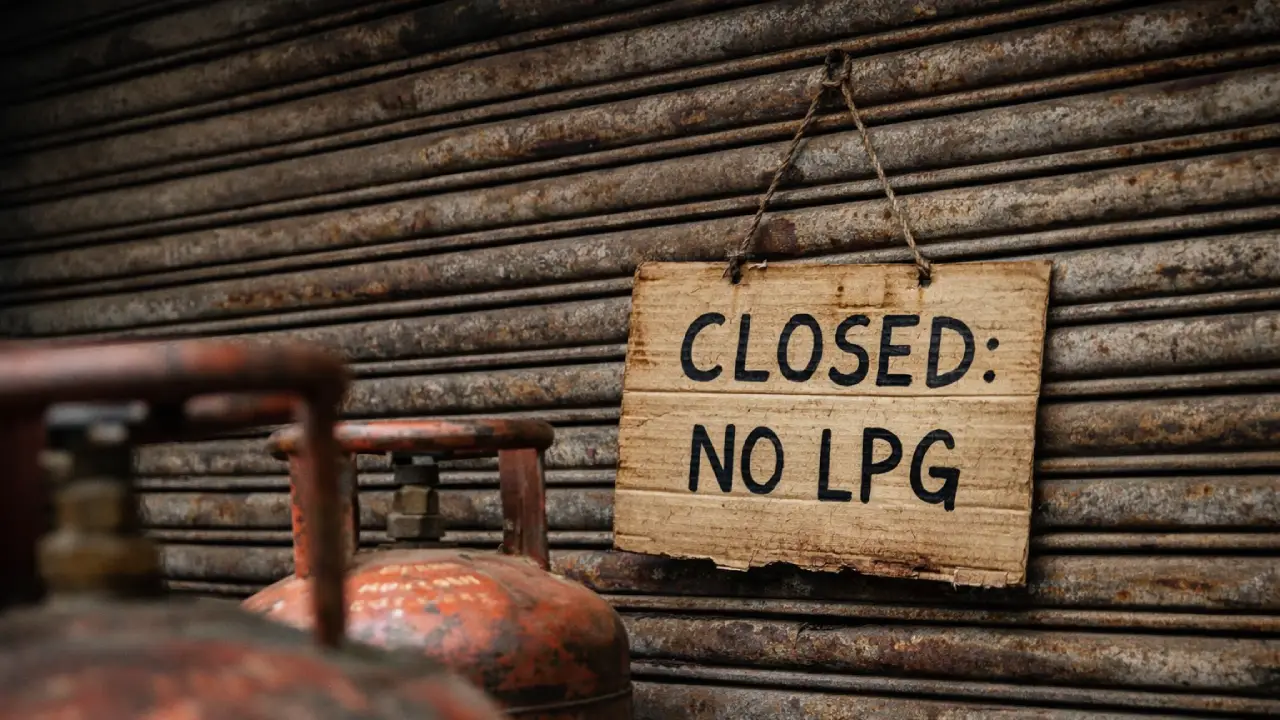
The familiar sounds of cooking in kitchens across the nation are quickly fading into silence. As of March 2026, the Indian hospitality industry is facing a massive threat to its very survival. What started as a political conflict thousands of miles away has cut off the energy supply for local businesses, triggering the severe India LPG shortage 2026. From famous luxury restaurants in Mumbai to the small corner food stalls feeding millions of students and IT workers in Bengaluru, the food business is coming to a complete stop.
The cooking gas crisis India is dealing with right now is not just a problem of high prices; it is a total breakdown of how people in cities get their daily food. With supply lines broken and stored fuel dropping to zero, the crisis needs our attention right away. For restaurant owners watching their life’s work shut down, and for the common public who rely on these places for their daily meals, the situation is getting more desperate every day.
The Root Cause
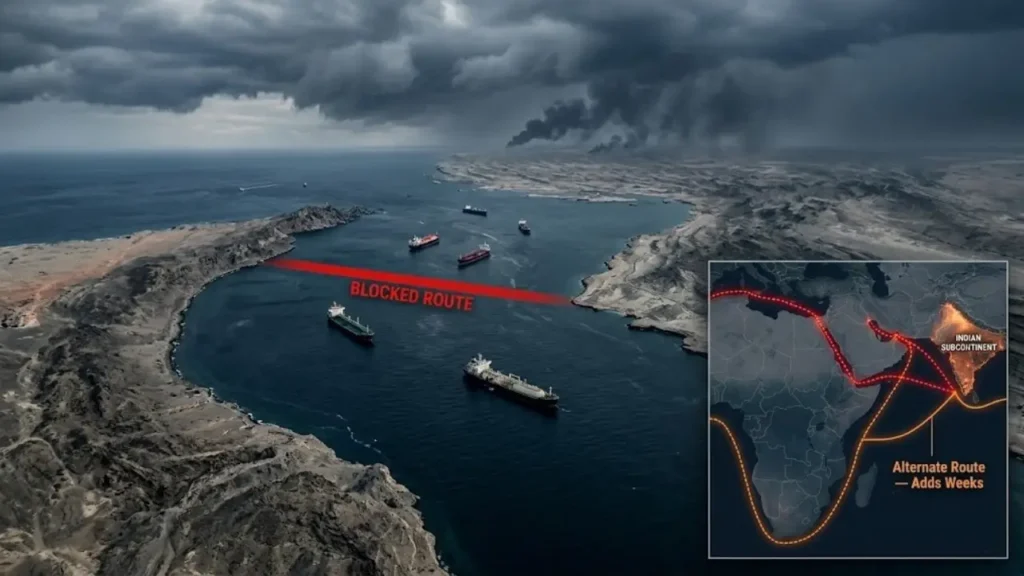
To understand why the stoves in Chennai and the ovens in Delhi have gone cold, we must look at the global supply chain. The current commercial LPG supply disruption is a direct result of the growing US-Israel-Iran conflict in West Asia. After a series of military attacks, the Strait of Hormuz, a highly important sea route for trade was declared closed to shipping.
The West Asia conflict impact on India is huge because the country relies heavily on other nations for its gas. India is the world’s second-largest buyer of Liquefied Petroleum Gas (LPG). It depends on foreign markets to provide over 60% of its total yearly need, which is roughly 31.3 million tonnes. What is truly alarming is that between 85% and 90% of these important LPG imports come from Middle Eastern suppliers. These shipments must travel directly through the Strait of Hormuz, which is now blocked.
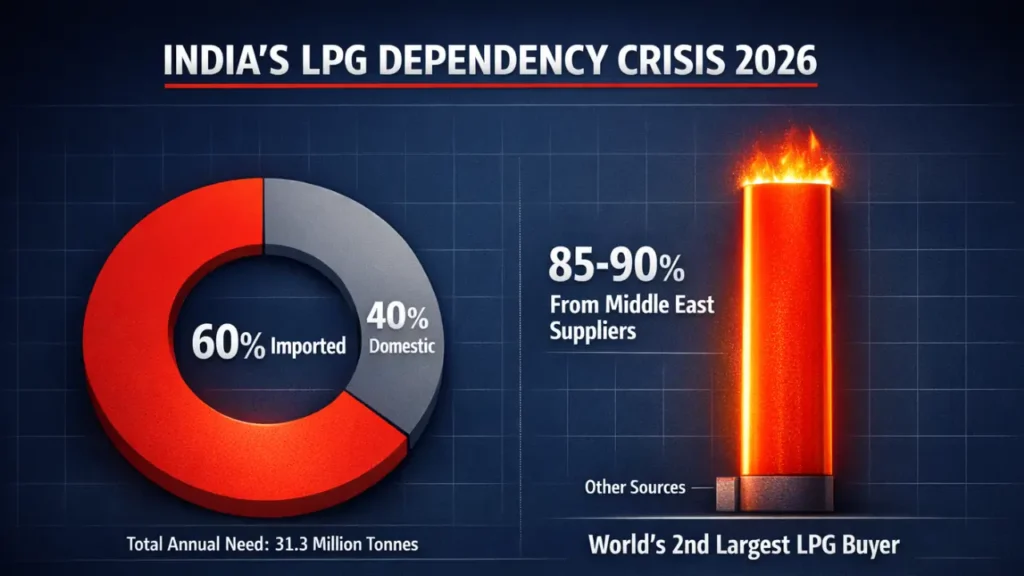
As global shipping companies change the routes of their ships to go all the way around Africa adding weeks to travel times and making shipping costs skyrocket, the supply of cooking gas to Indian shores has almost completely stopped. The business reality is grim: unlike crude oil, India does not have deep, special backup storage for gas. Because of this, the local market is instantly hurt by any problems happening overseas.
The Impact
Facing a sudden and total lack of imported fuel, the local distribution network has broken apart. Because the government has stepped in to strictly protect the gas supplies for homes, the commercial restaurant sector has been left to face the entire problem alone.
The Mumbai Restaurants Shutdown
In India’s financial capital, the damage is getting worse by the hour. The Indian Hotel and Restaurant Association (AHAR), the main group for the hospitality business in Maharashtra, has given strong warnings about whether its members can stay open. By the second week of March, AHAR reported that 20% of hotels and restaurants in Mumbai have already temporarily shut down operations because they ran out of gas cylinders.
The leaders of the association have warned that if emergency supplies do not return, up to 50% of the city’s commercial eateries could be forced to close within days. The Mumbai restaurants shutdown gas crisis threatens to destroy the incomes of lakhs of daily wage workers and restaurant staff who rely on these jobs to survive.
Bengaluru Chennai Hotels
In the southern technology hubs, the crisis is breaking down the daily city life. The Bengaluru Chennai hotels closing gas problem is especially scary because so many people depend entirely on getting their daily meals from outside.
In Bengaluru, local hotel groups warned that closures are coming very soon. They noted that the lack of gas will severely affect over 10 lakh people living in Paying Guest (PG) homes, college hostels, IT professionals, and medical staff who rely entirely on these kitchens for their daily food.
In Chennai, the situation is just as critical. The Chennai Hotels Association wrote an urgent letter for help to Prime Minister Narendra Modi. They highlighted that gas distributors have zero stock left. The food industry, which works day and night to supply hospitals and IT parks, is on the edge of a total shutdown.
Expanding the Radius
The problem does not stop at city borders. The crisis is heavily affecting businesses across Delhi, Hyderabad, and Kolkata, where even massive luxury hotel chains are cutting back on what they do.
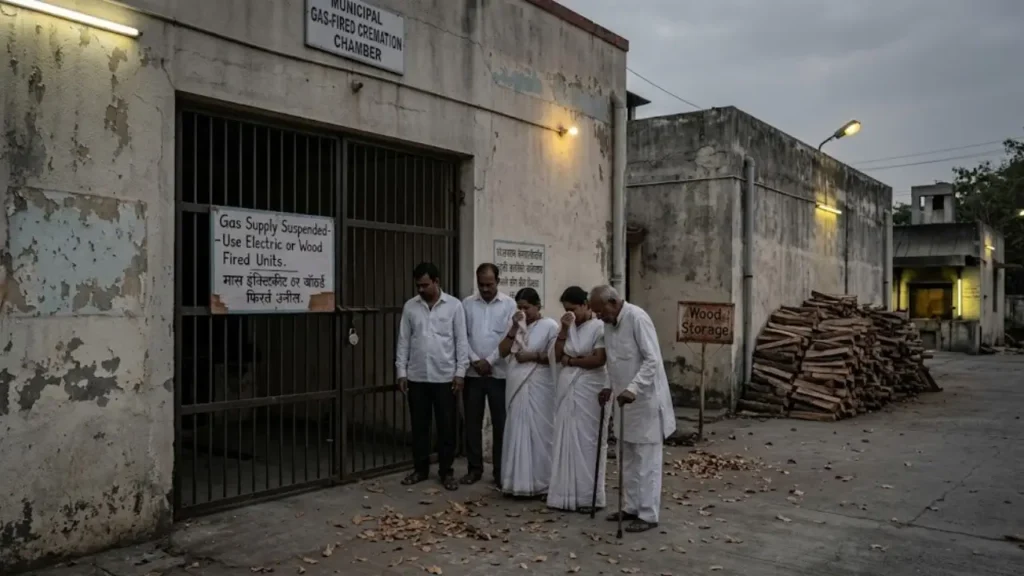
Perhaps the most shocking sign of how bad the shortage has become is happening in Pune. The Pune Municipal Corporation (PMC) was forced to temporarily stop operations at 18 gas-based crematoriums. They had to tell citizens to use electric and wood-fired options instead. This shows just how deeply commercial LPG is used in important daily city services.
Ground Reality
Facing a complete lack of supply, restaurant owners are trying extreme steps just to keep their doors open.
- Strict Menu Limits: To make their fast-dropping fuel last longer, chefs are strictly cutting down their menus. Items that take a long time to cook like complex biryanis, thick curries, and traditional tandoor foods that need high heat for a long time have been completely removed from menus. At the same time, restaurants are staying open for fewer hours each day to save gas.
- The Black Market and Huge Costs: Whenever an important item is hard to find, a hidden, illegal market appears. Desperate business owners are turning to the black market, paying huge prices of up to ₹1,950 for a single commercial gas cylinder. This extra black market cost, combined with the official LPG cylinder price hike of over ₹114 for commercial 19 kg cylinders, has completely wiped out any profits the restaurants were making.
- The Shift to Electric Cooking: In a frantic attempt to stop relying on gas completely, some owners are trying to switch to electric and induction cooking. However, putting high-power electric fryers and commercial induction stoves into older kitchens overnight costs a lot of money. It also often overloads the old electrical wiring in buildings, making it a very difficult quick fix.
The Domino Effect
The forced closing of restaurants is not just a problem for the restaurant owners; it is the first falling piece in a massive chain reaction across the economy. India’s modern food system is deeply connected, and the failure of commercial kitchens immediately affects many others.
A recent major study by the National Council of Applied Economic Research (NCAER) showed that the digital food delivery sector brings in ₹1.2 lakh crore and creates a massive ripple effect in the economy. Every single job in the food delivery business supports about 2.7 extra jobs in the wider economy, covering farming, shipping, and packaging.
As thousands of restaurants, cloud kitchens, and small food businesses close their doors, platforms like Swiggy and Zomato are preparing for a massive drop in food orders. Delivery riders face a huge drop in their daily earnings. At the same time, farmers who rely on restaurants to buy large amounts of fresh vegetables, milk, and meat every day are left with food that is rotting and going to waste.
The Government Response
Facing a huge crisis, the Ministry of Petroleum and Natural Gas (MoPNG) used emergency powers under the Essential Commodities Act to take strict control of the situation. The government’s main goal was to make sure the global problem did not cause a massive crisis for ordinary families at home.
The MoPNG strictly prioritized domestic (household) LPG supply over commercial supply. By protecting the country’s 332 million household users, the government basically pushed the entire weight of the gas shortage onto the restaurant and hotel sector.
To manage this difficult situation, the government introduced a series of highly organized emergency rules:
| Government Rule | Main Goal | What it Means for Restaurants |
| Focusing on Home LPG | Protect regular people from losing cooking gas and prevent anger among the public. | A complete stop of official commercial cylinder deliveries, forcing restaurants to close. |
| Boosting Refinery Output | Ordered local refineries to stop making chemicals and turn all raw materials into cooking gas. | Changes how the supply chain works, but gives no quick help to commercial kitchens. |
| Creating an OMC Committee | A three-member group of Oil Marketing Company (OMC) leaders was formed to look at the food sector’s requests for help. | Creates a way to review requests fairly, giving hospitals gas before restaurants. |
| 25-Day Waiting Period | Started a strict 25-day waiting period before a home cylinder can be refilled. | Stops people from panic buying and stops businesses from illegally buying home gas on the black market. |
The order telling refineries to make as much LPG as possible is a very big step. Normally, refineries use raw materials to make highly profitable chemicals (like plastics). By ordering them to stop making chemicals and focus only on basic cooking fuel, the government has stepped over normal business rules. They are giving up industrial profits to make sure household stoves can keep cooking.
Future for Commercial Kitchens
The cooking gas crisis of March 2026 is a hard lesson about the dangers of relying on other countries for energy. For the hospitality sector, surviving this will require a huge change in how they do business.
Moving forward, the traditional gas-fired commercial kitchen will be seen as too big of a business risk. Industry experts believe there will be a fast shift toward smart, heavy-duty electric cooking systems. They also predict more use of computers and machines that can work without worrying about sudden global fossil-fuel shortages.
However, until the supply chain goes back to normal and the Strait of Hormuz opens again, the reality on the ground remains very sad. The Indian restaurant industry a key part of city life, a massive provider of jobs, and an important cultural space is currently fighting for its life. Understanding and quick financial help from the government will be needed to make sure that the businesses forced to turn off their stoves today can afford to turn them back on tomorrow.
READ OUR OTHER ARTICLES
- ओडिशा का दीपक पहुंचा बेंगलुरु, Hardik Pandya की उदारता ने मचाया तहलका
 भारत में क्रिकेट केवल एक खेल नहीं, बल्कि एक गहरी सामाजिक भावना है जहाँ खिलाड़ी भगवान की तरह पूजे जाते हैं और प्रशंसक उनके प्रति अटूट स्नेह प्रदर्शित करते हैं. … Read more
 - Iran’s Darkest Day: Screams for Revenge and a Missing Leader
 On Sunday, July 5, 2026, Iran entered the tense and highly charged Khamenei funeral Day 2. This marked a critical moment in a six-day state funeral meant to show the … Read more
 - अजीत कुमार: प्रेरणादायक सफर और वैश्विक उपलब्धियों का महाकाव्य
 भारतीय सिनेमा के परिदृश्य में कुछ ऐसे व्यक्तित्व होते हैं जो पर्दे की चकाचौंध से परे जाकर समाज और संस्कृति पर अपनी अमिट छाप छोड़ते हैं। दक्षिण भारतीय सिनेमा के … Read more
 - Coachella 2026: Highlights and History-Making Moments You Missed!
 The 25th anniversary of the Coachella Valley Music and Arts Festival just wrapped up, and it was absolutely legendary! From April 10–12 and April 17–19, 2026, the Empire Polo Club … Read more
 - वैभव सूर्यवंशी का टीम इंडिया में चयन हो चुका है?
 भारतीय क्रिकेट के इतिहास में कुछ क्षण ऐसे आते हैं जो केवल खेल के आंकड़ों को नहीं बदलते, बल्कि पूरे देश की खेल भावना और भविष्य की दिशा को पुनर्परिभाषित … Read more